 Selected
- Perpetuum
- 23 Nov ― 13 Jan 2024
- DS GalerieParis, Francegallery
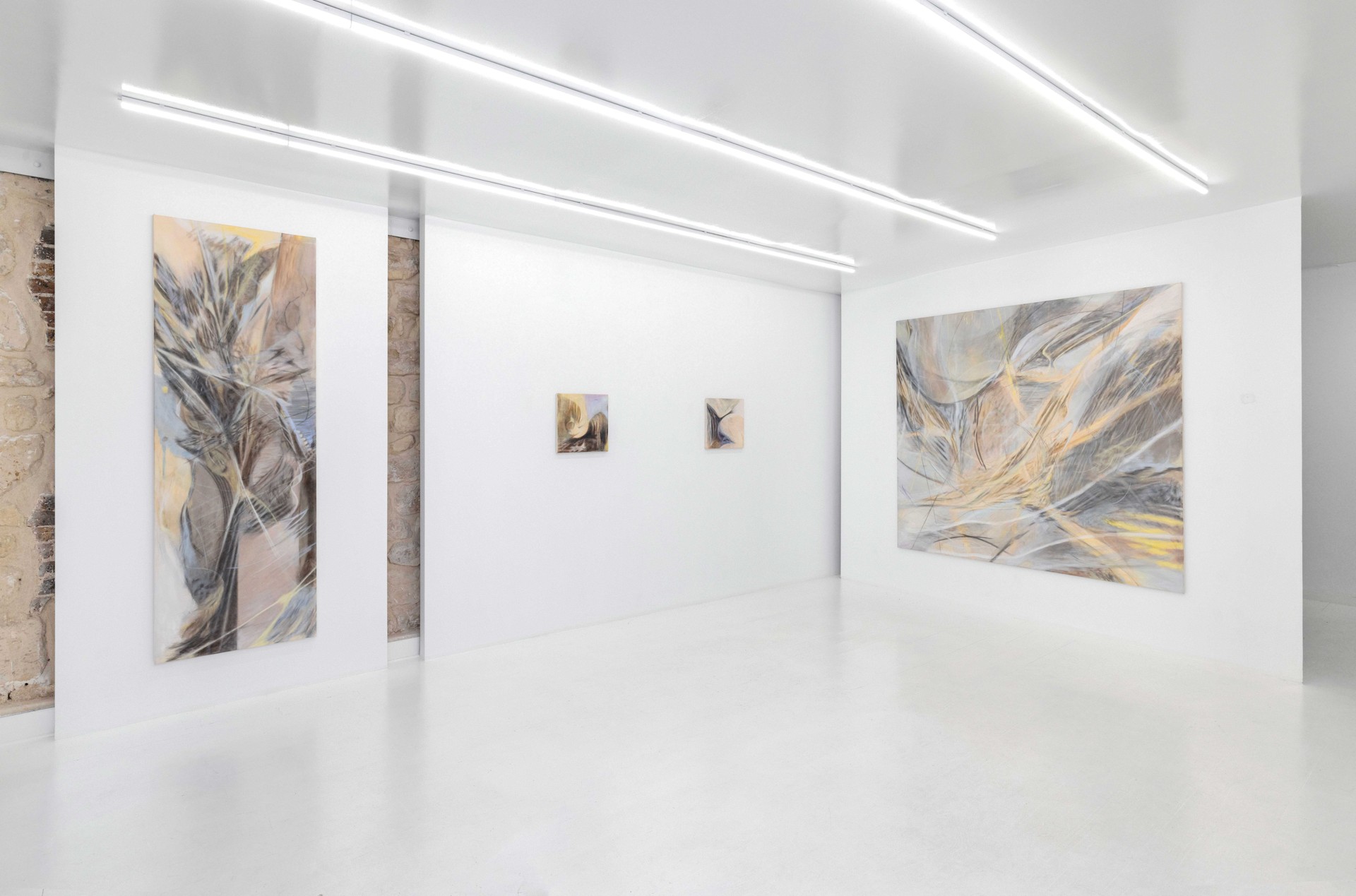
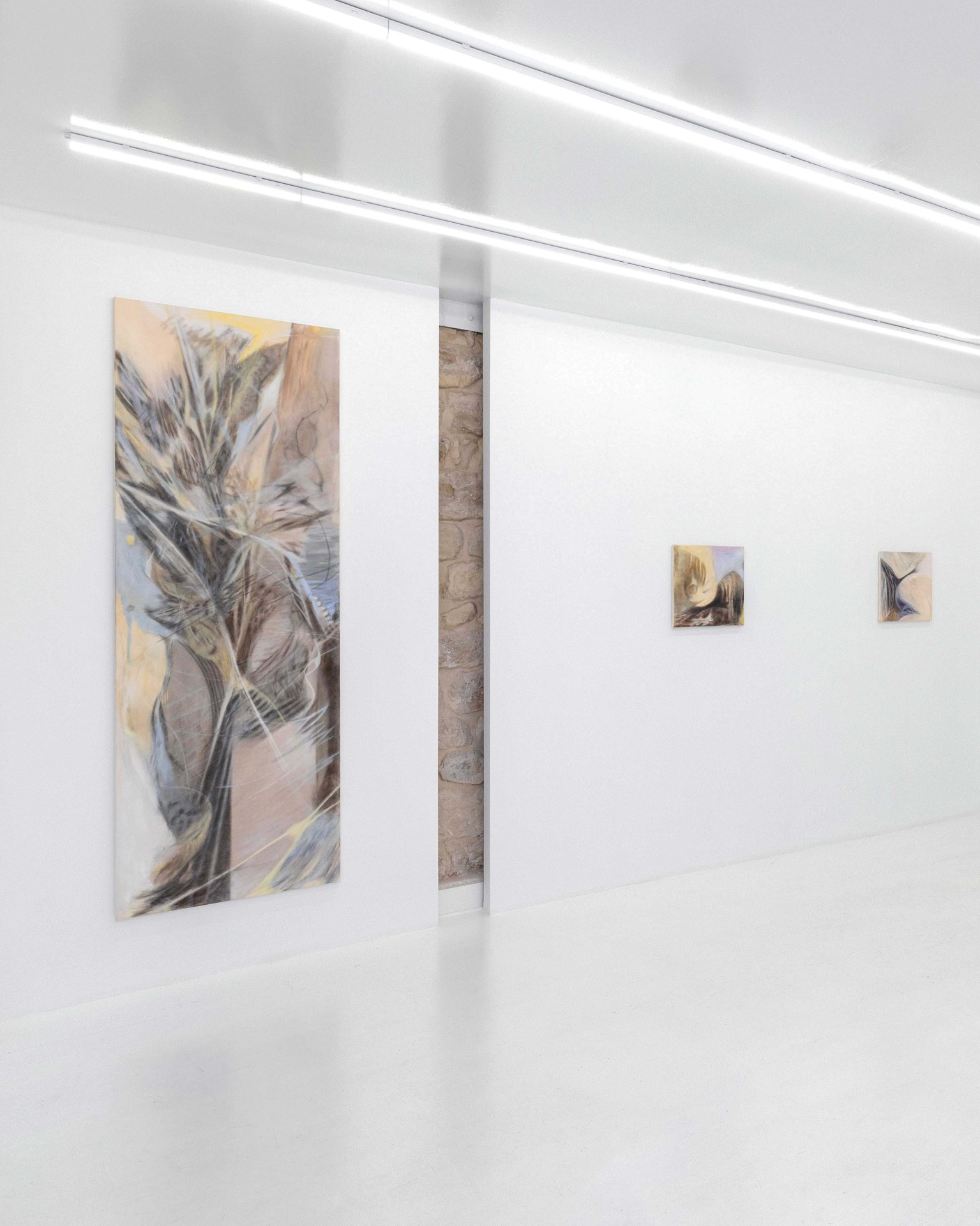
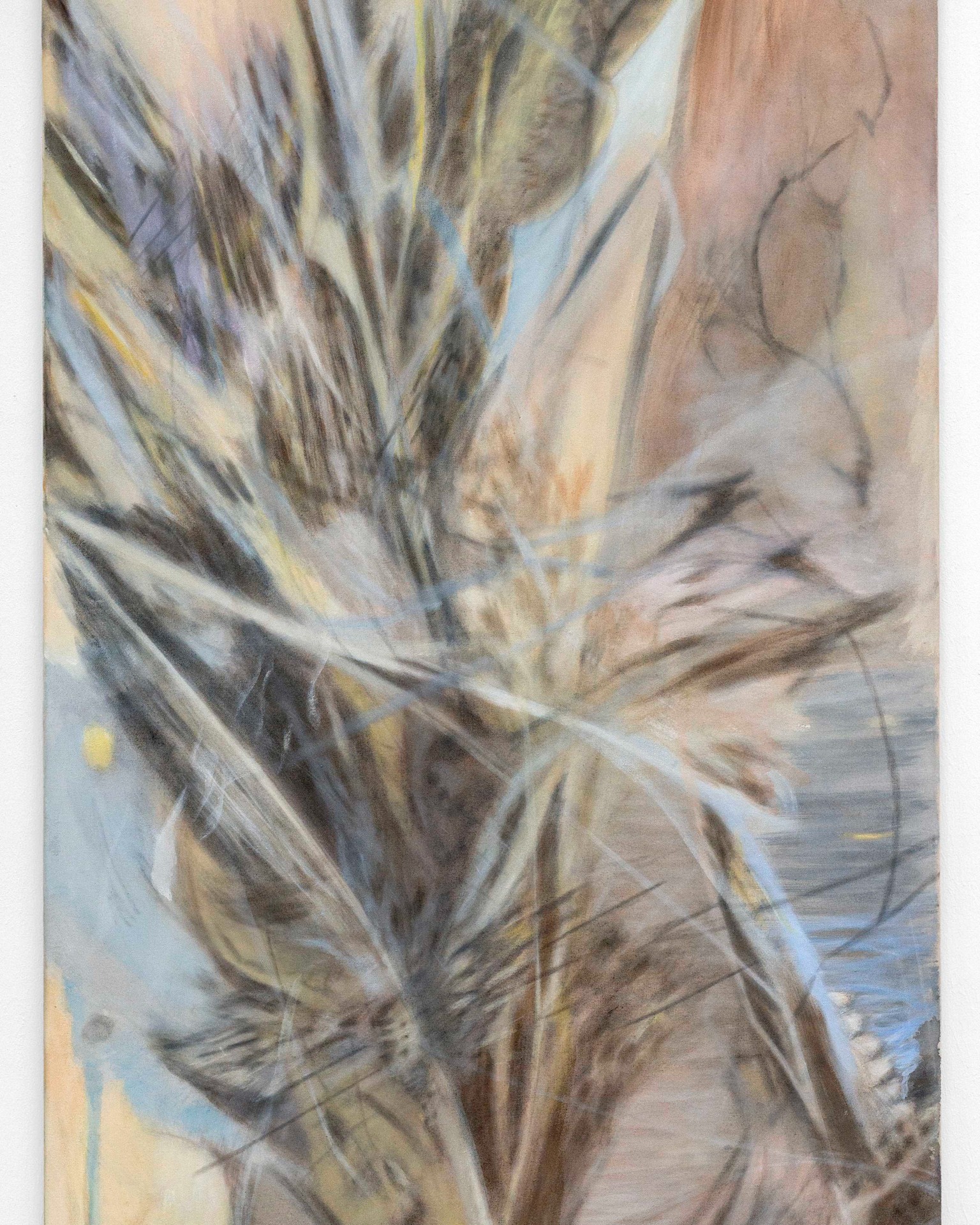
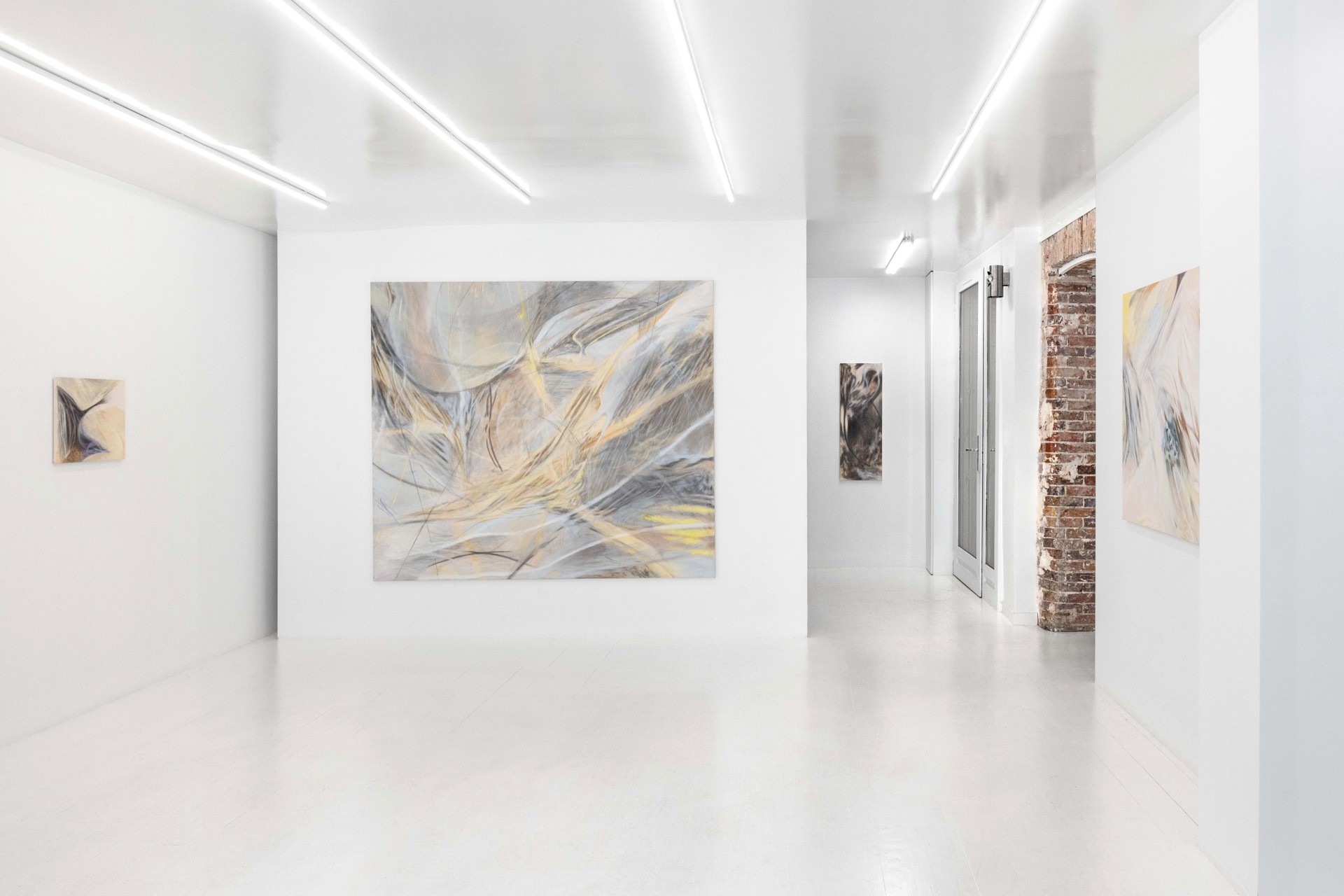
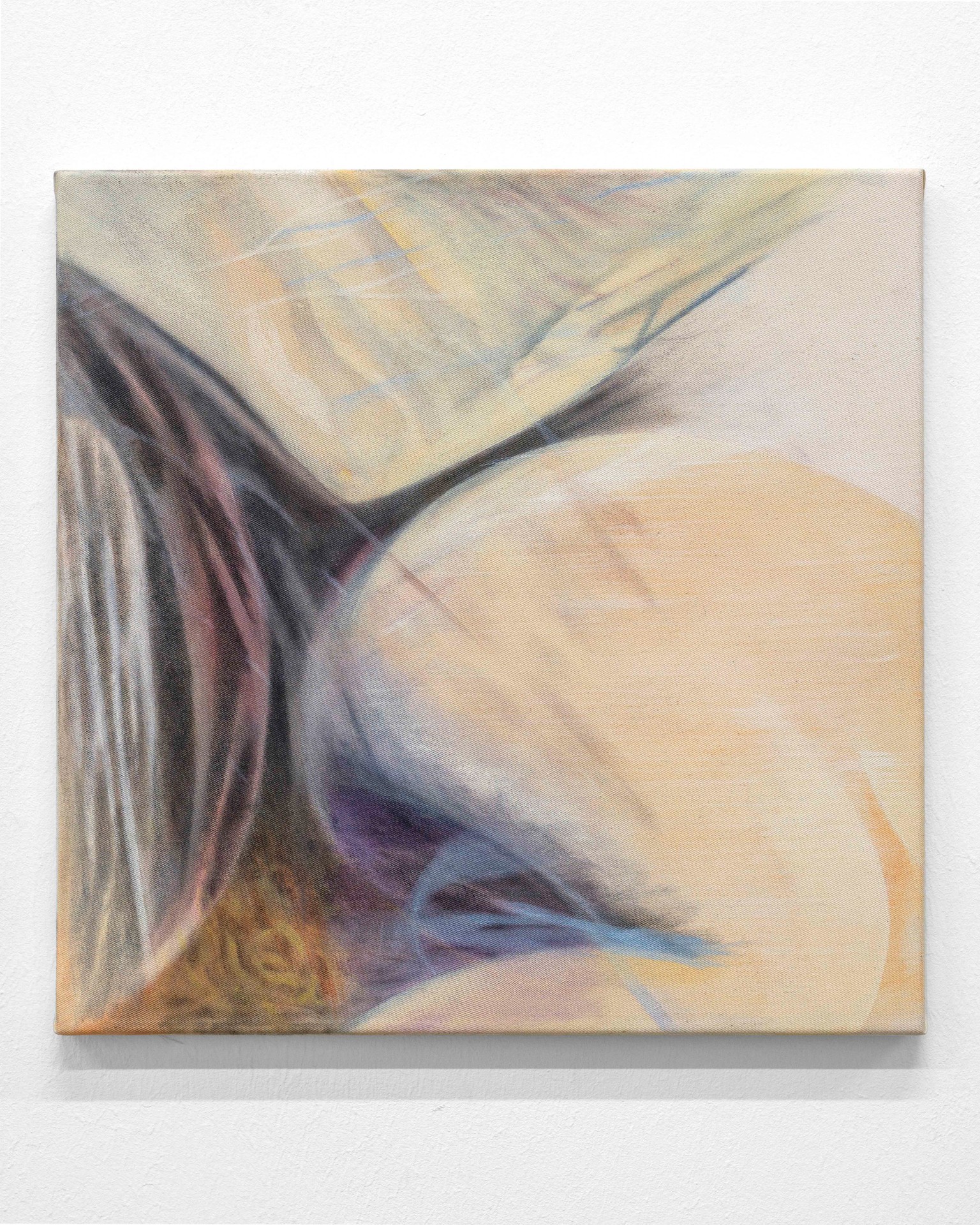
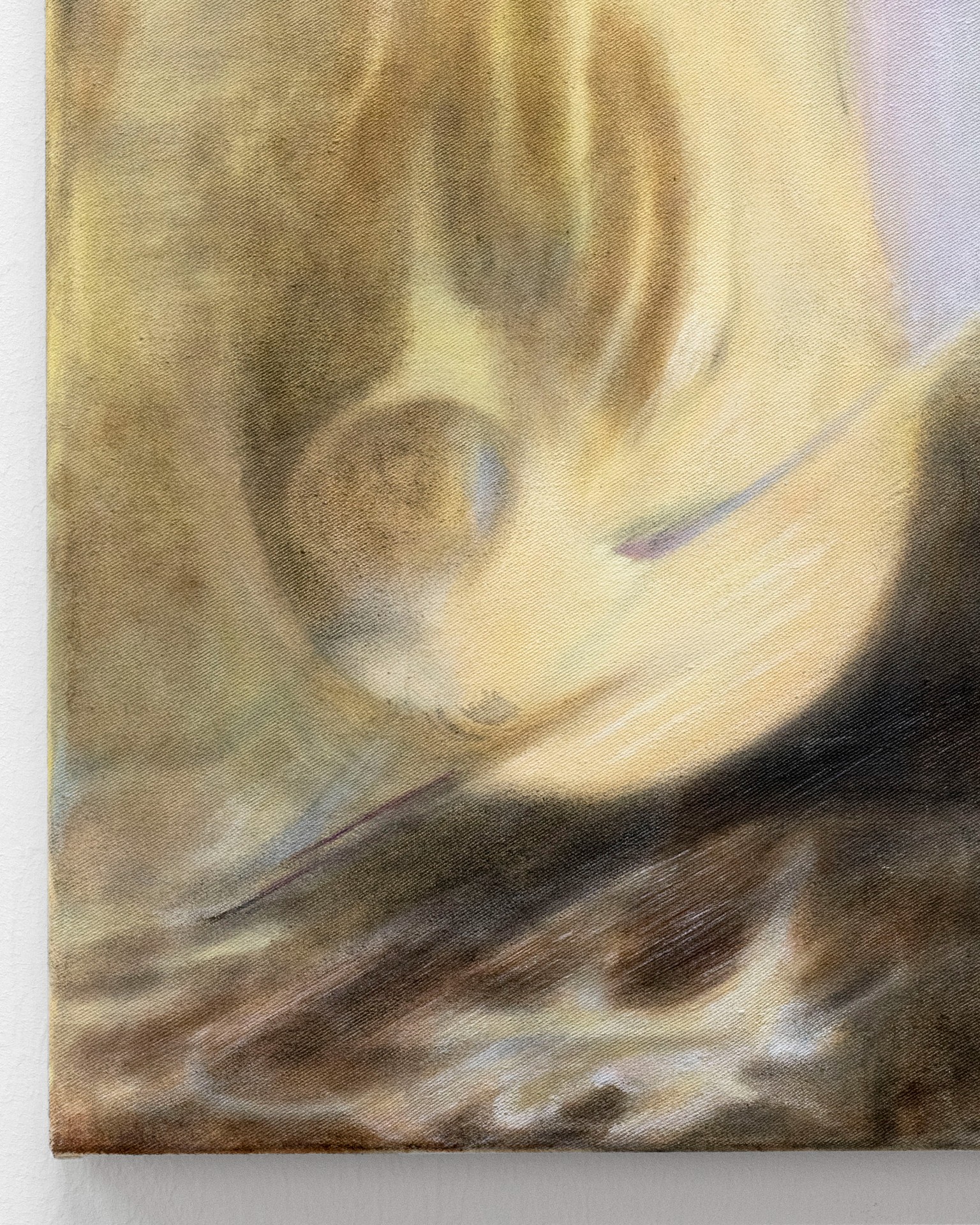
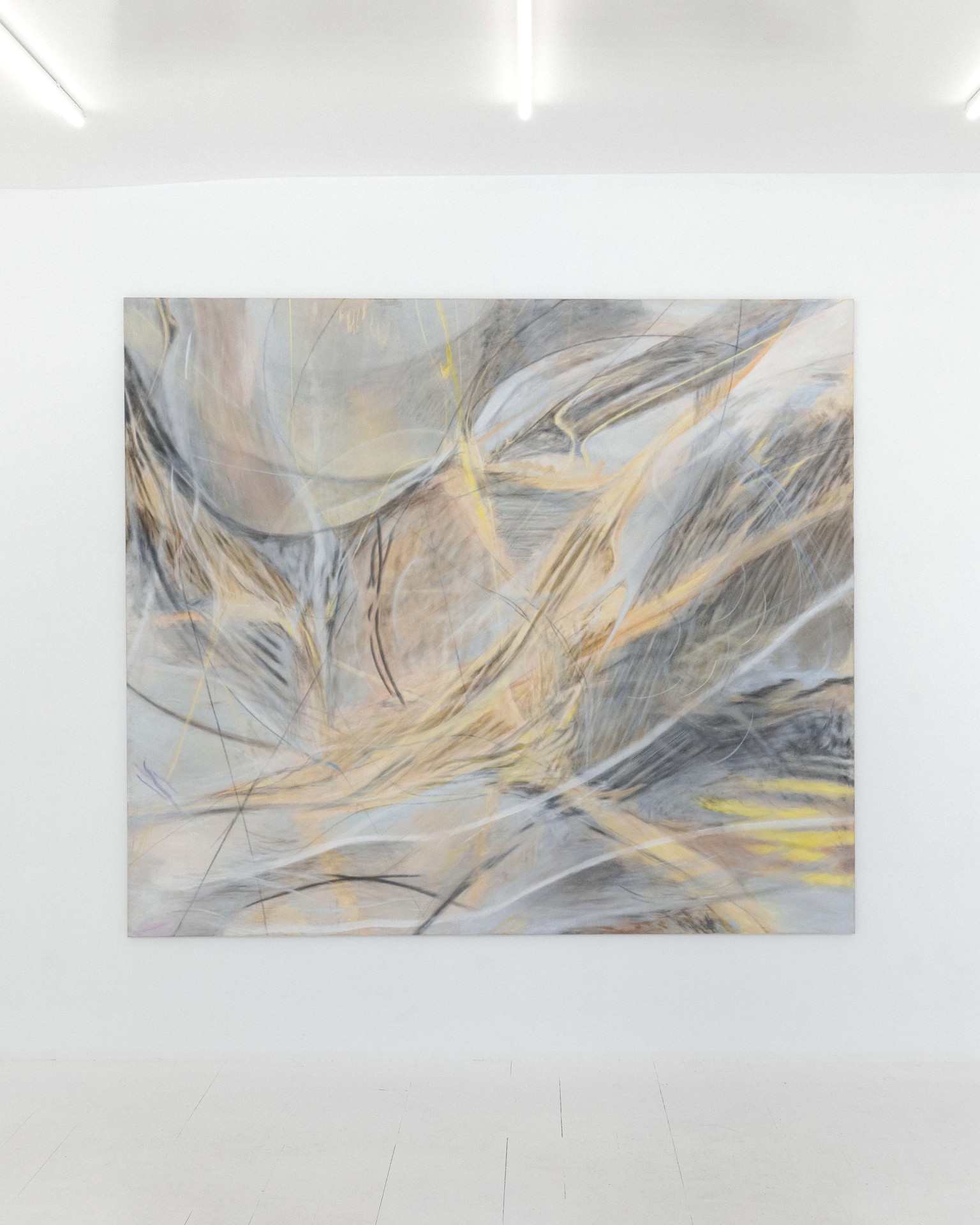
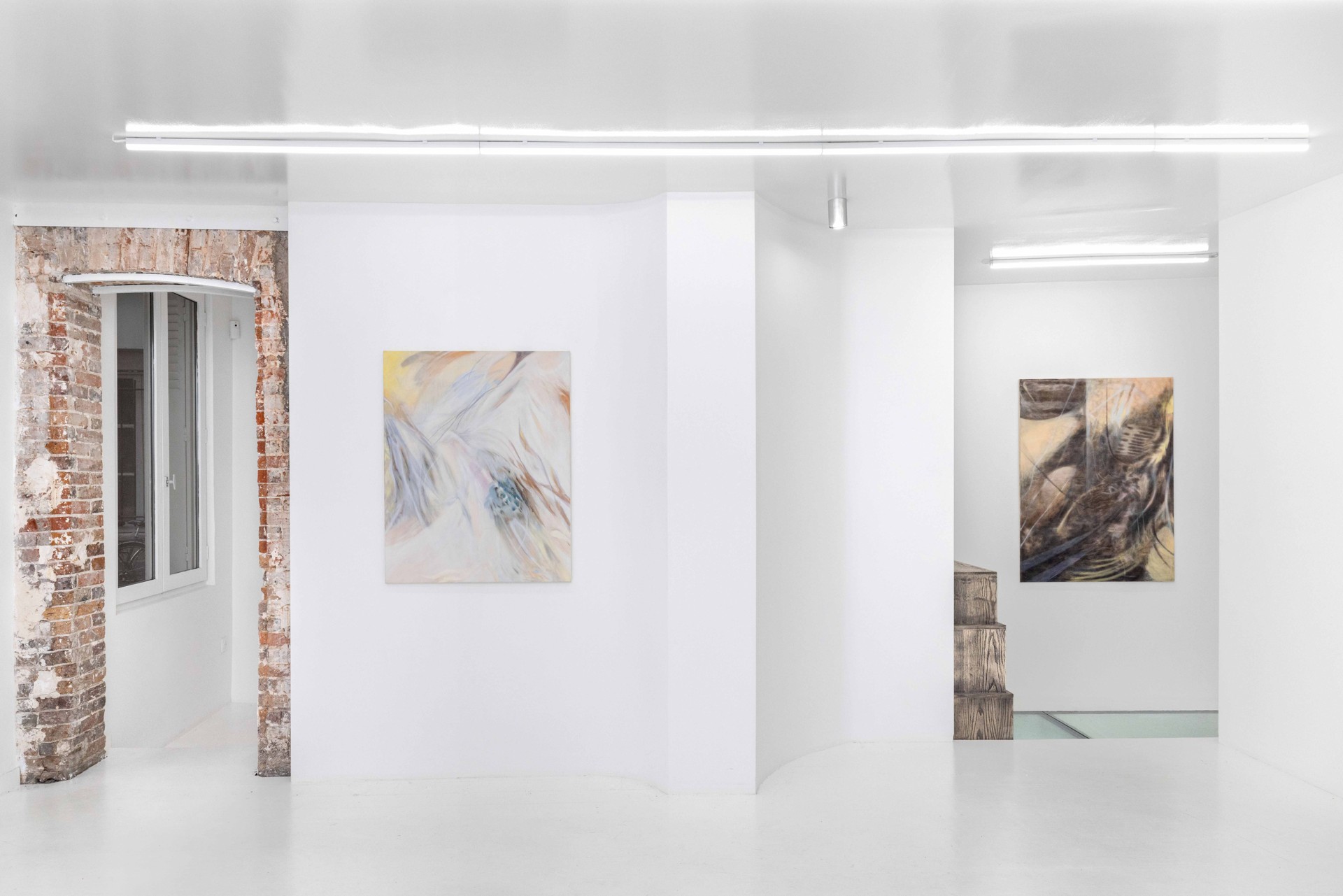
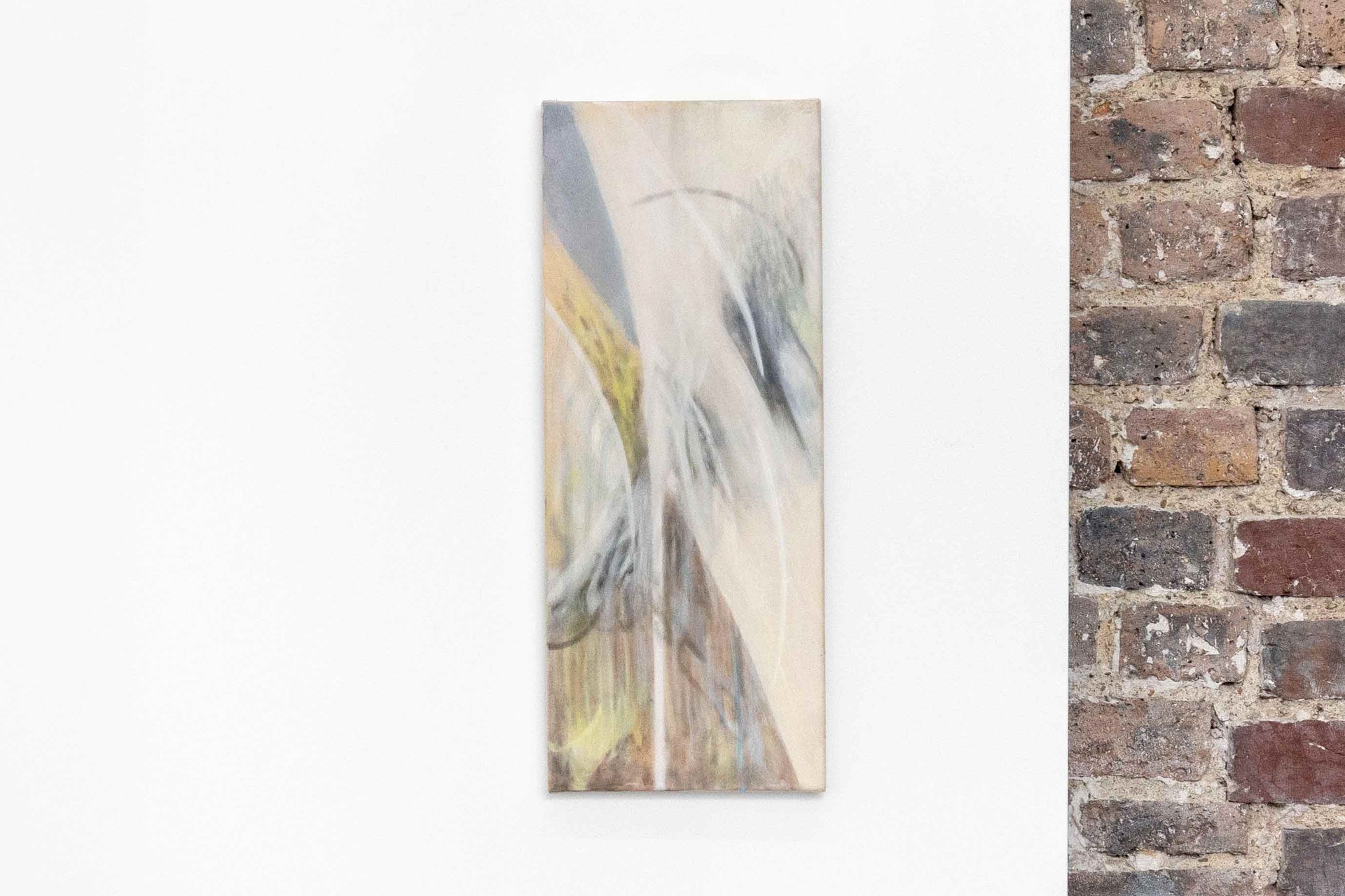
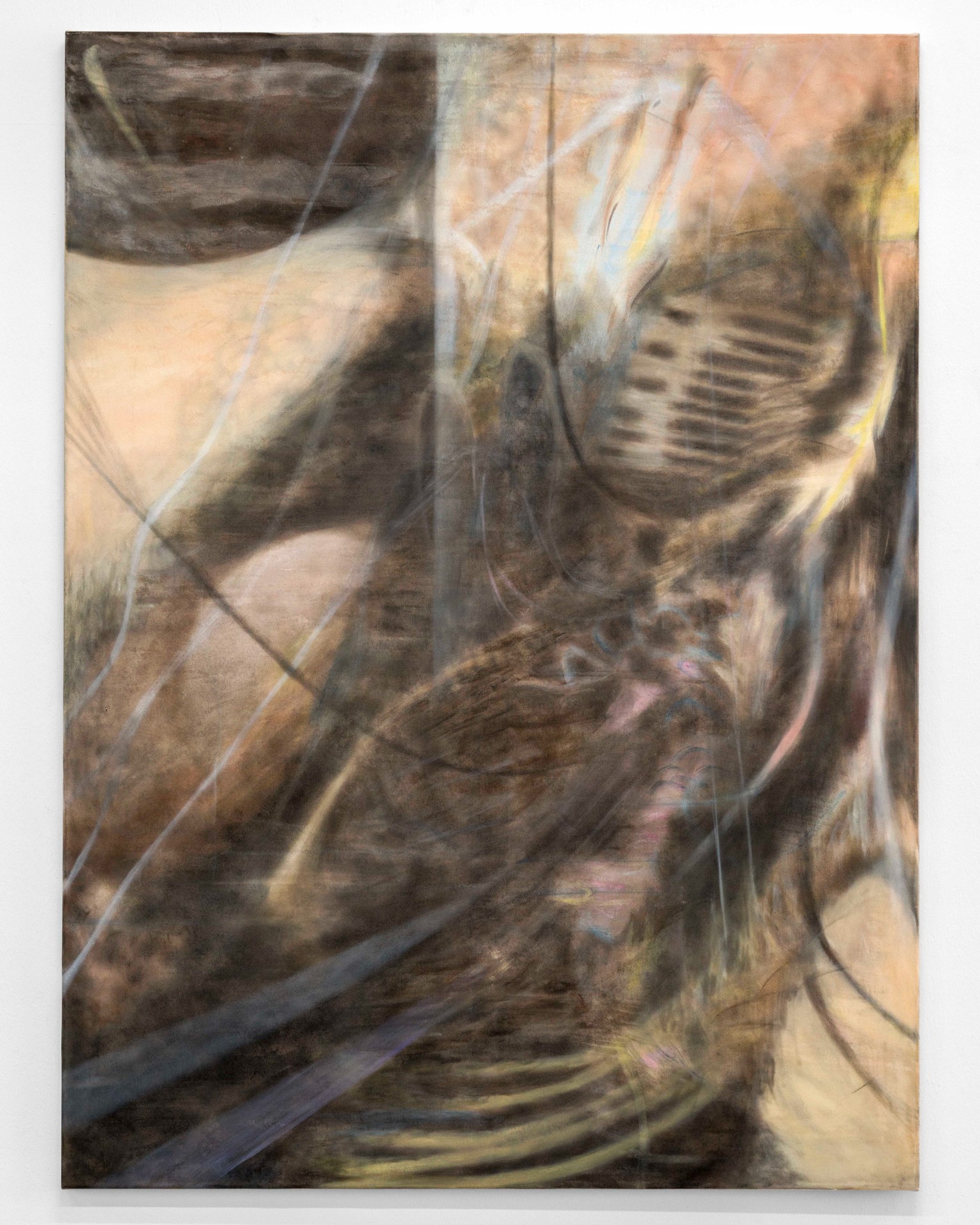
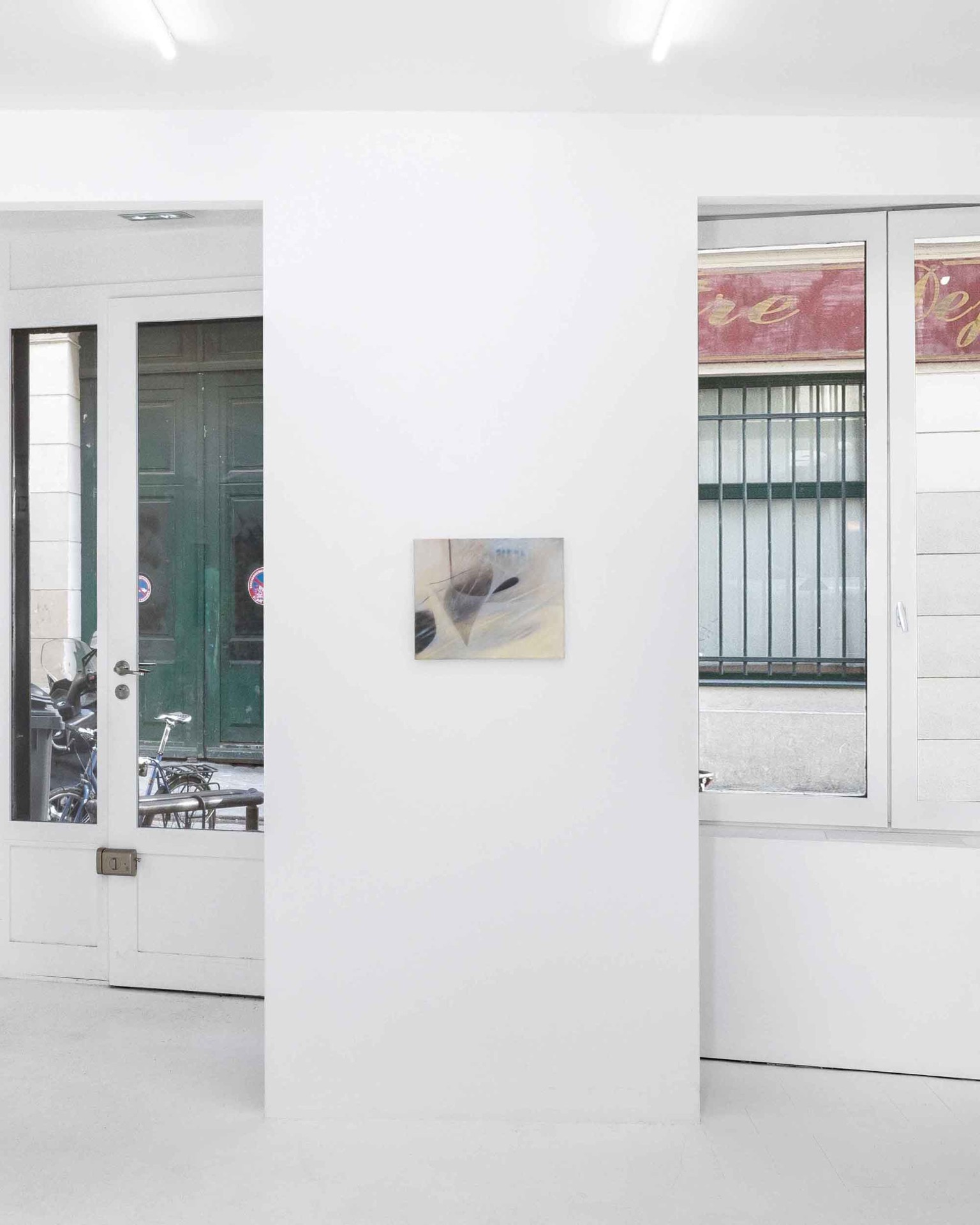
Using painting as a very direct medium of expression, Kolja Kärtner Sainz creates a body of work intersecting abstraction and figuration. Albeit his degree of spontaneity, Kärtner Sainz arranges his pieces as metaphorical elements so they will compose together a fictional structure; accentuated by its individual title, each finished painting plays a different role in a scenario. This assembly of pieces in one room generates an informative system, with strings sending inputs and outputs simultaneously, and the attempt to follow the linearity of transmission and reception becomes vain. From this logic stems the title of the show “Perpetuum” describing a utopic machine with the capacity to convert its loss of energy into gain, allowing it to run in endless motion. With this unceasing movement in mind, one can think of science-fiction plots where the beauty of speed makes the world a better place. This literary genre involves an entangled conception of time : though it aims towards the future, it does so by leaning on imagery from the past, binding thus a bidirectional, contradictory motion. In Kärtner Sainz’s paintings Surface Probability, Urging or Fast Forward we observe brushstrokes at two different speeds, both accelerating and lingering. Although in some of the paintings presented in “Perpetuum” we can sense a certain technological dimension or even architectural, it coexists with bodily substances that seem like internal organs, synapses or skeletal beings. All these functional units do not obey a cohesive scientific logic here; on the contrary, they are composed in a free-flowing manner, glorifying the organic component of nature that cannot be calculated. This extemporaneous universe, where no order is maintained, might lead somehow to a hallucinatory state. The series of paintings entitled Mirage refers to a specific type of delusion, both optical and mental: Fata Morgana — a complex form of an entity visible in a narrow band right above the horizon — reminding the haze covering most of Kärtner Sainz’s paintings. Although Fata Morgana can be explained mathematically by an equation dismantling the interwoven link between the brain and the eye, this misleading vision also has a mental factor. It is the projection of our desires into reality that leads to an investment of all our efforts to reach them: going toward a destination may be fruitless or fruitful. This situation can serve here as an allegory for our very existential condition, where even in the face of a seemingly meaningless life, individuals can create their own meaning through acts of defiance and rebellion against absurdity. This intricate relationship between life, death, creation and decay is brought into light in Kärtner Sainz’s painting Last One Dancing, as well as in in Emily Dickinson’s poem: Because I could not stop for Death He kindly stopped for me The Carriage held but just Ourselves And Immortality. We slowly drove He knew no haste And I had put away My labor and my leisure too For His Civility – We passed the School, where Children strove At Recess – in the Ring – We passed the Fields of Gazing Grain – We passed the Setting Sun – […] I first surmised the Horses’ Heads Were toward Eternity –