- Herbarium
- 13 Nov ― 10 Jan 2027
Dénes Farkas’ “Herbarium” of Interruptions
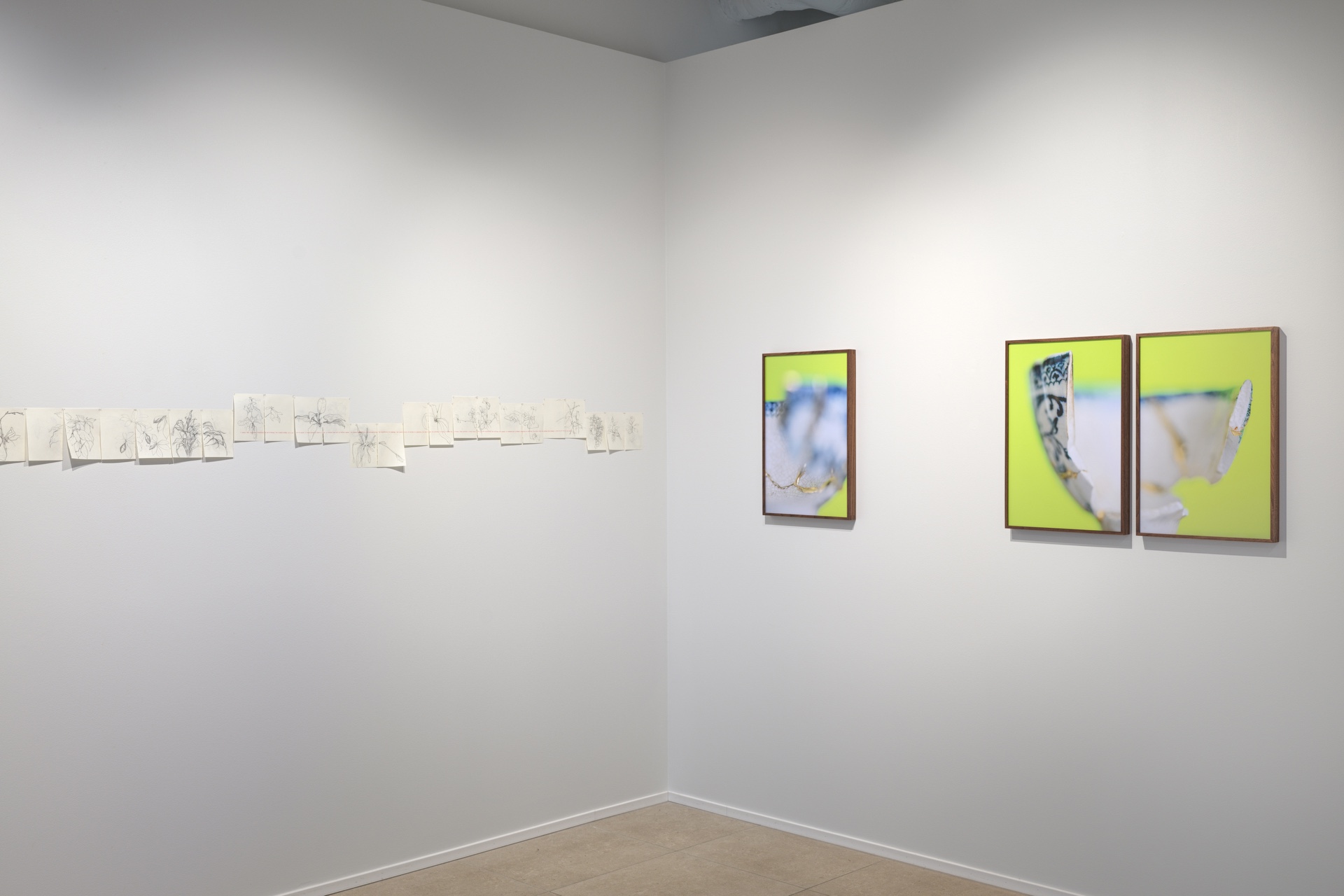
This space, the small white cube of Tütar gallery, reminds me more than any other exhibition venue in Tallinn of a laboratory test tube, just large enough to hold one restrained emotion, one measured gesture, one story, one thought that stretches out in three directions and ties itself into a knot with itself. This stage, which on one side opens through glass onto the street, acts as a kind of magnifying glass that gathers, adjusts and amplifies the visual material. With a work of fragmentary aesthetics, which this “Herbarium” (made up of Dénes Farkas’s drawings, a diary excerpt, and black-and-white and colour photographs) undoubtedly is this time, it becomes a surface that mirrors the artist’s inner world. But where, in relation to the artist, do we stand here in the installation space – inside or outside?
Dénes Farkas, who for some twenty years has been known for works that focus on the basic structures of social existence or examine the relationship between language and convention, has here pointedly let go of the main body of his work and the central themes of his practice. In this sense, this is an exhibition about being between exhibitions, about a space for letting go of thoughts and feelings, dominated by stray impulses that may not even have wanted to be art in the first place, yet on which being an artist nonetheless feeds: accumulating frustrations and the everyday rites of coming to terms with them. On constructive brokenness.
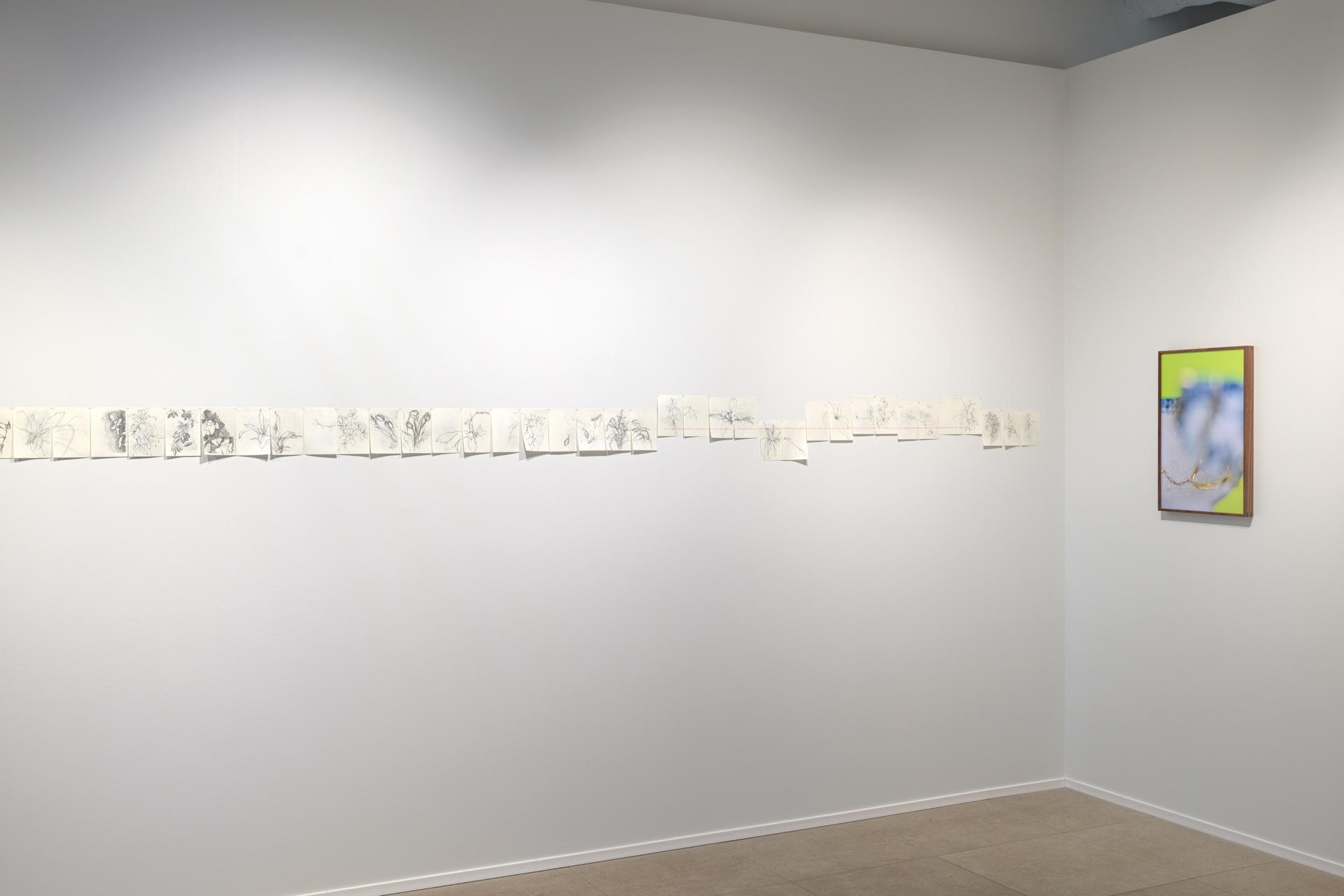
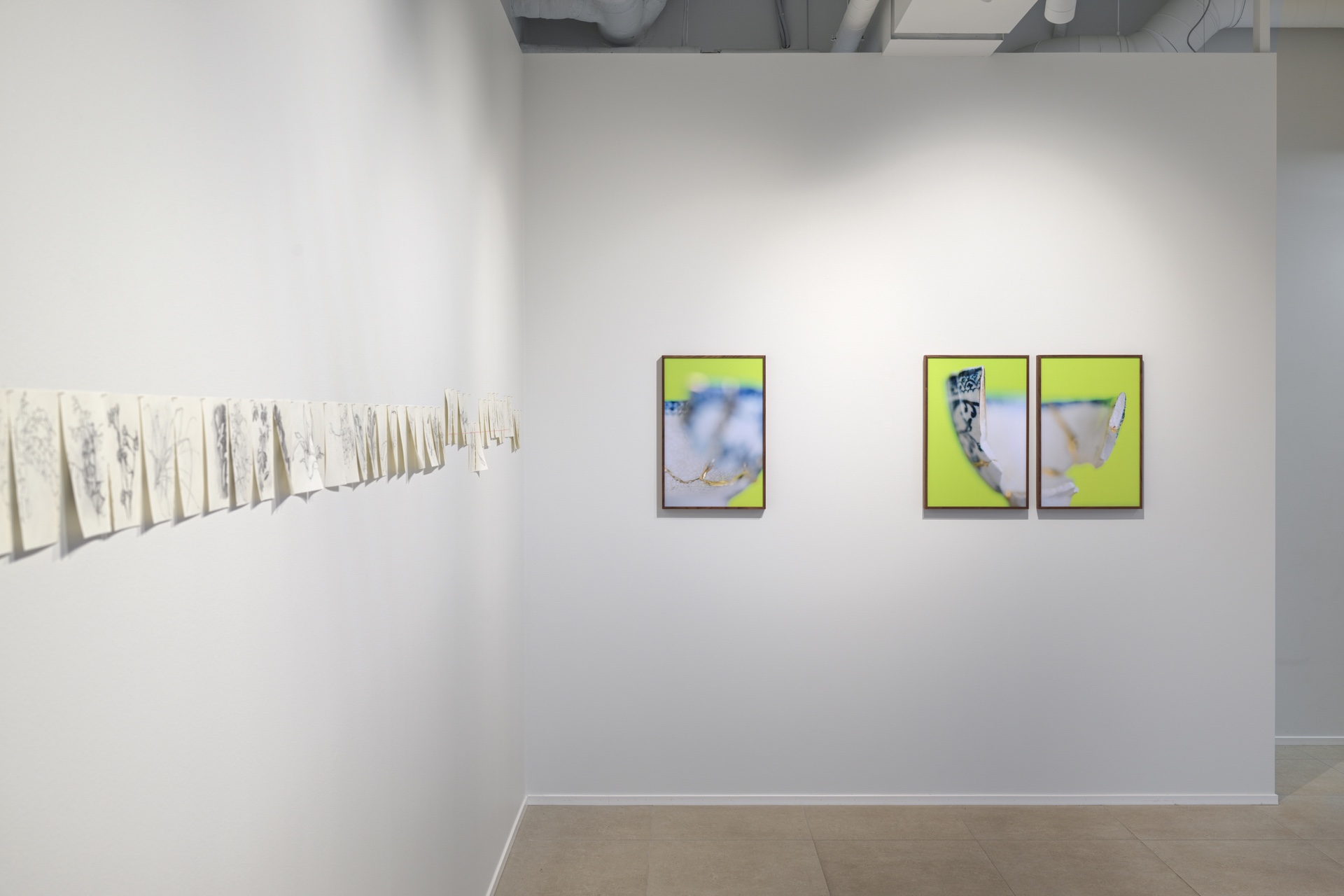
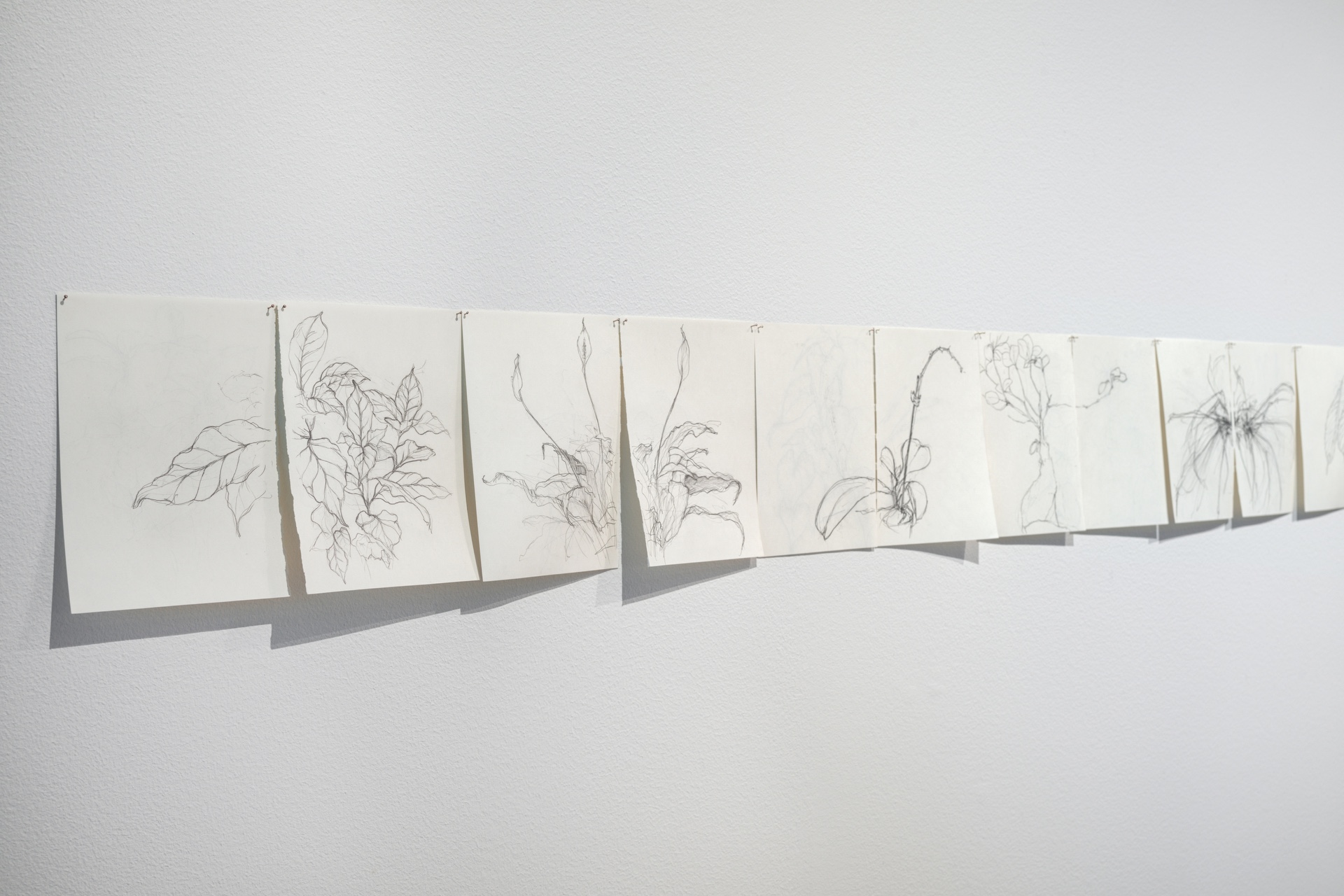
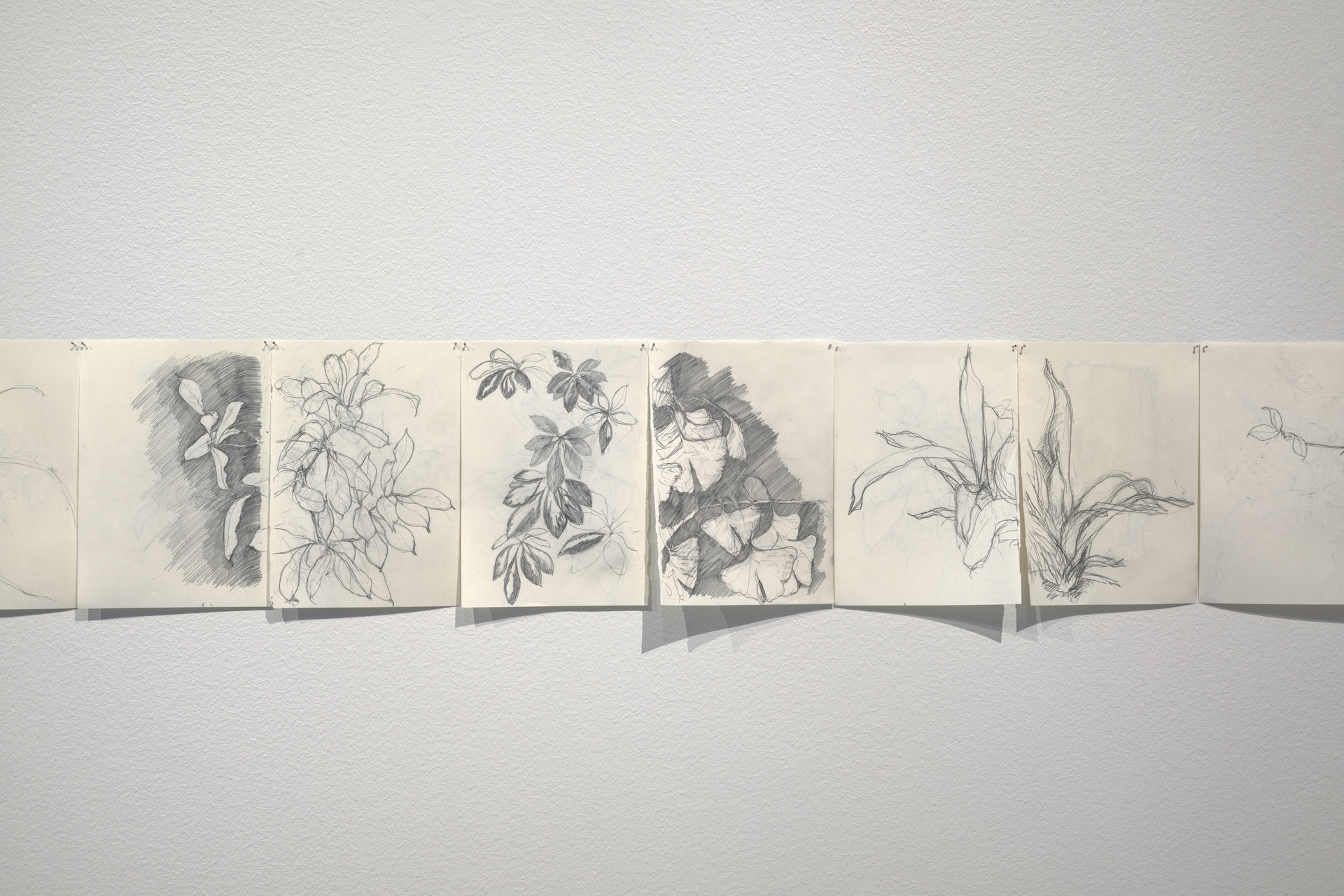
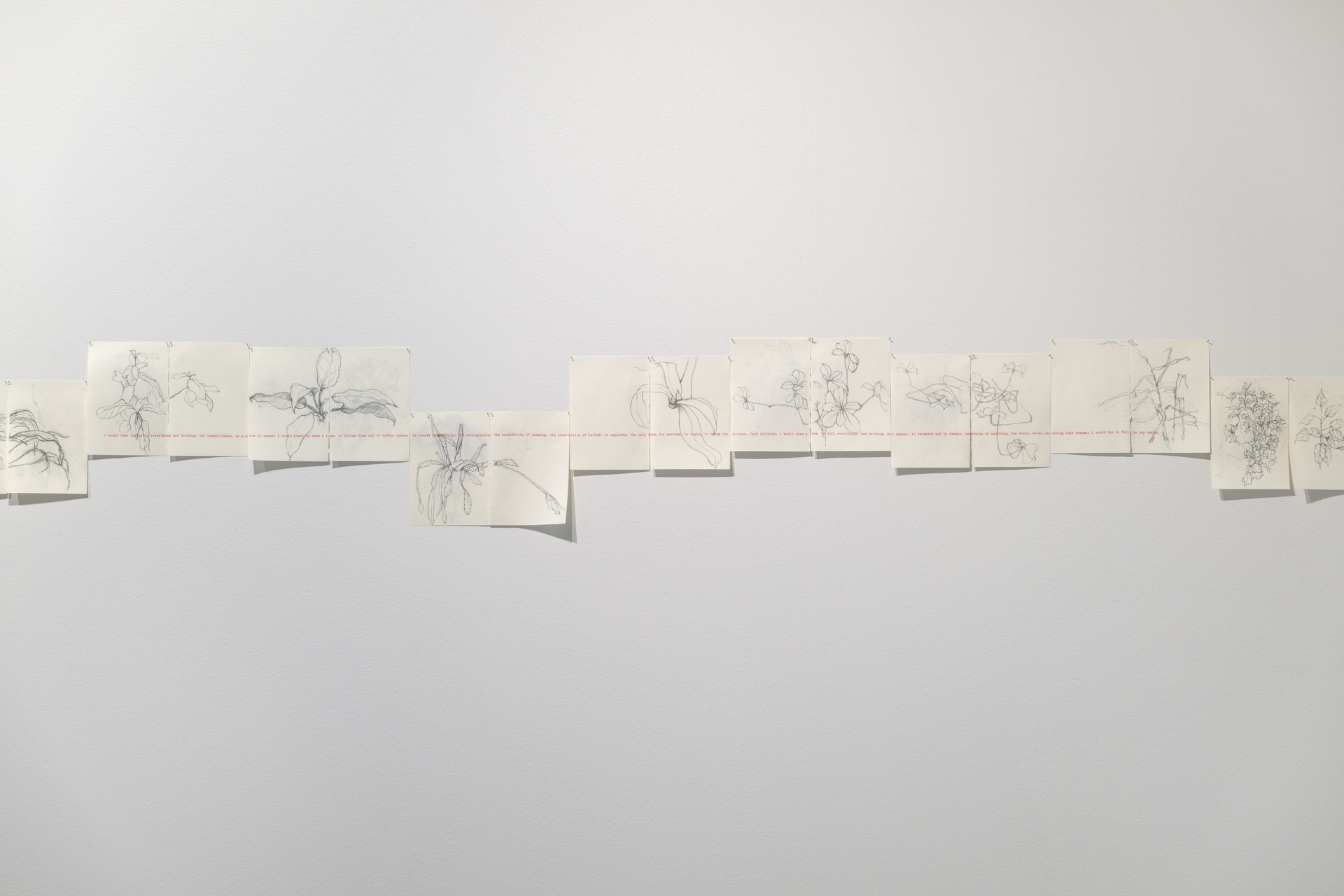
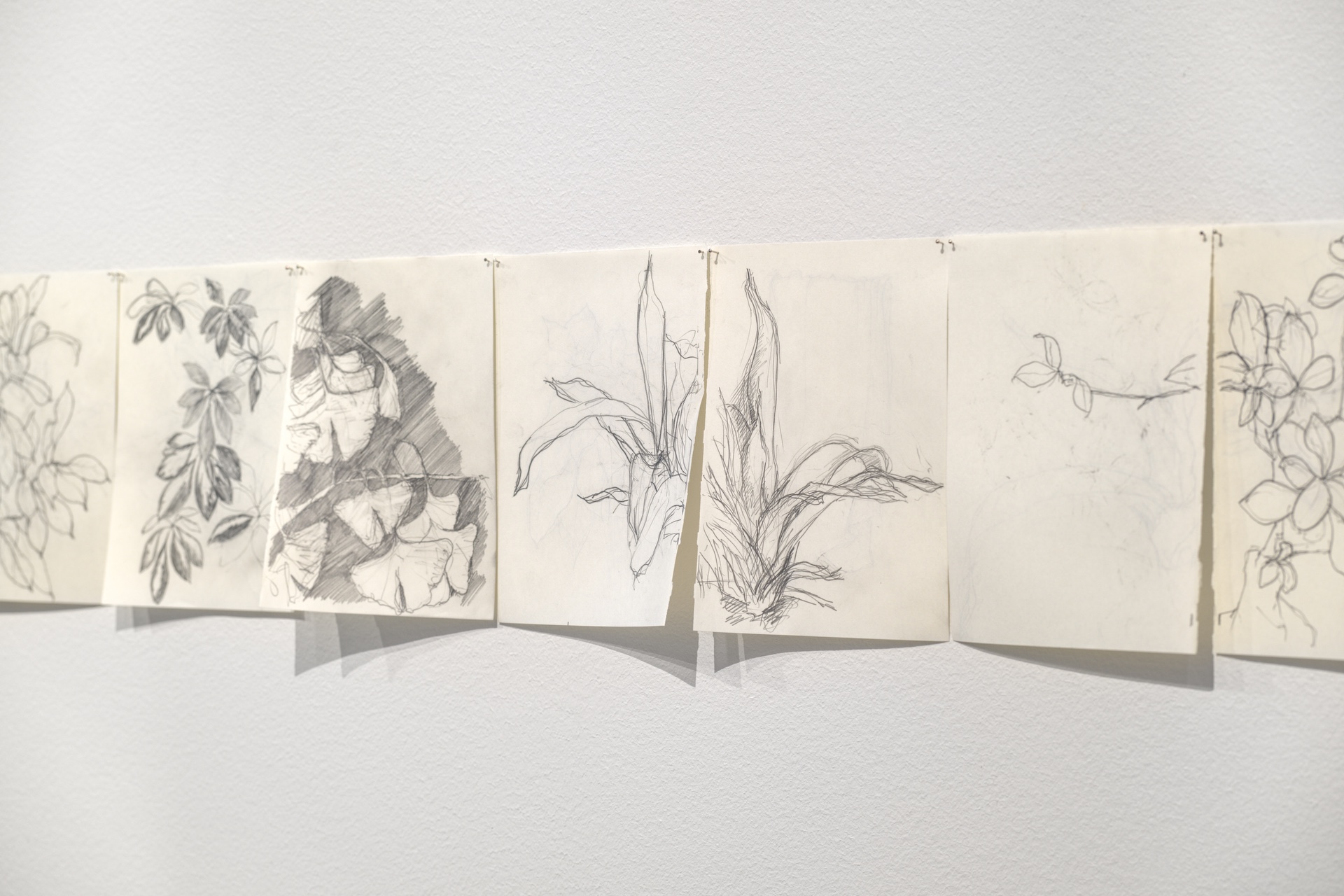
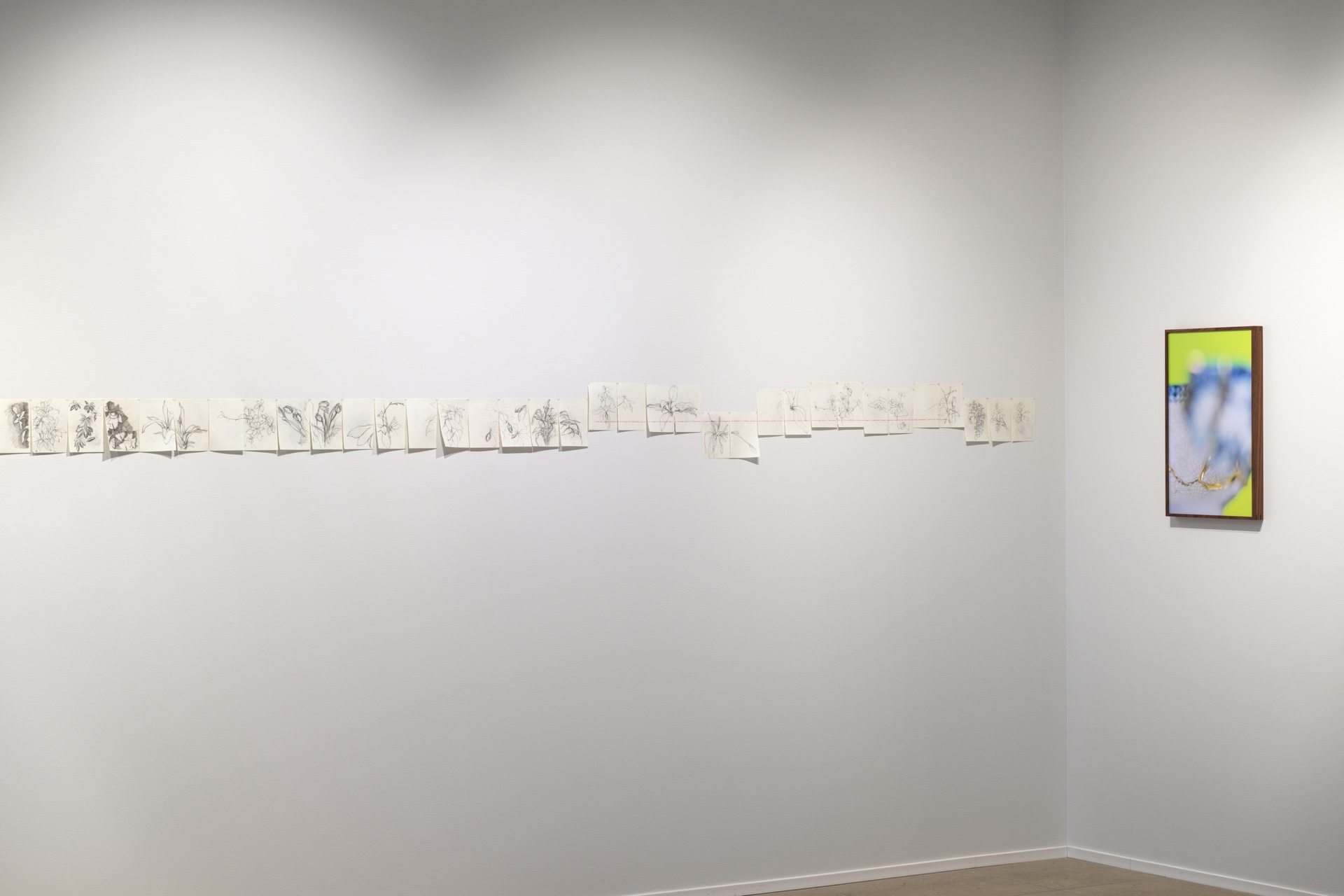
The artist cited as the starting point for the exhibition his futile attempts at keeping a diary, attempts that had disappointed him time and again. He kept starting diaries anew, only ever to abandon them after a couple of entries. Some time ago, as a stand-in for keeping a diary, he began making fragile sketches of his houseplants in small Japanese notebooks. At least at first, these mattered not as drawings in their own right but as a means of creating an everyday ritual space for being alone with himself, a way of striving towards continuity of the psyche. One is reminded of Slavoj Žižek’s well-known remark on boredom as the starting point of every authentic act. One is reminded of Marcel Duchamp in his studio, spinning the wheel of a bicycle mounted upside down on a stool as an idle, meditative pastime, long before he got round to converting it into the conjuring trick that shook the art world. A kind of blank, a kind of caesura.
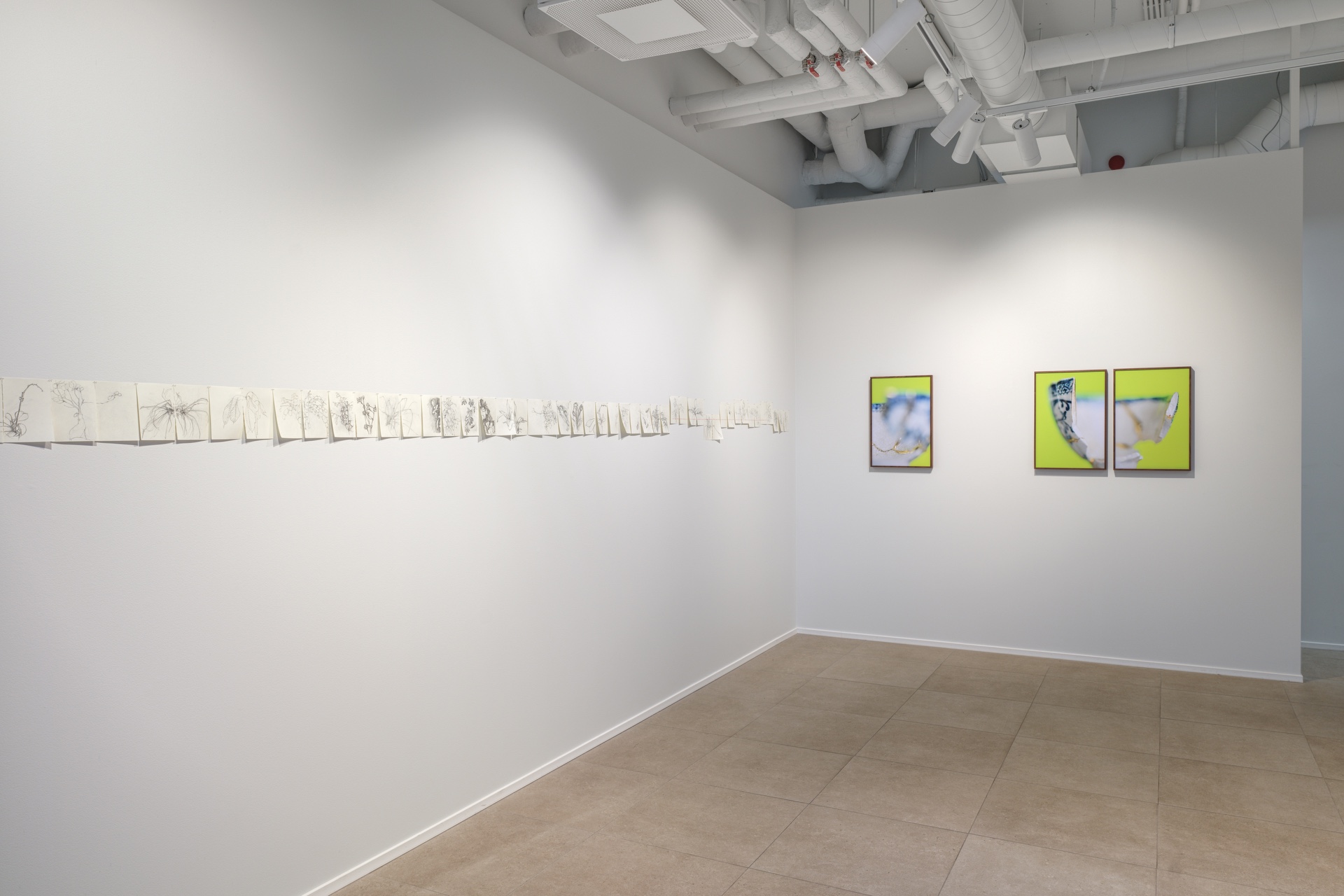
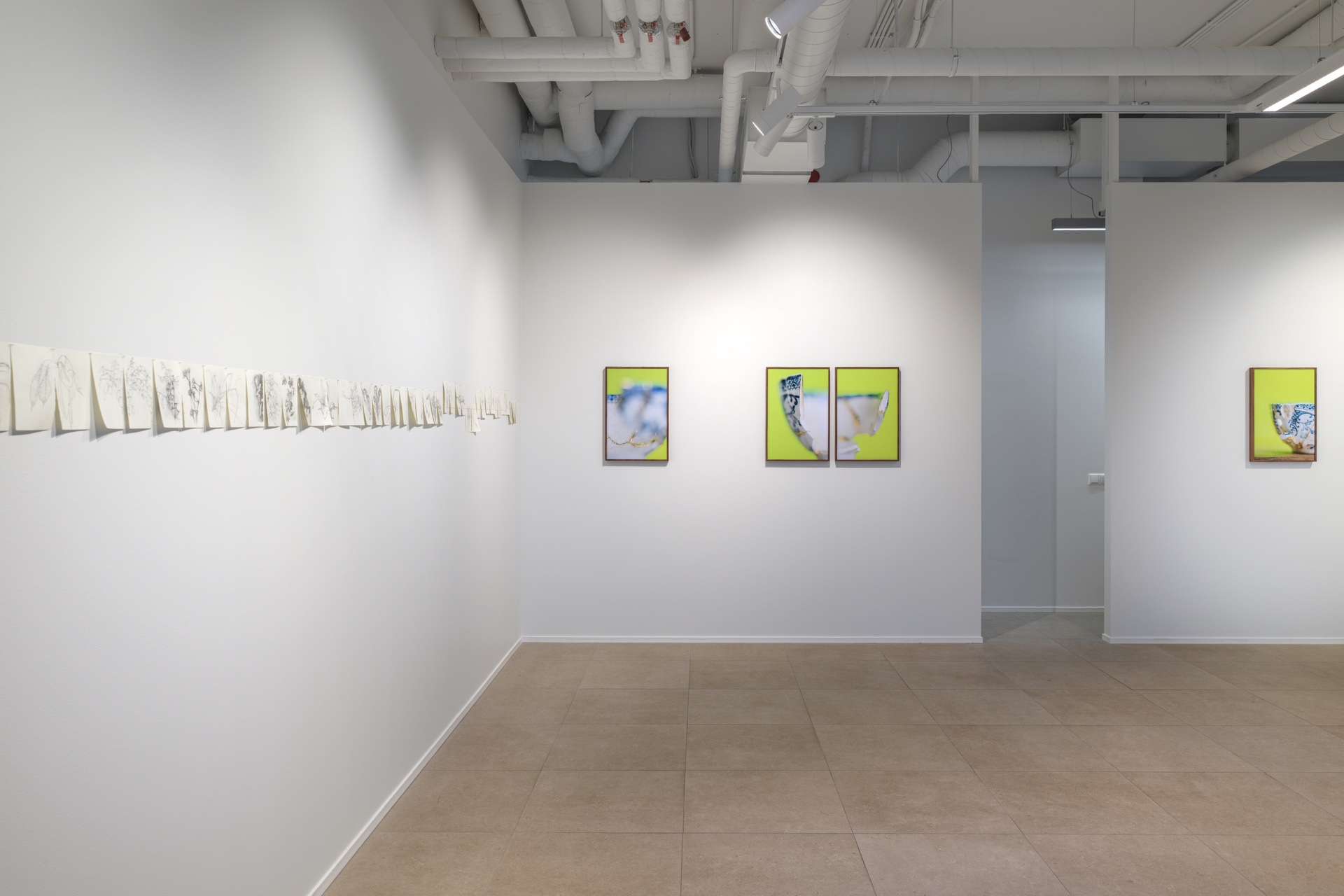
Farkas claims he still remembers exactly when, and with what feeling, he set about one sketch or another at the time. This, too, matters here: the drawings work as a reservoir of living memory, or as a fishhook for it. Torn from the notebook and stripped of their original order, the houseplant sketches, or at least some of them, are threaded through in the installation space, like a red thread, by a stray diary excerpt: a typewritten statement of sorts, with a Beckettian undertone, on the wellsprings of creative impulses.
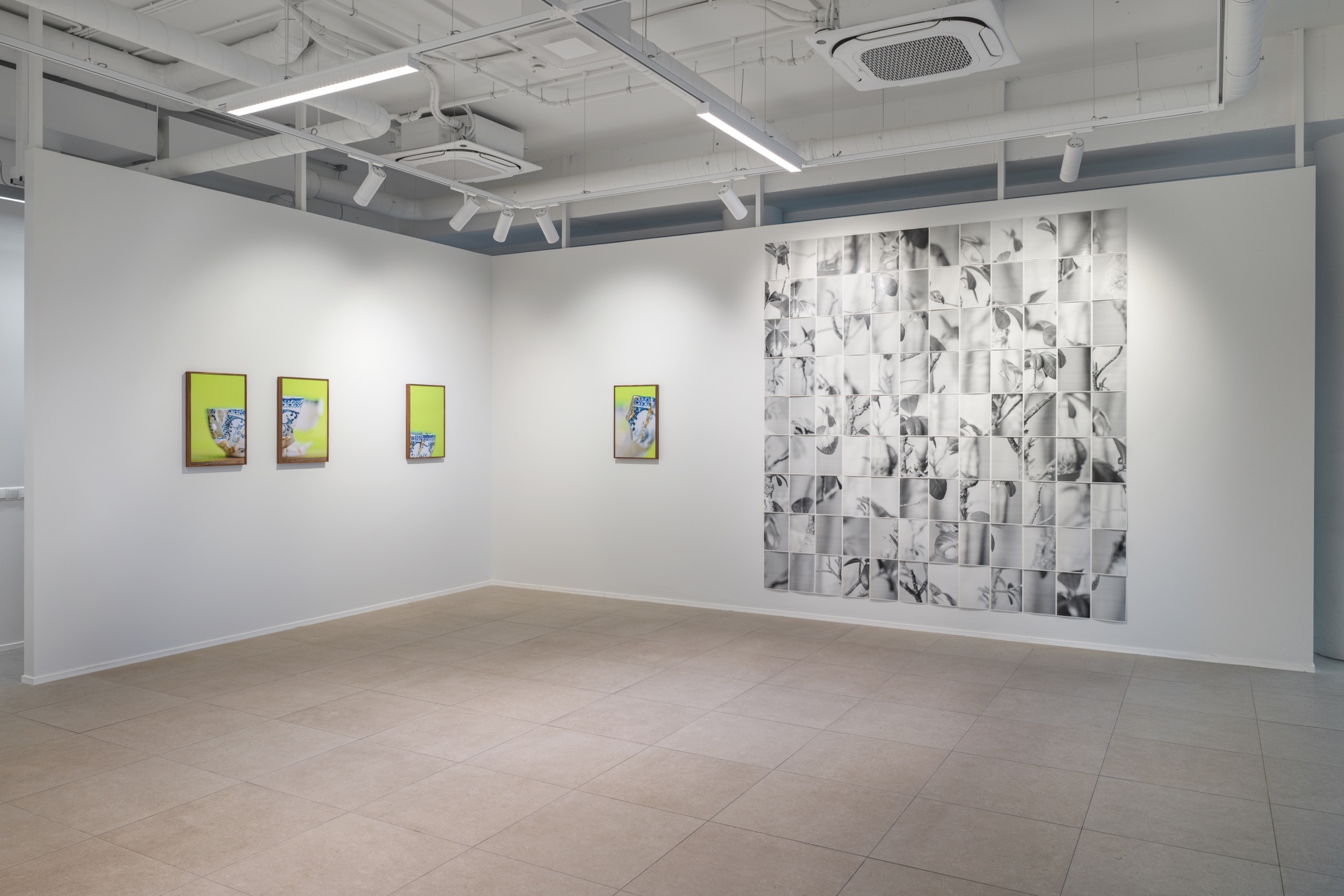
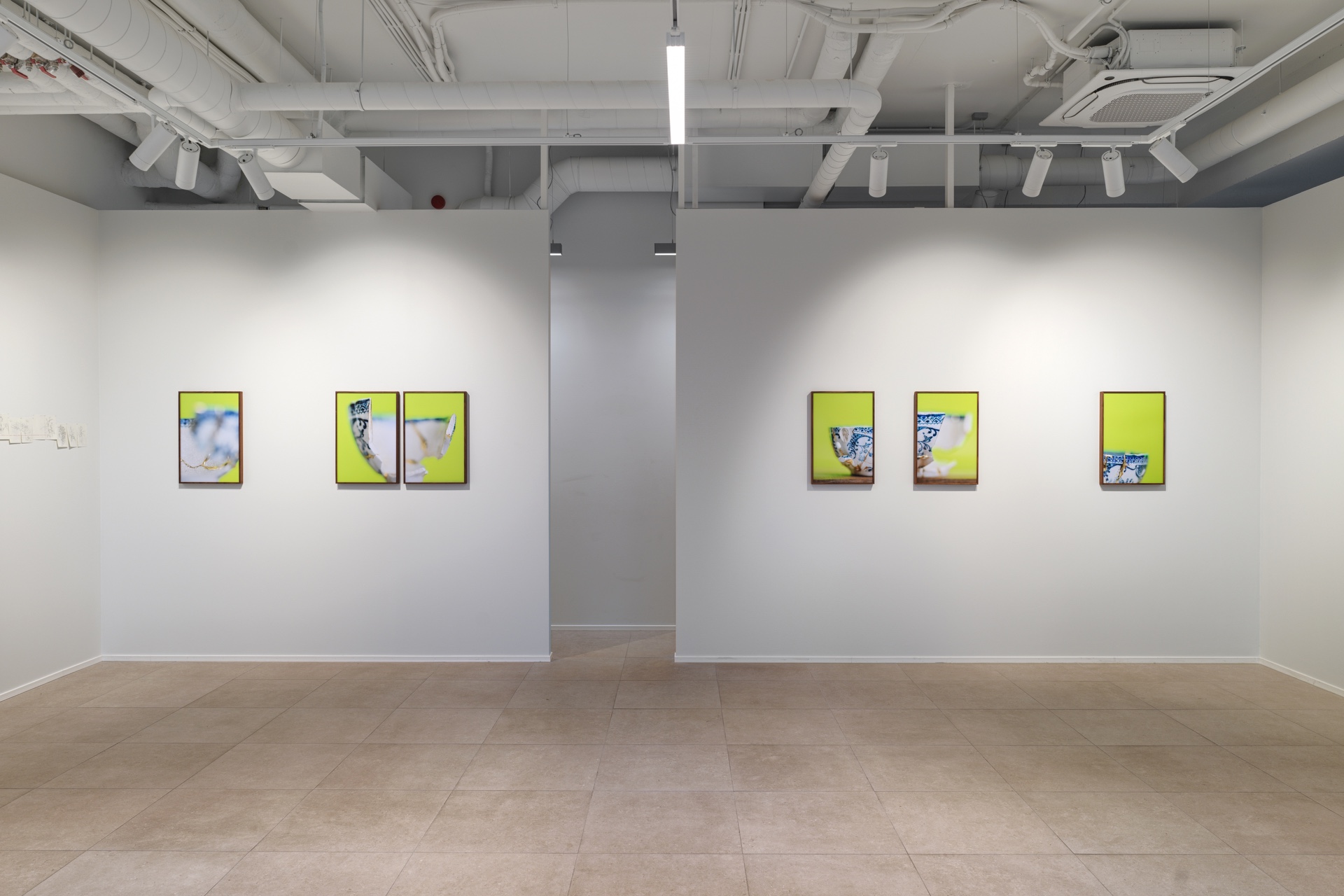
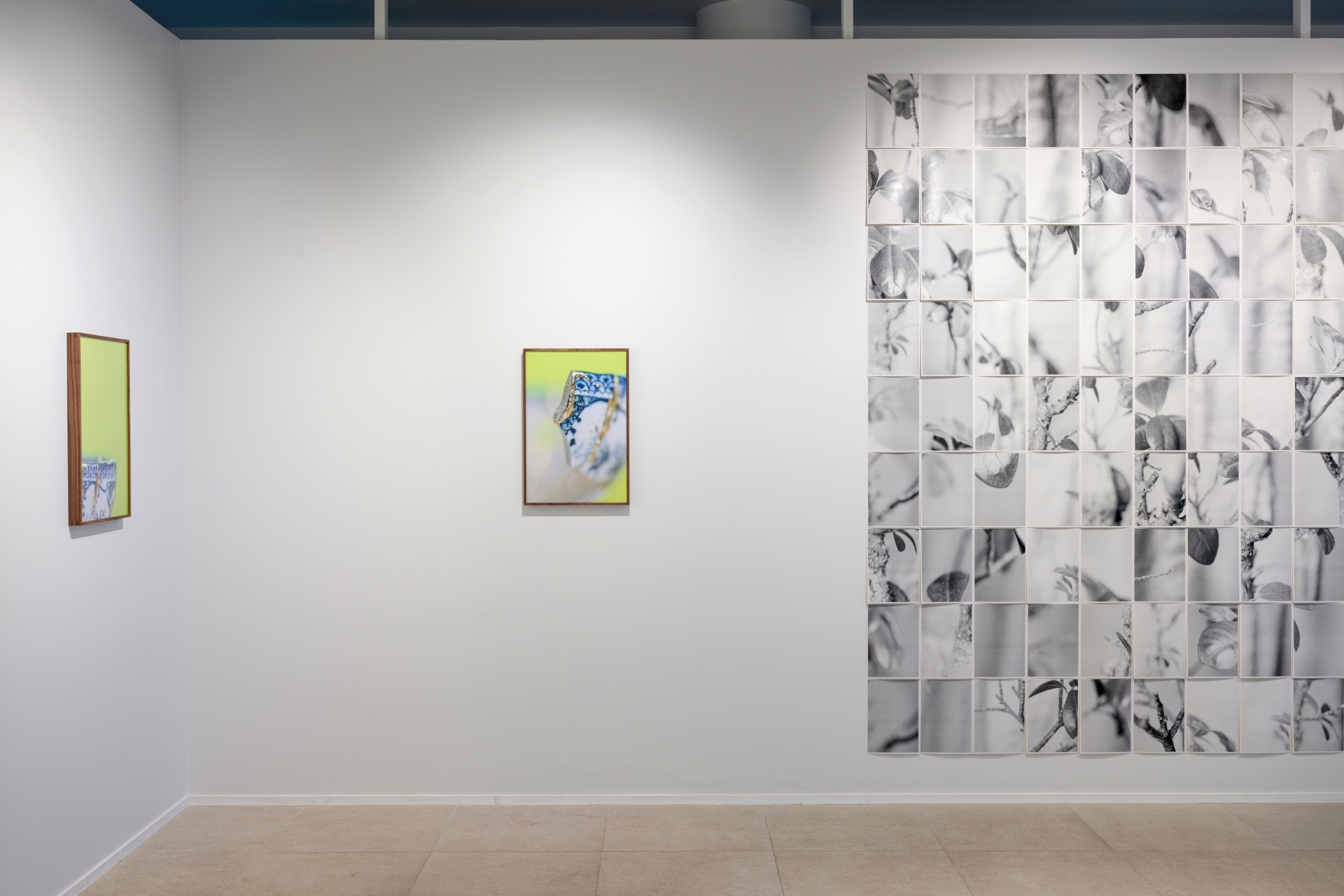
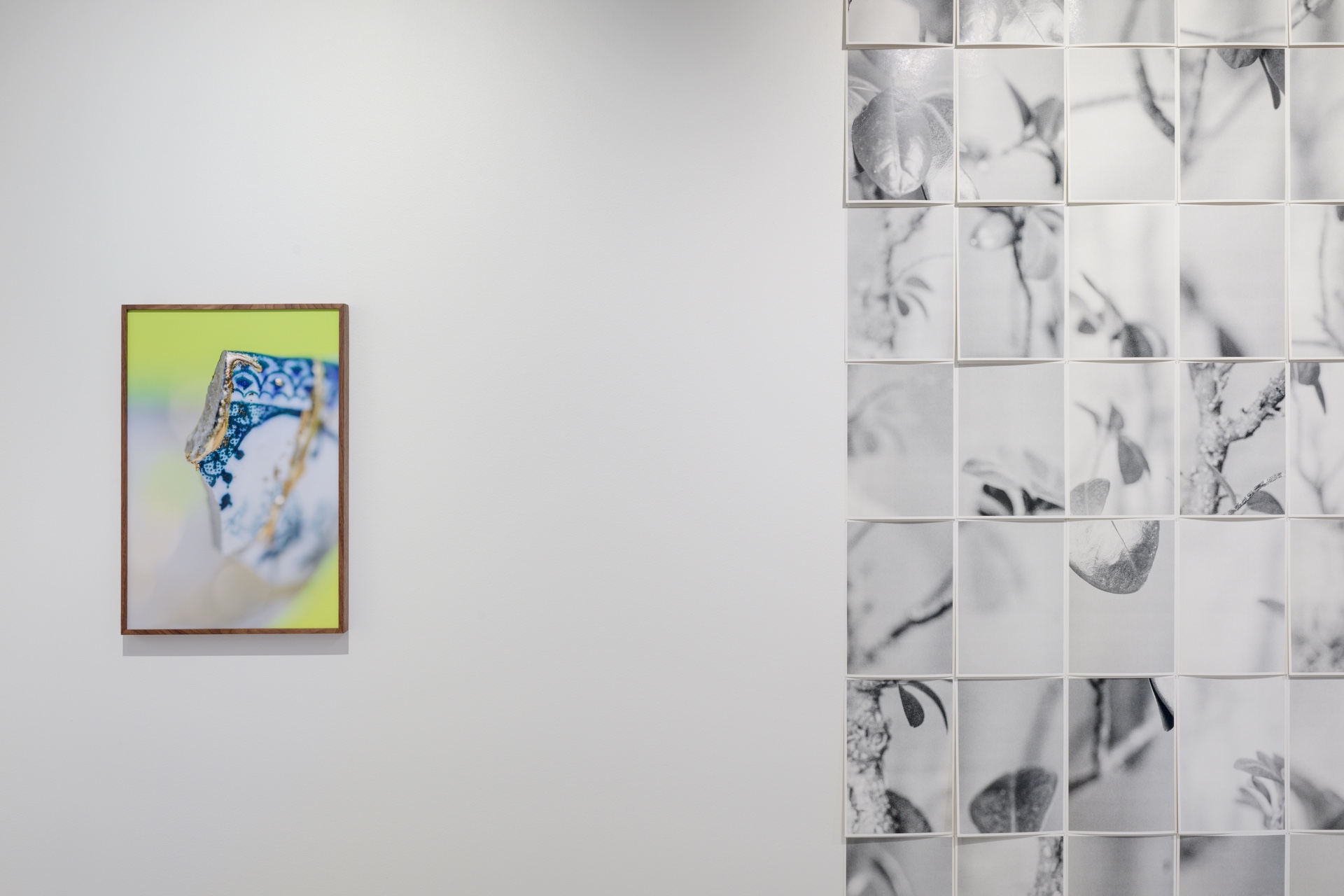
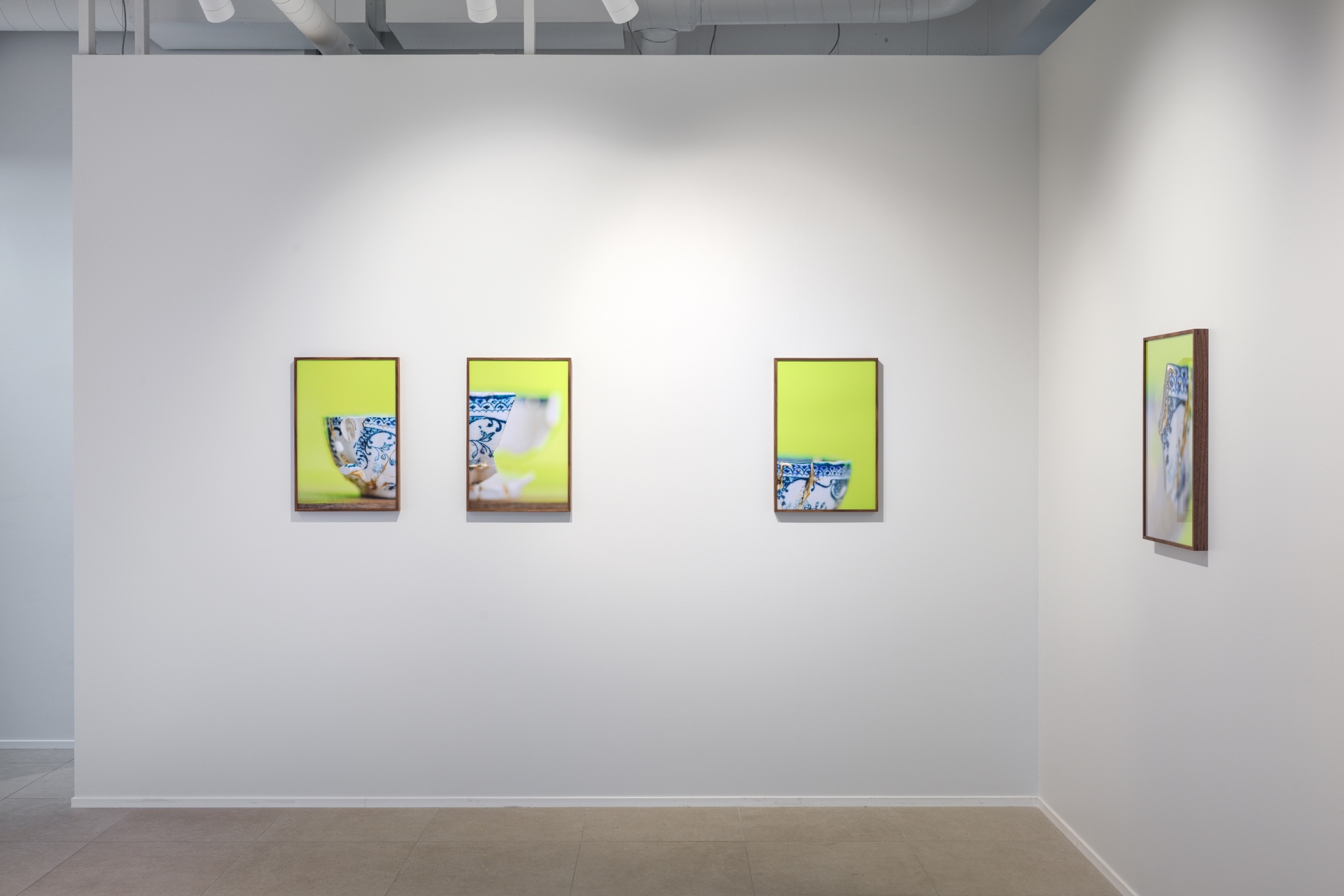
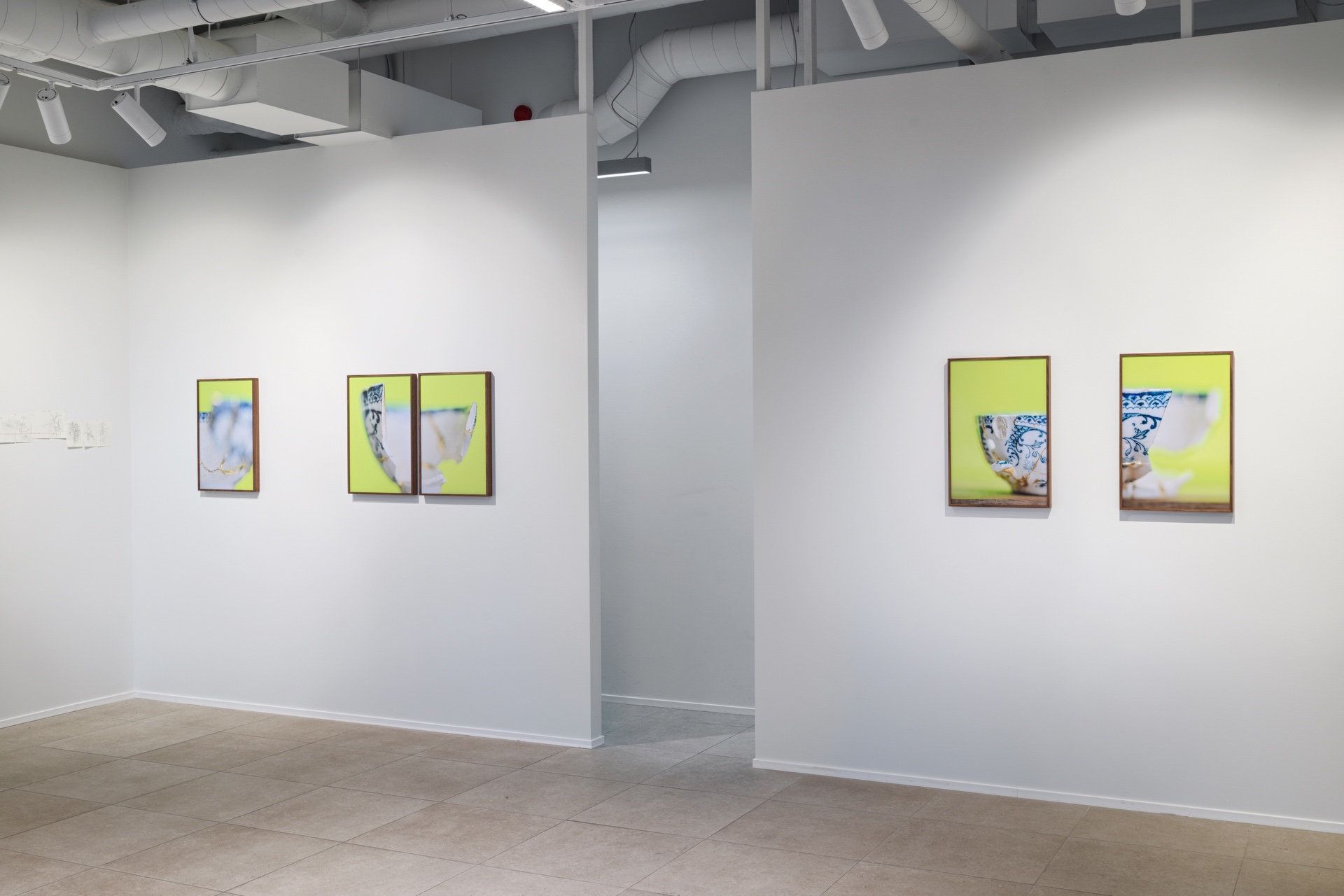
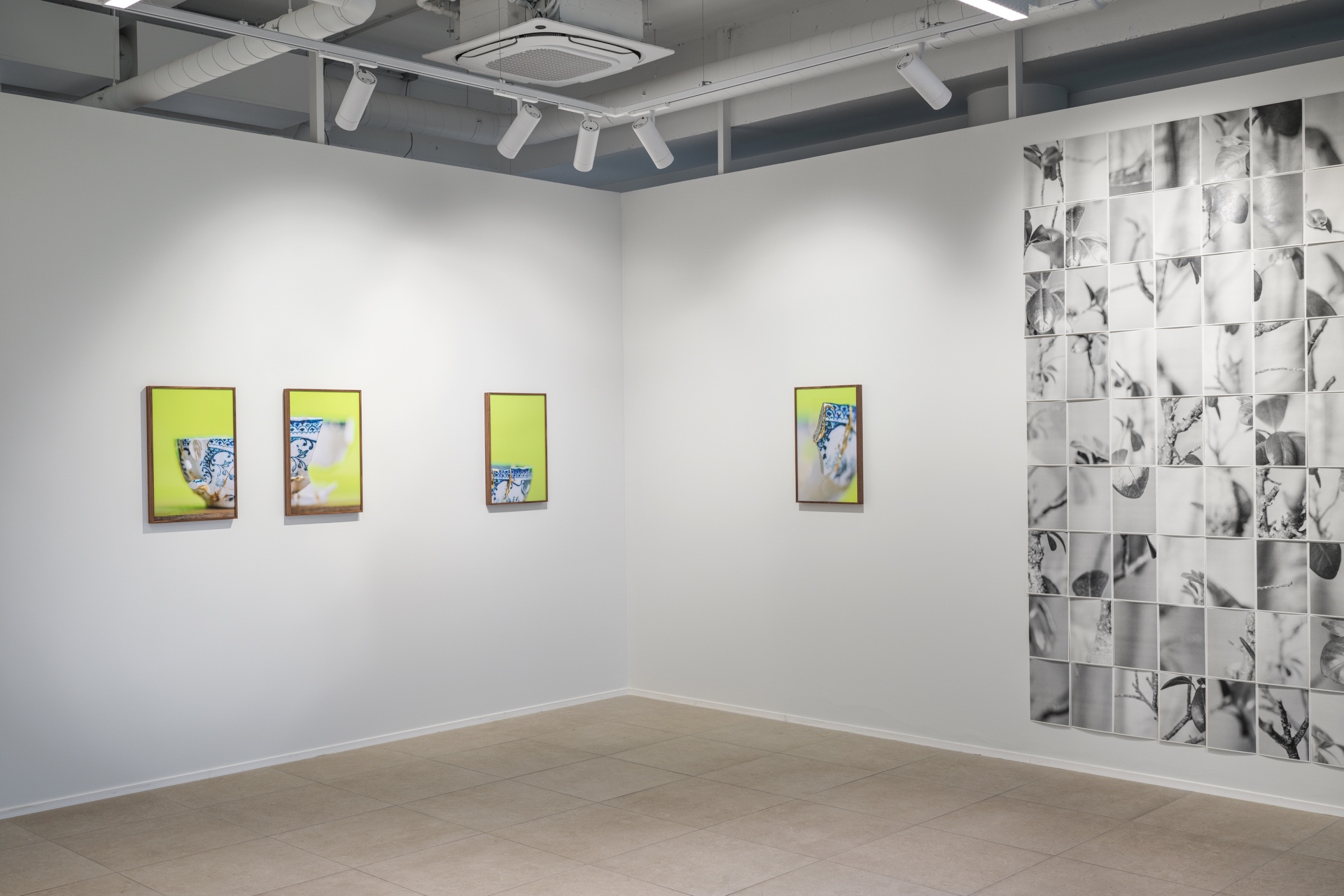
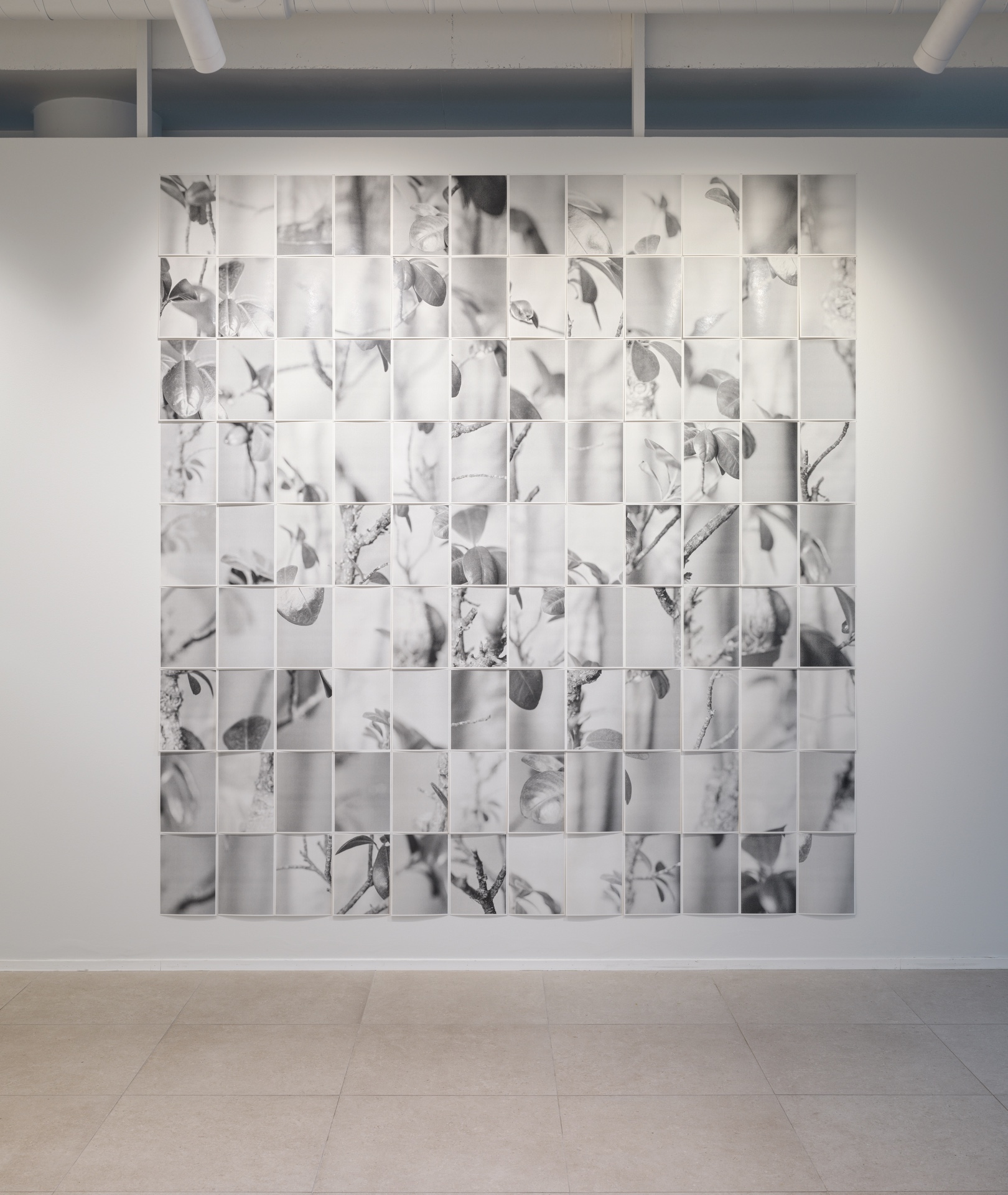
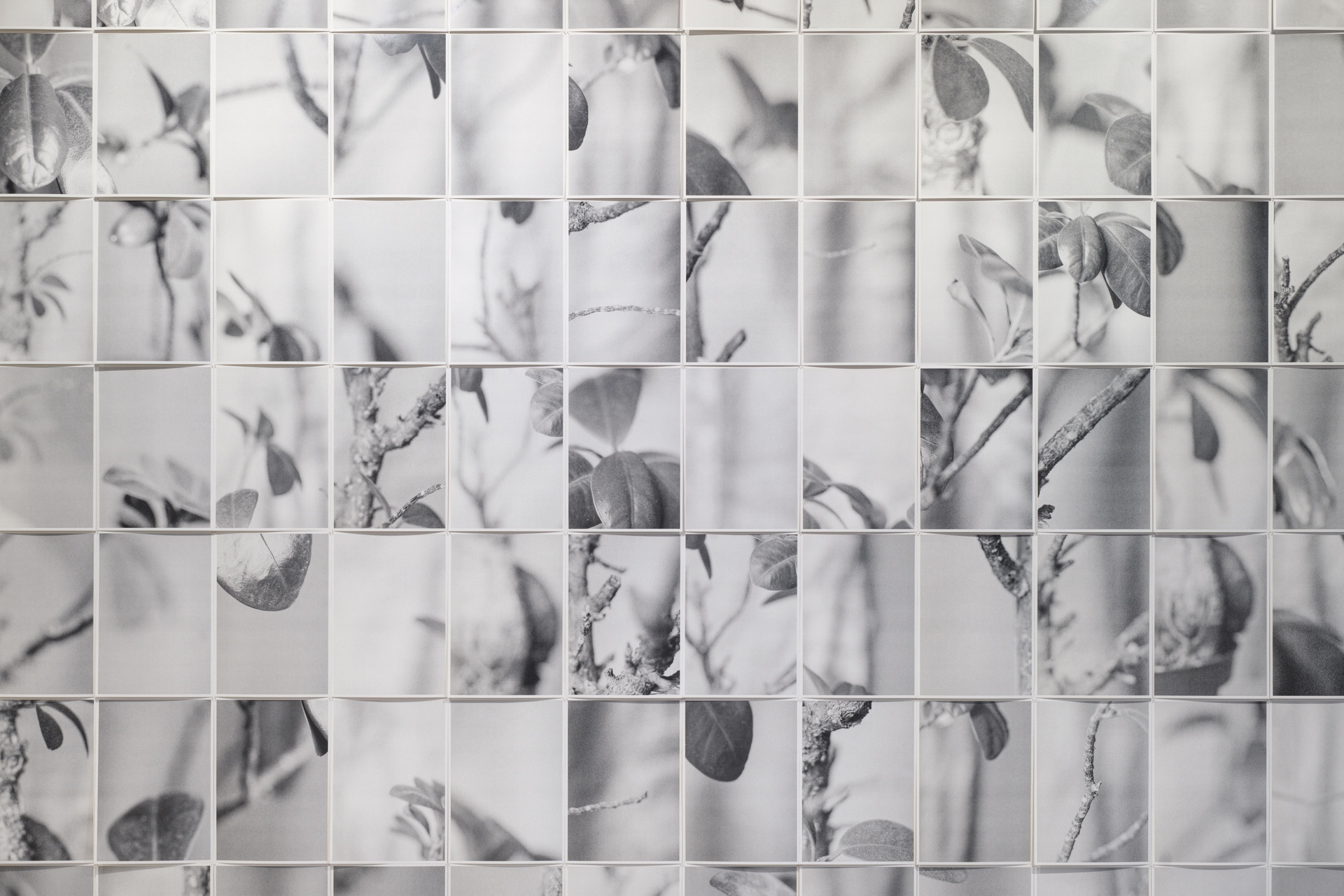
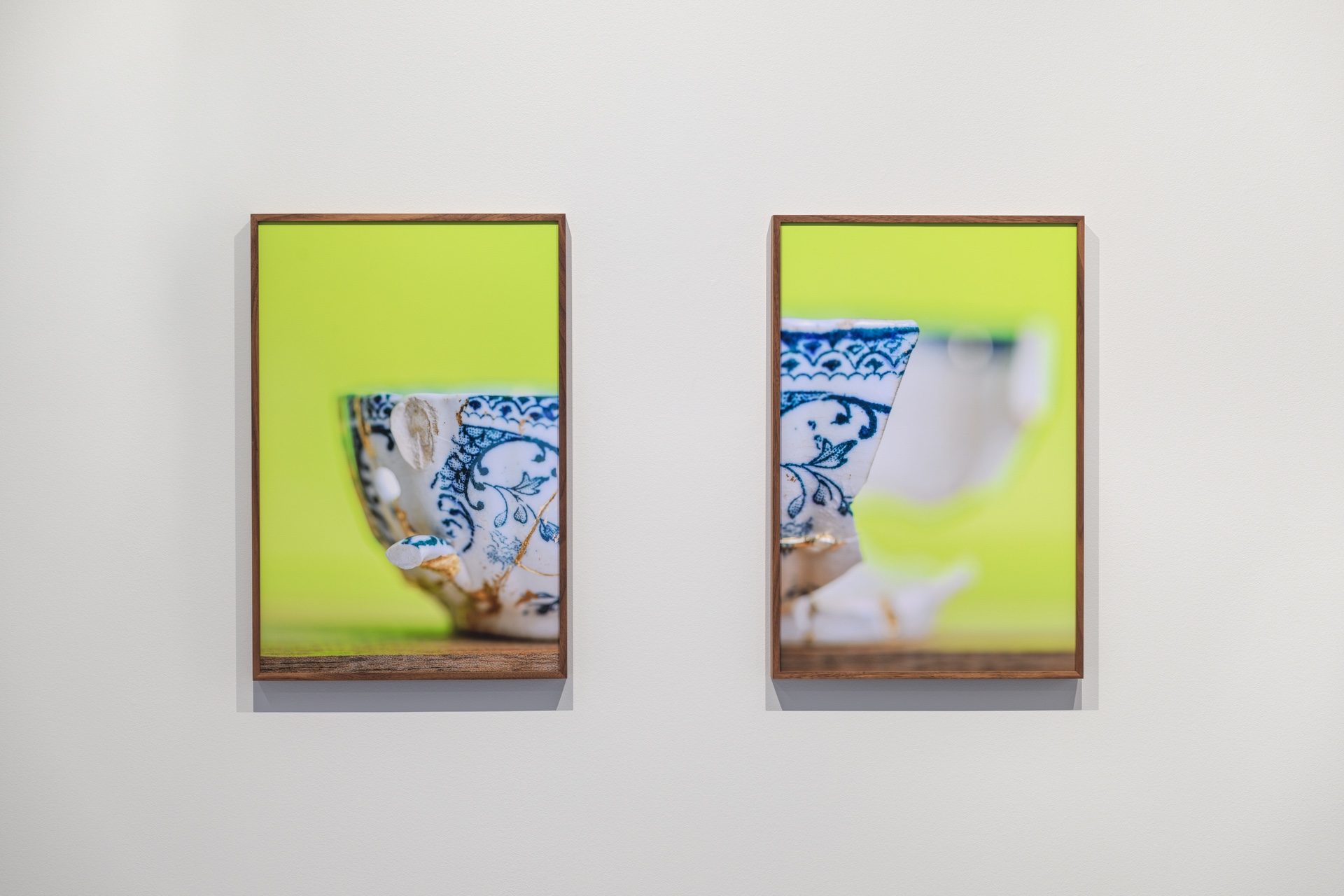
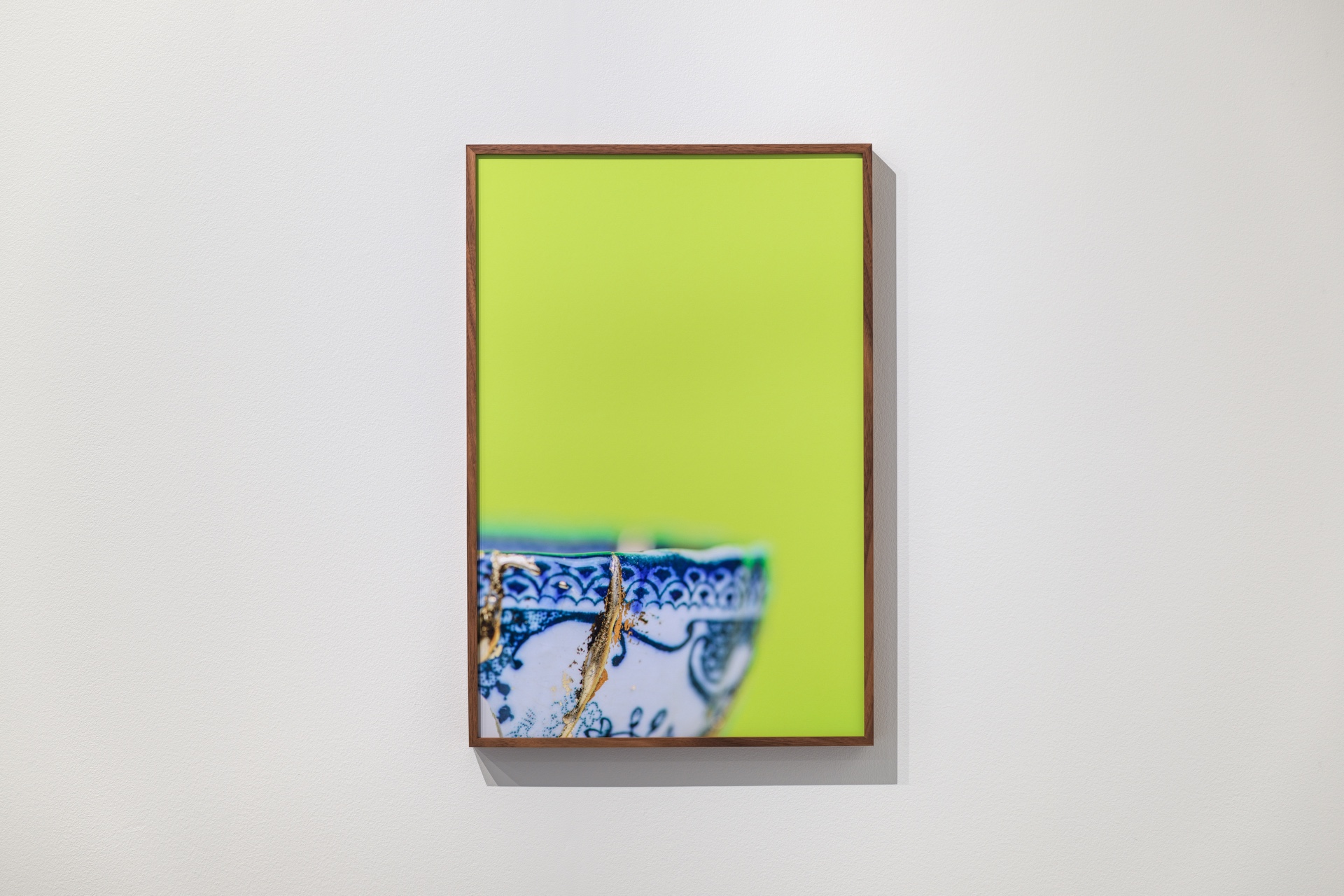
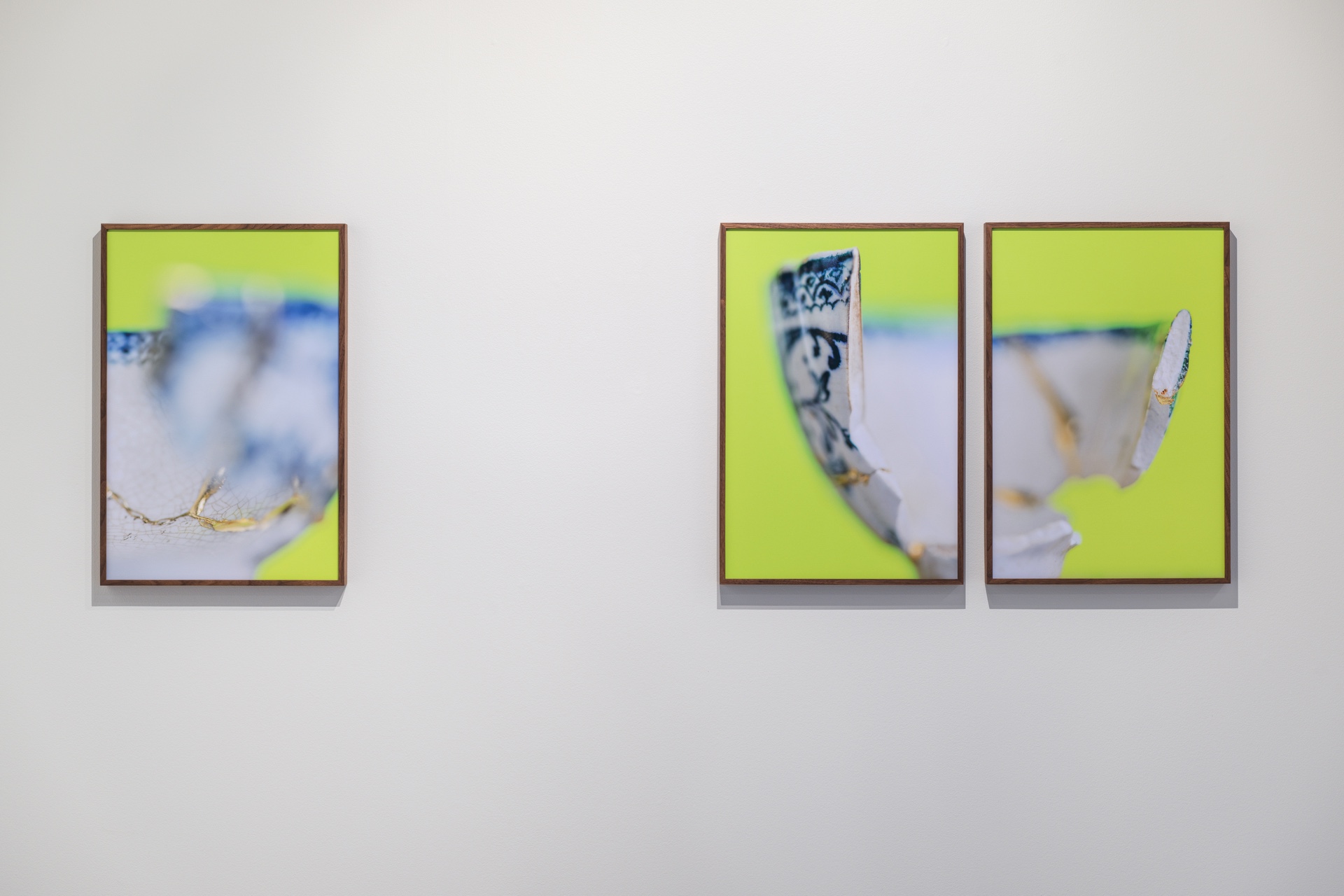
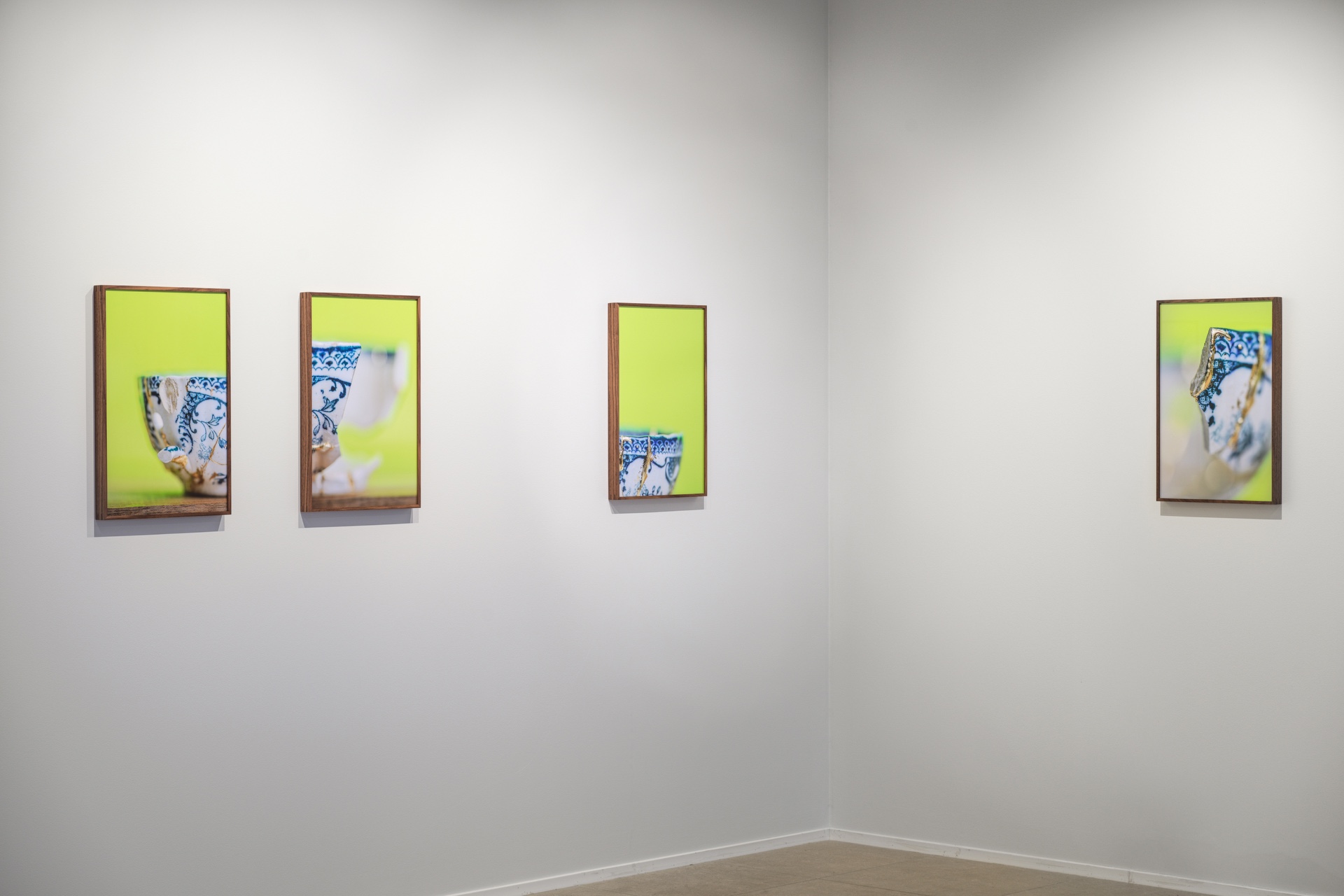
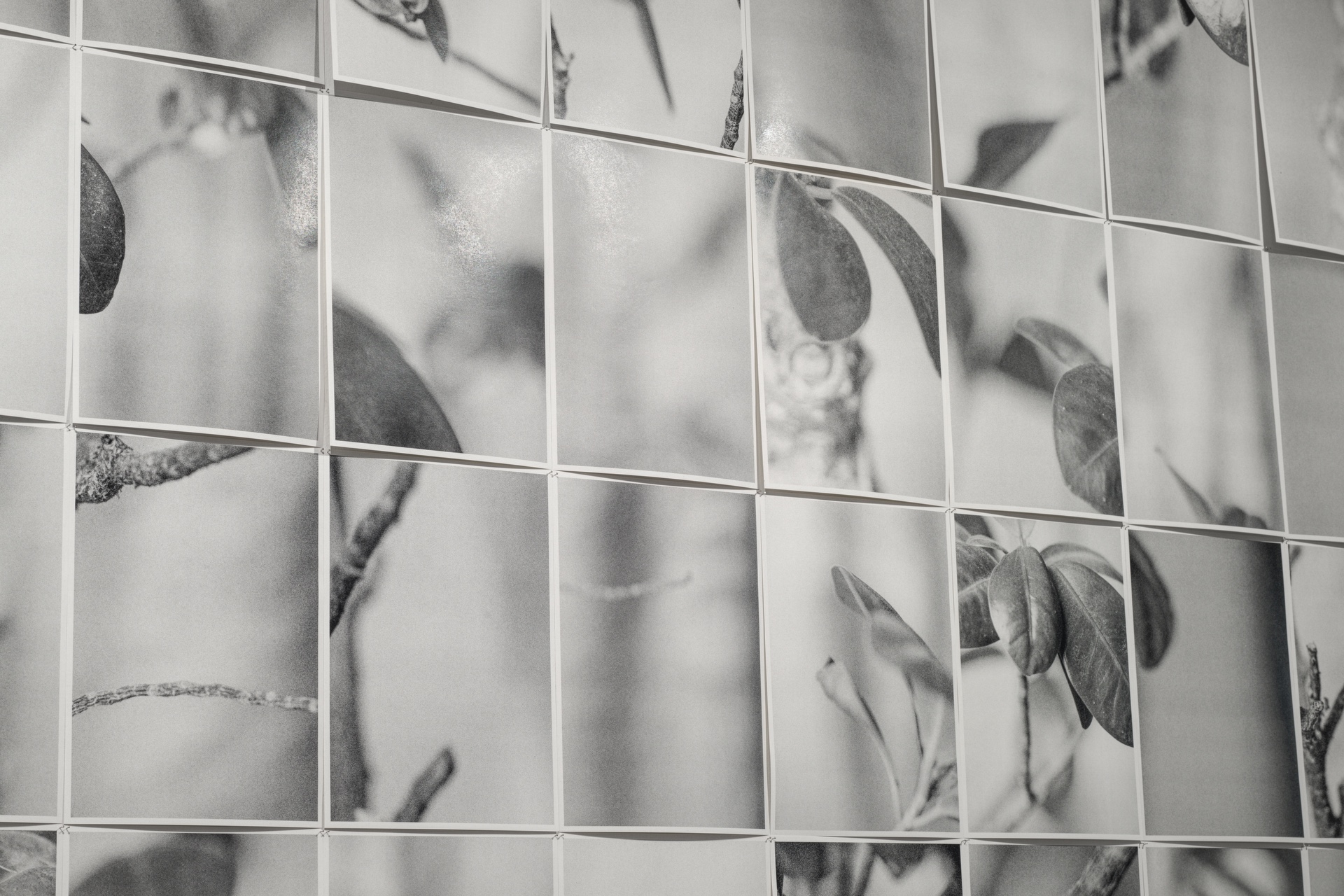
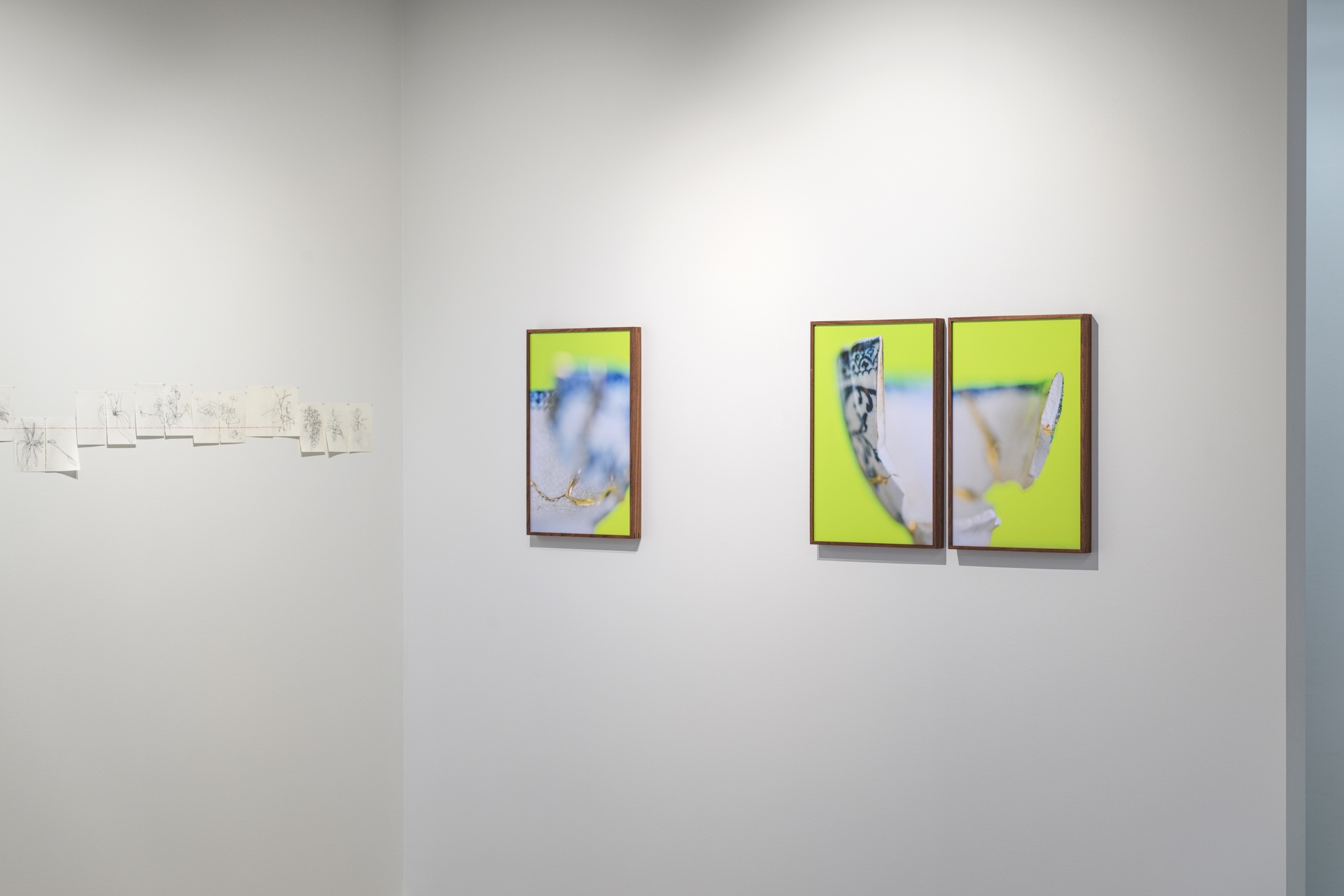
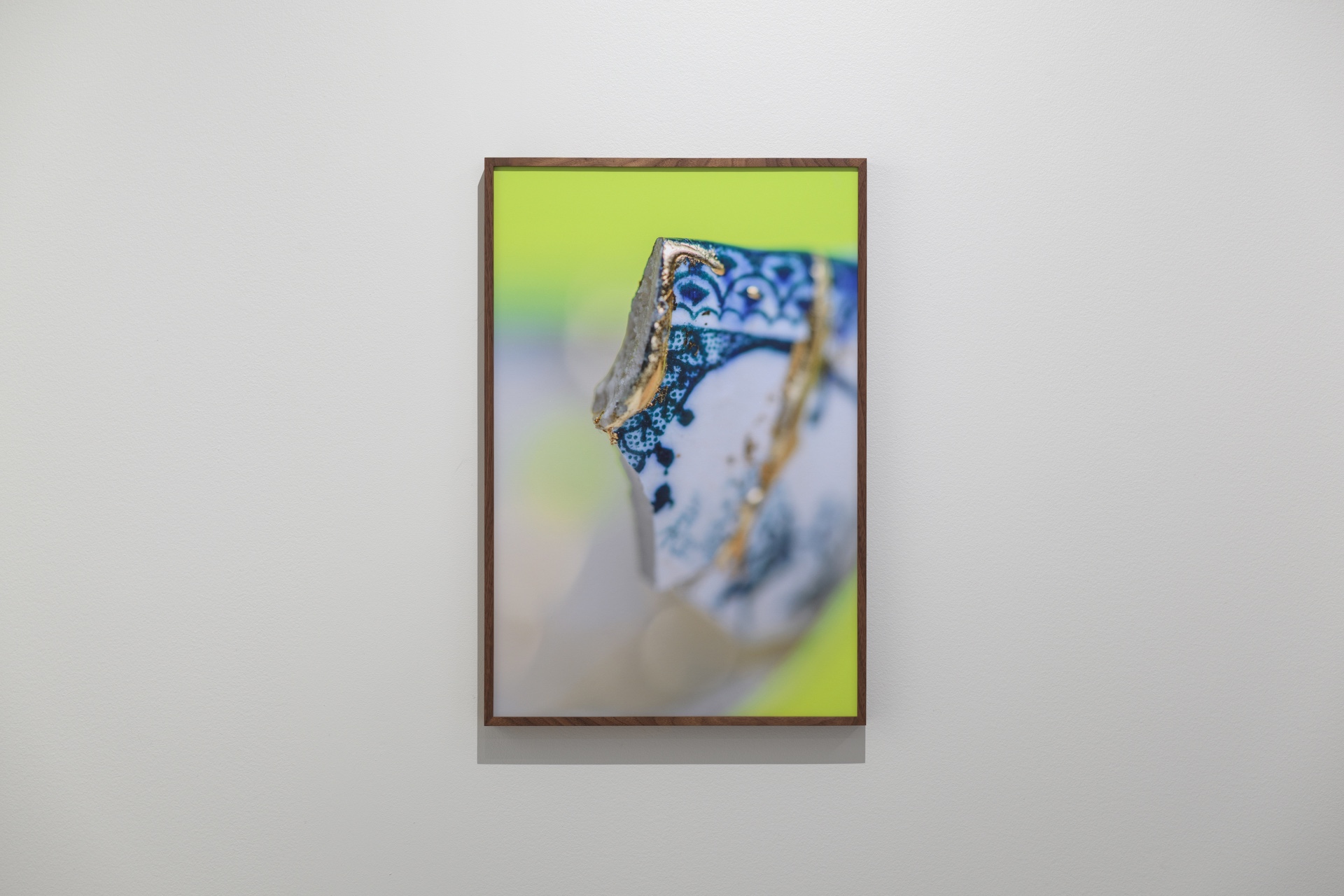
The second part of the installation consists of seven photographs of a broken porcelain cup, helplessly patched up using the kintsugi technique. Shot against an un-Farkas-like bright background, in the hyper-detail of a macro lens, they speak of an interruption in an established everyday ritual. The third block is made up of 116 grainy black-and-white A4 photo prints. Fragment by fragment, view by view, they show the same houseplants already familiar to us in another medium, in their paradoxically simultaneous presence and absence. And in the installation space, where the gaze in search of interpretations may wander freely in any direction or come back to meet itself from the other side, these blocks work not in sequence but alternately, merging into one another and upstaging each other in turn.
Are we at the departure station or the terminus of the artistic impulse here? Or both at once? Rather, at precisely the point where beginning and end, emptiness and meaning, briefly touch, forming a constellation that is complete only for a moment…
Dénes Farkas (1974) is an Estonian photographic and installation artist whose practice focuses on the critique of visual modes of representation, the relationship between image and text, and the ways in which individual experience is shaped by social structures. Farkas studied printmaking (BA, 2001) and photography (MA, 2003) at the Estonian Academy of Arts. He represented Estonia at the 55th Venice Biennale with his exhibition Evident in Advance. In 2018, he participated in the URRA artist residency in Buenos Aires. He received the Annual Award of the Cultural Endowment of Estonia in 2010, 2014 and 2018, and was a recipient of the Estonian Artist Laureate Salary from 2016 to 2018. His works are held in the collections of the Art Museum of Estonia, Pérez Art Museum Miami, Hungarian National Gallery and the Leal Rios Foundation in Lisbon, as well as in private collections across Europe, Asia, the United States and South America.