- Pure Strata
- 20 Nov ― 29 Nov 2026
Pure Strata
"It's a very very close and difficult thing to know why some paint comes across directly onto the nervous system and other paint tells you a story in a long diatribe through the brain….” (Francis Bacon in an interview with David Sylvester)[1]
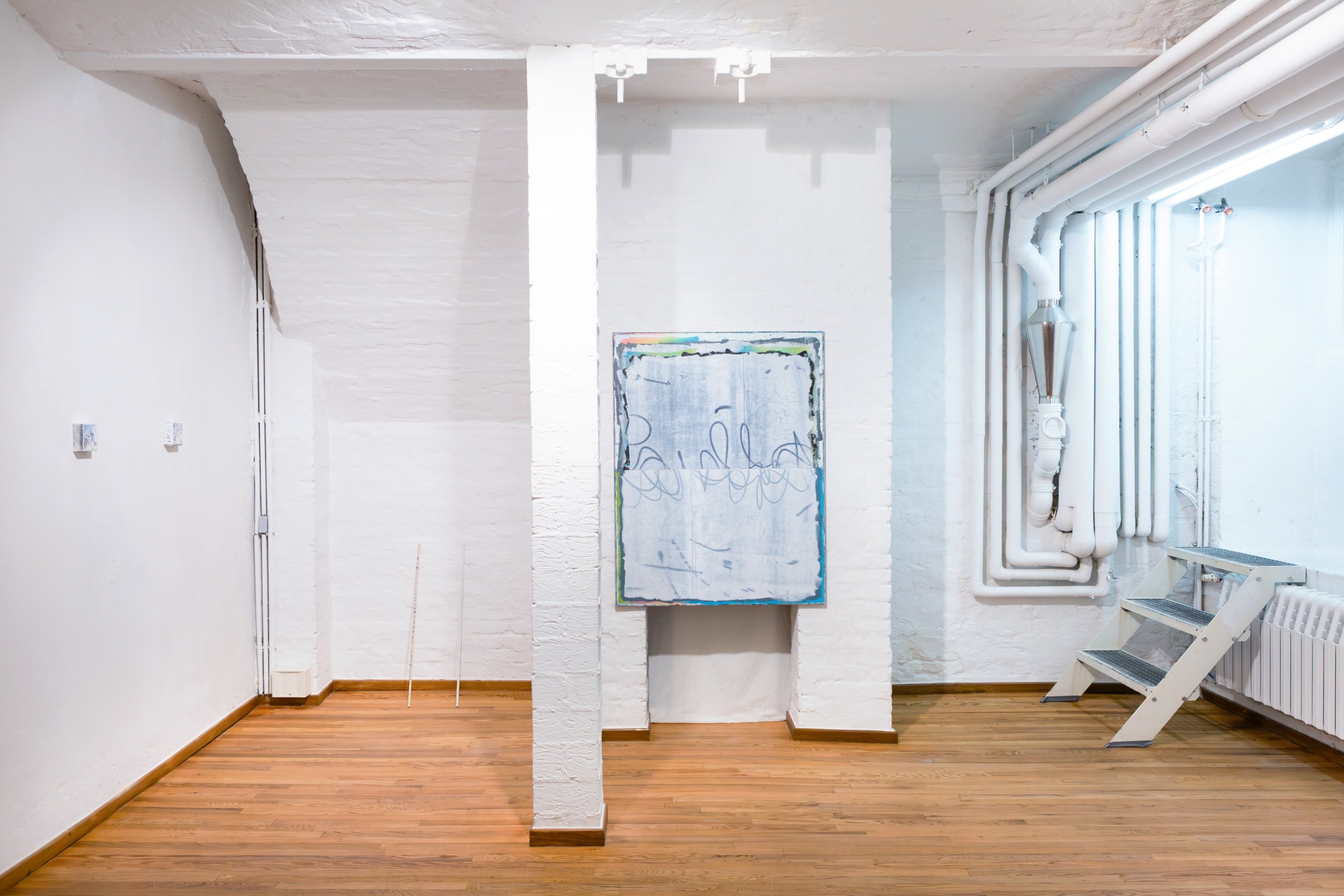
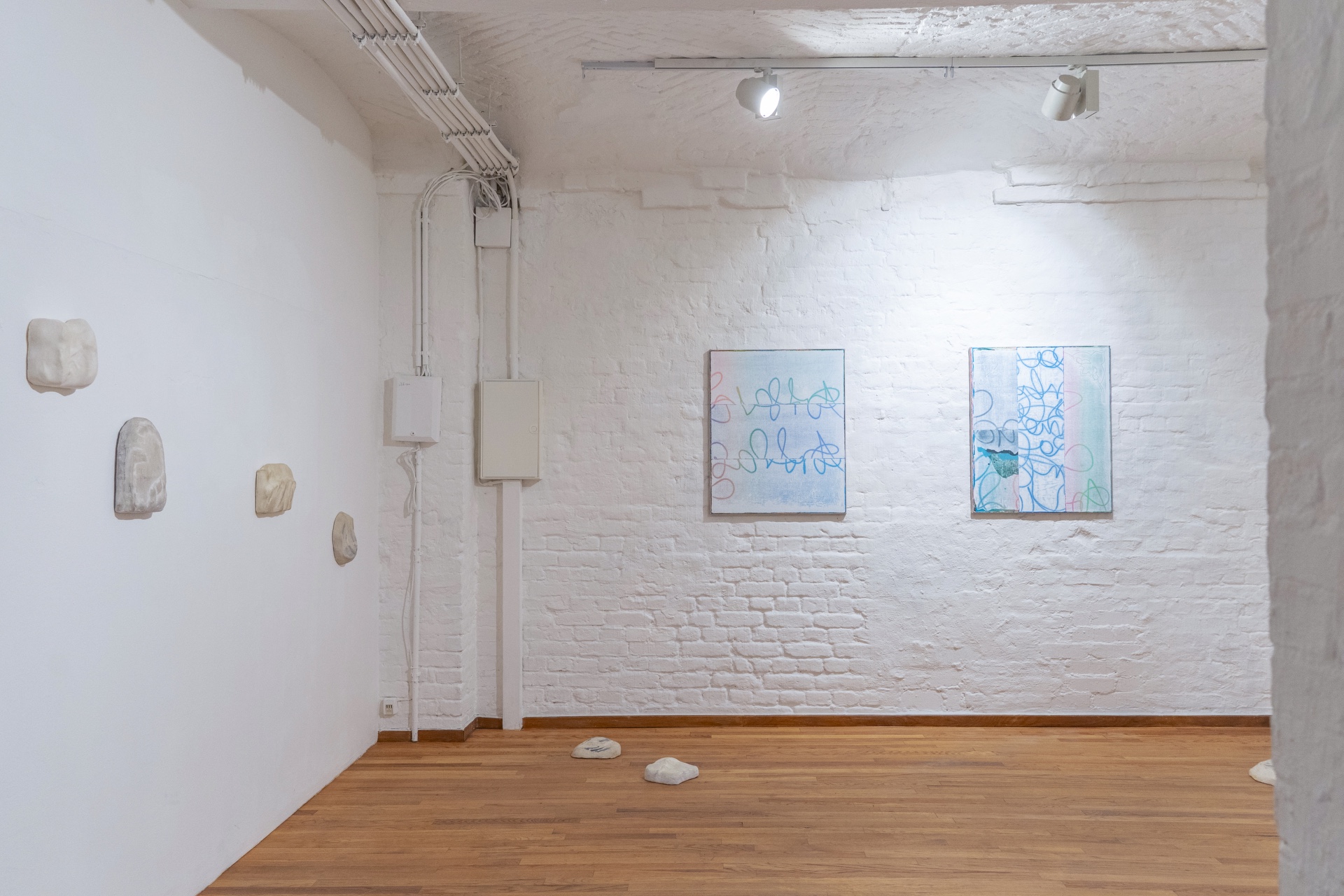
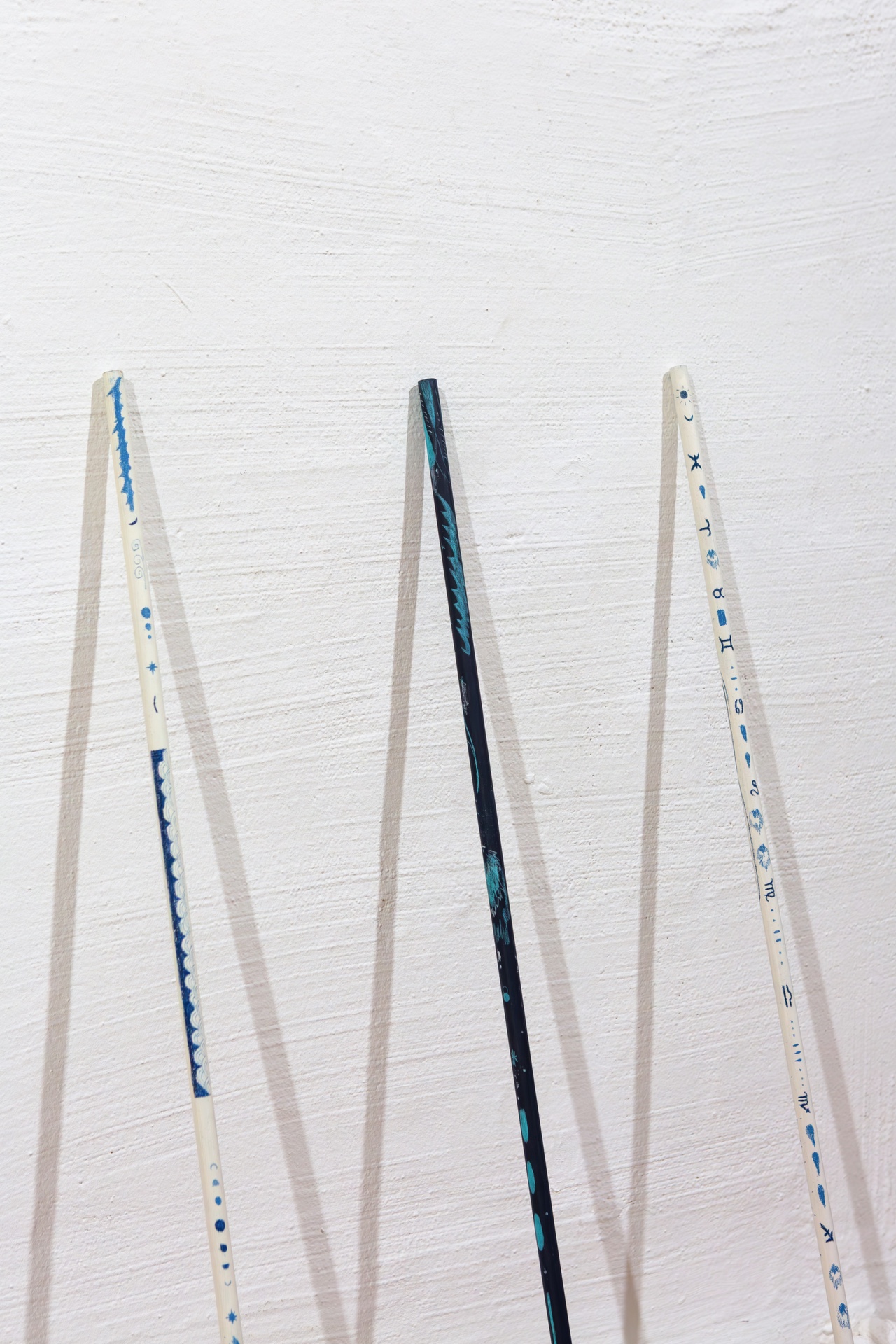
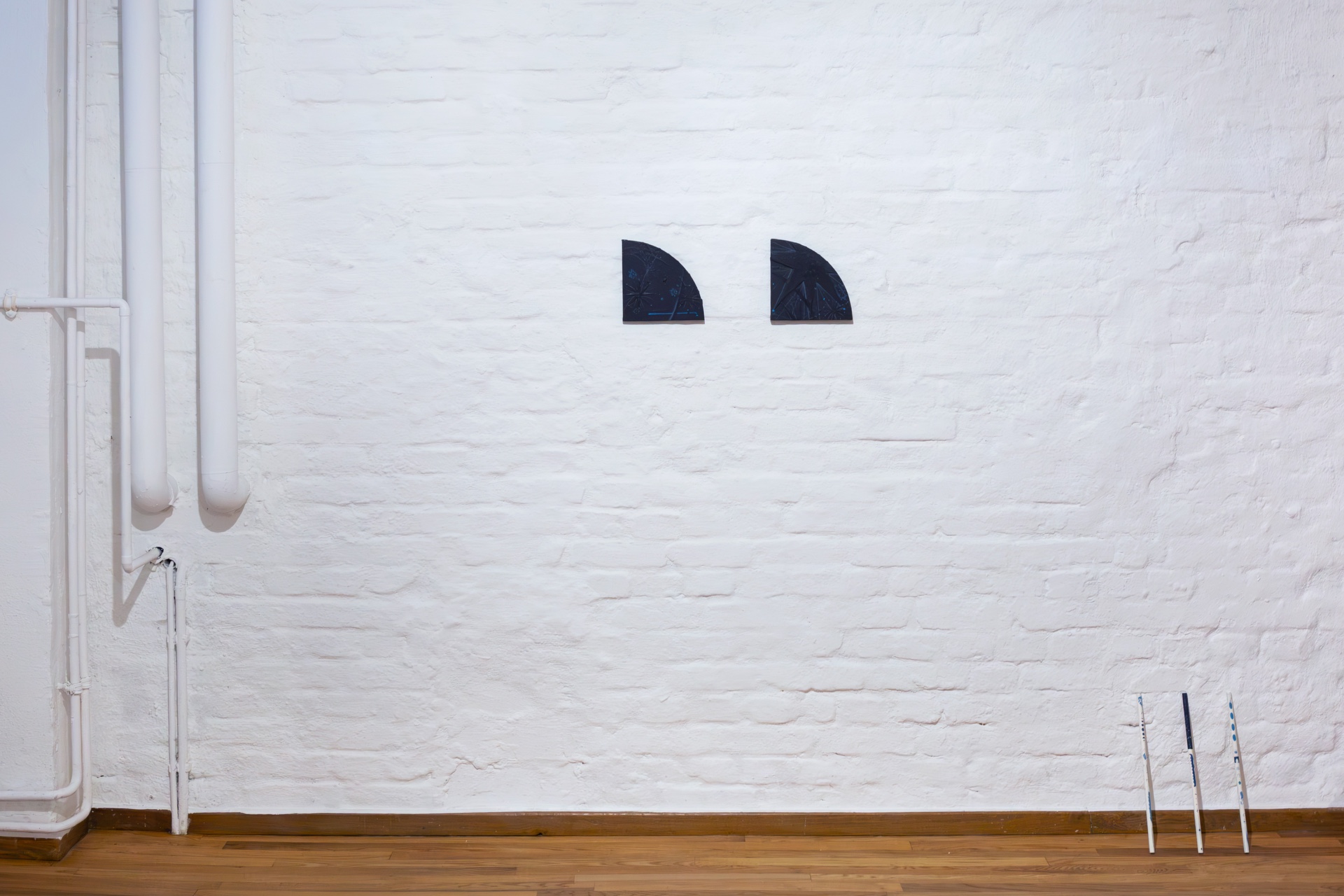
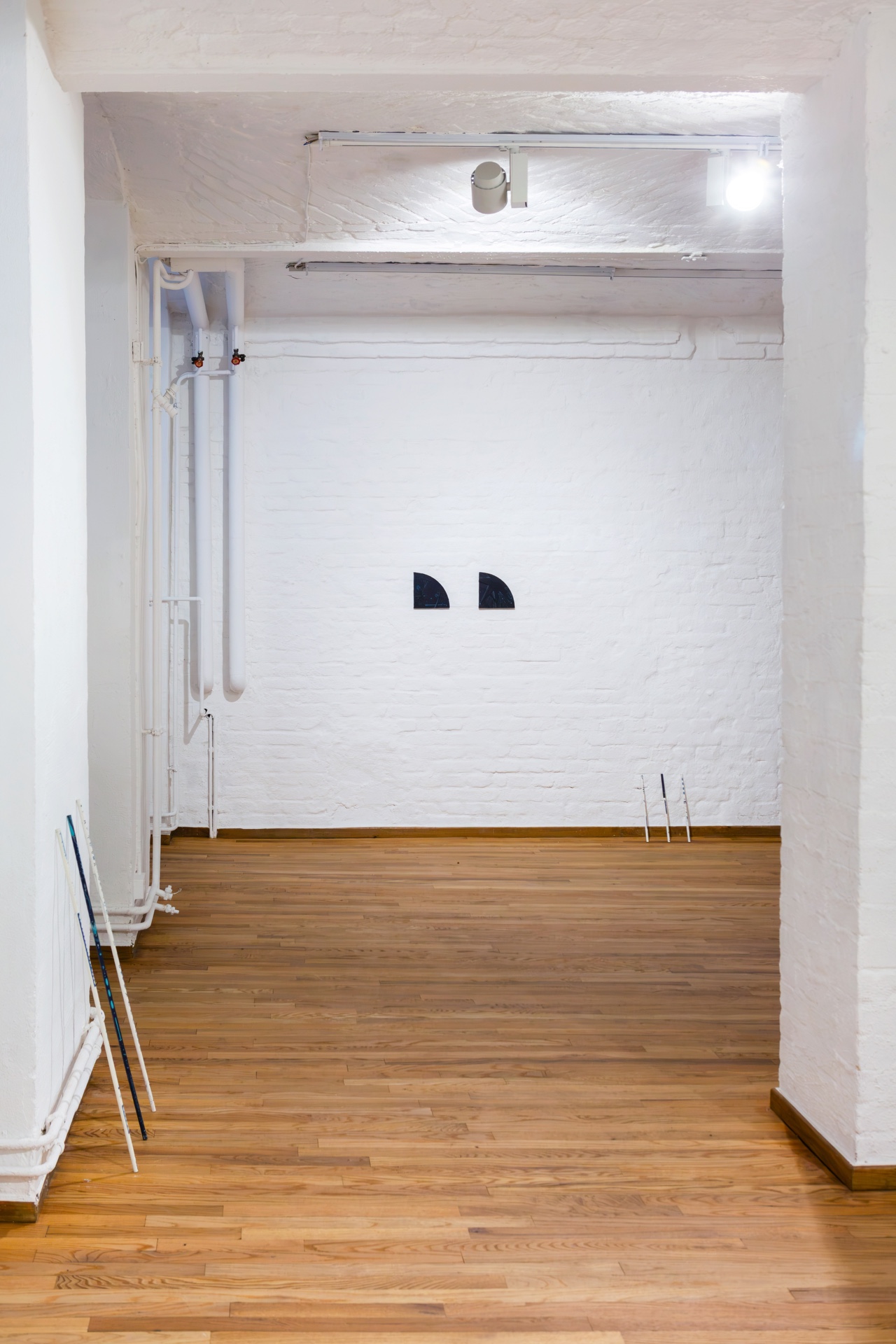
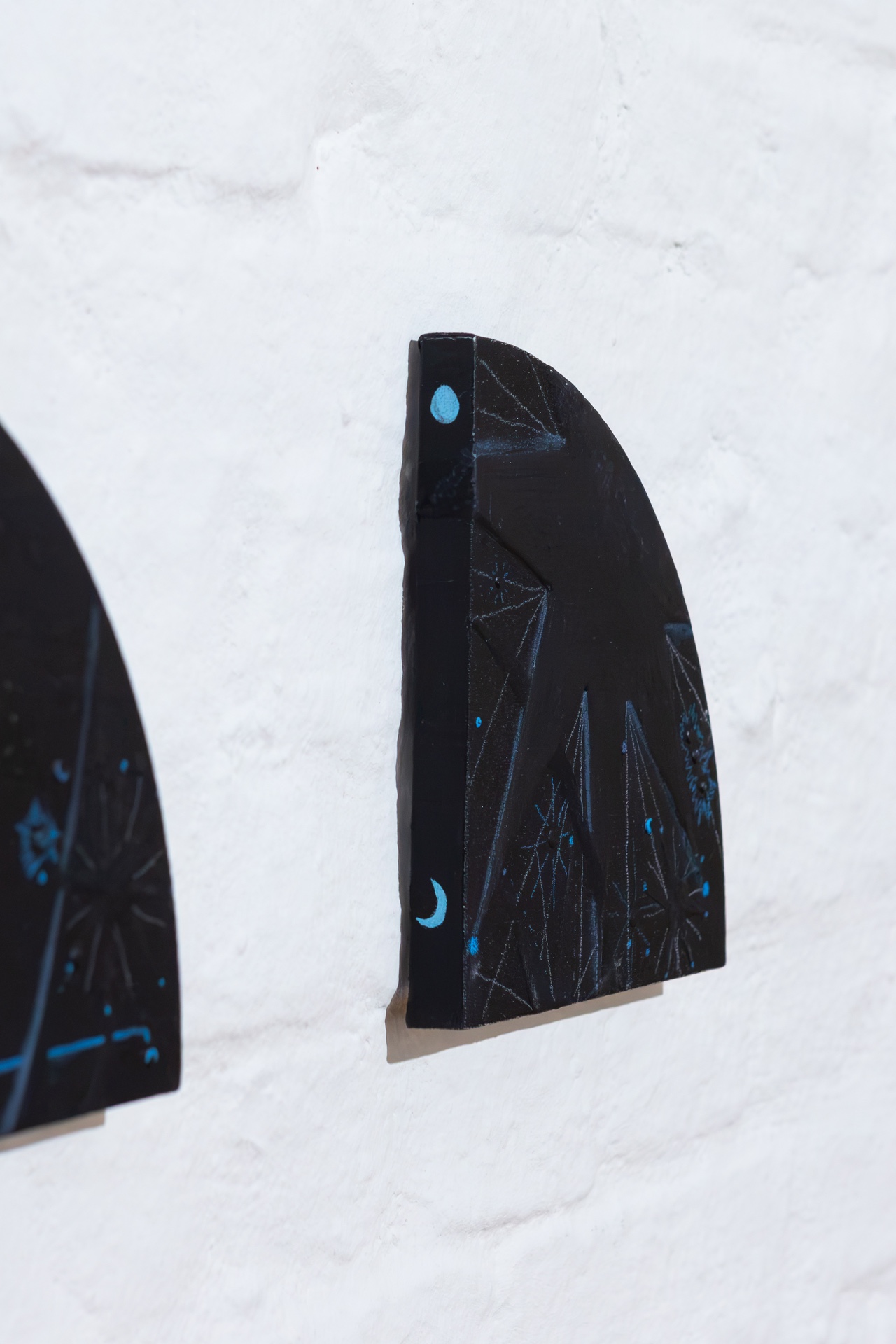
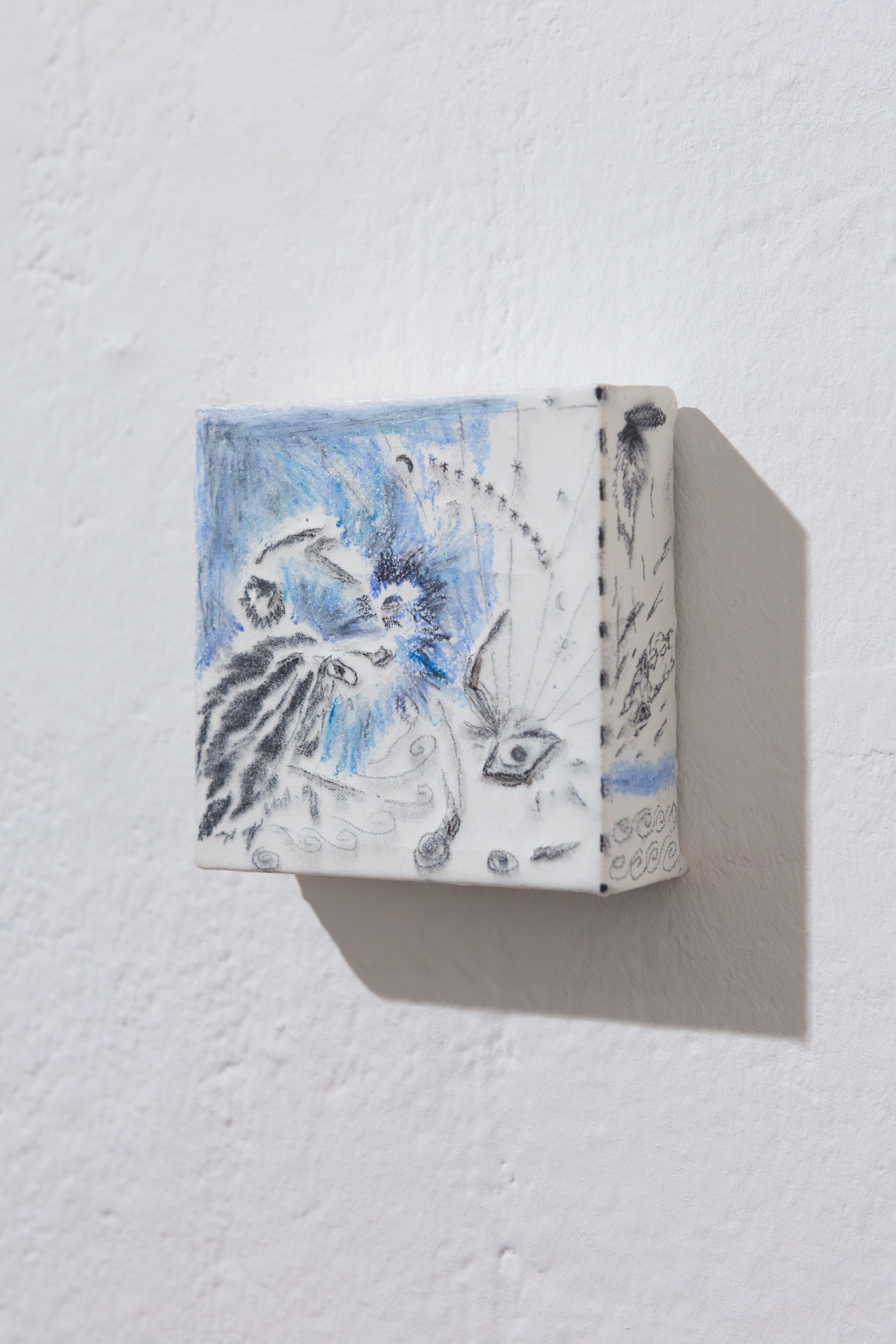
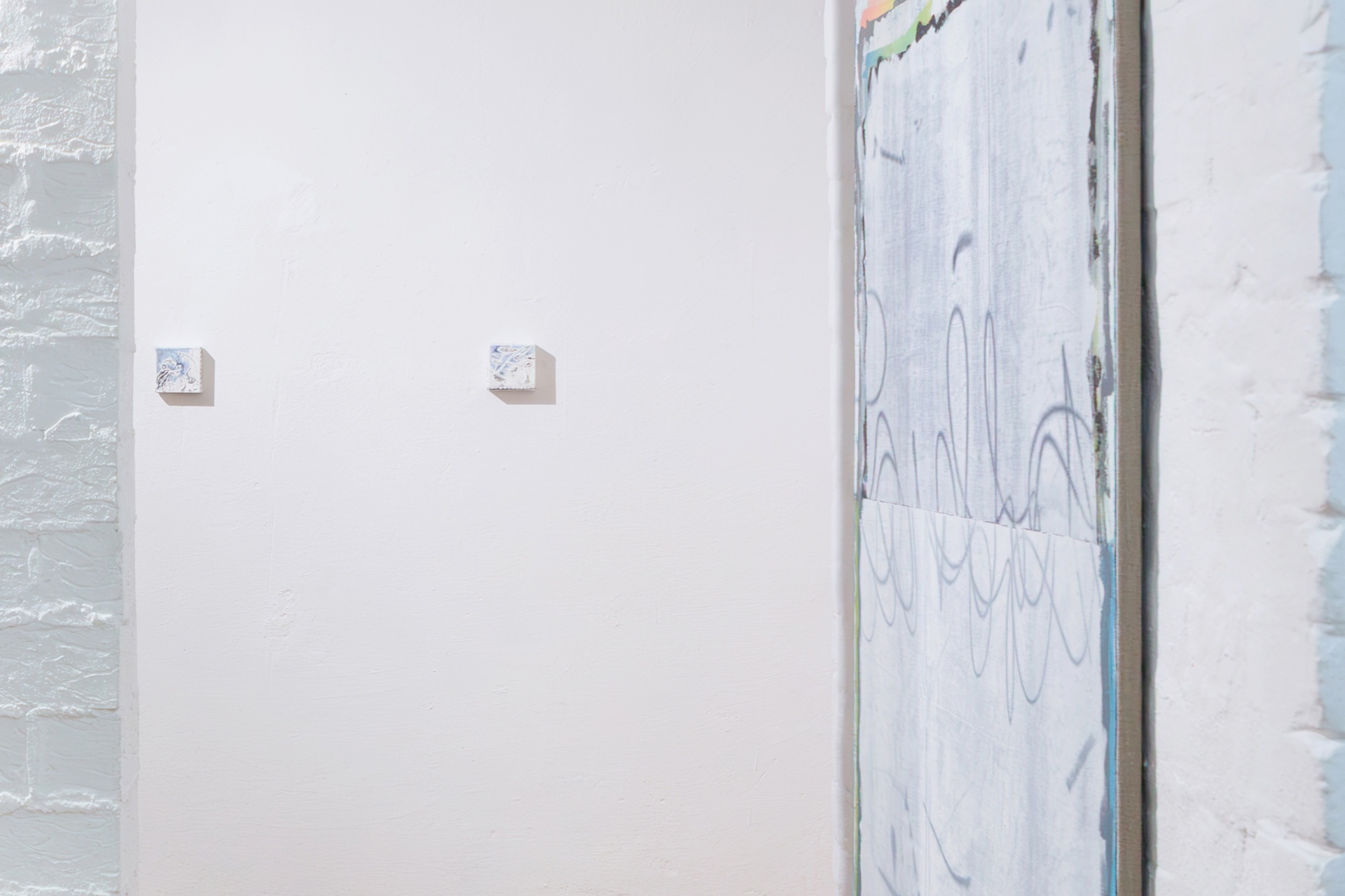
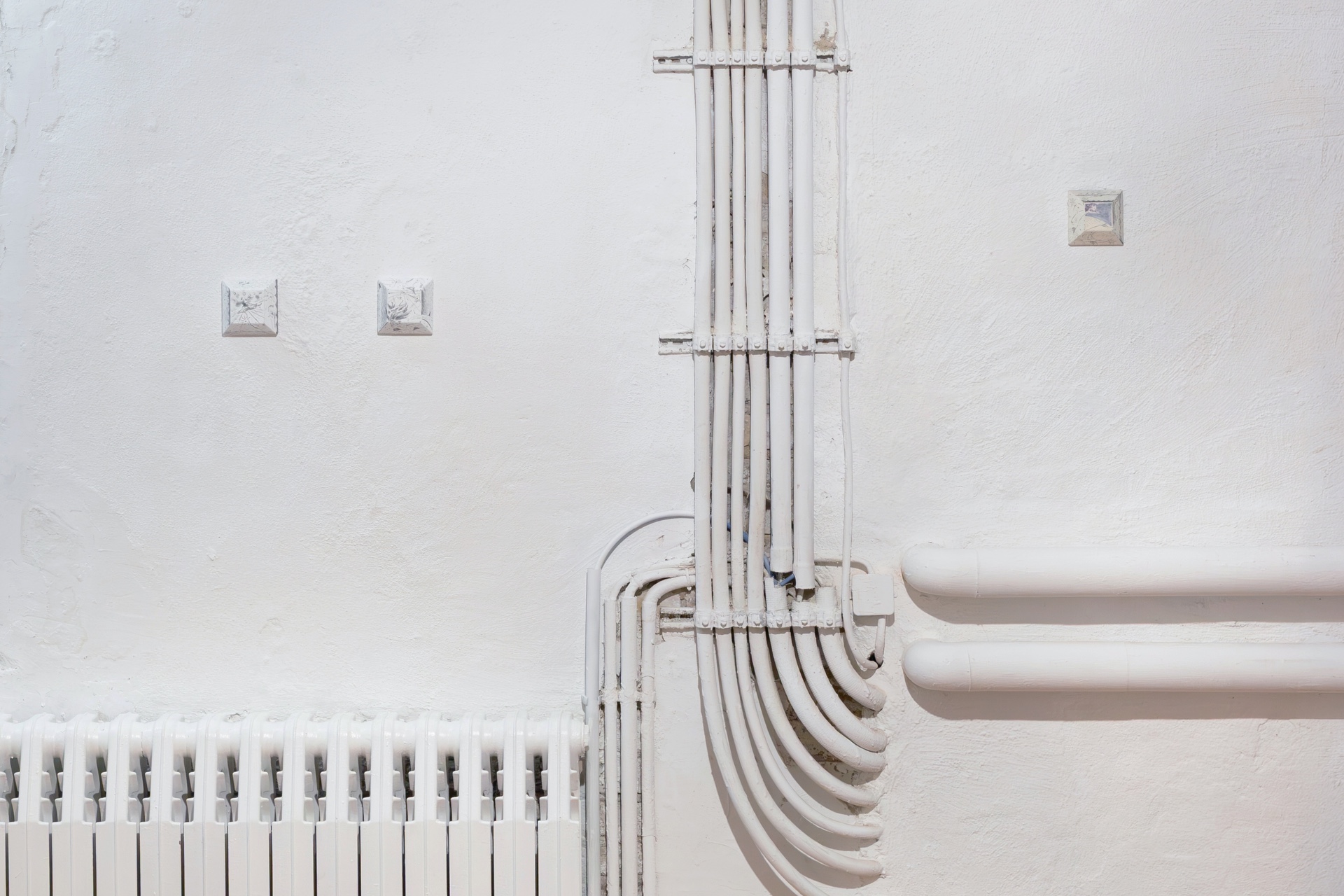
Francis Bacon is right: it is indeed a close thing, an intimacy of sorts. Some paintings have this direct effect - they invite us in. Whatever their peculiar materiality, it stops us in our tracks, and we decide to take those few steps closer, until our face is only a few inches away from their surface. And we look. But it is not clear what we expect to find. The paintings of Sowan Eum do this. They come out towards us, jutting out of the wall. As we lean closer to examine their textures, they offer their world where electrons crash and explode in blue. What is more difficult to understand is how these pencil diagrams, lines and strokes made fragile by the thickness of the canvas, graphite broken up by the various bumps and crevices of the stone powder mixed in with the white paint, support the electrons' play. And what makes us feel the vast emptiness of the night sky.
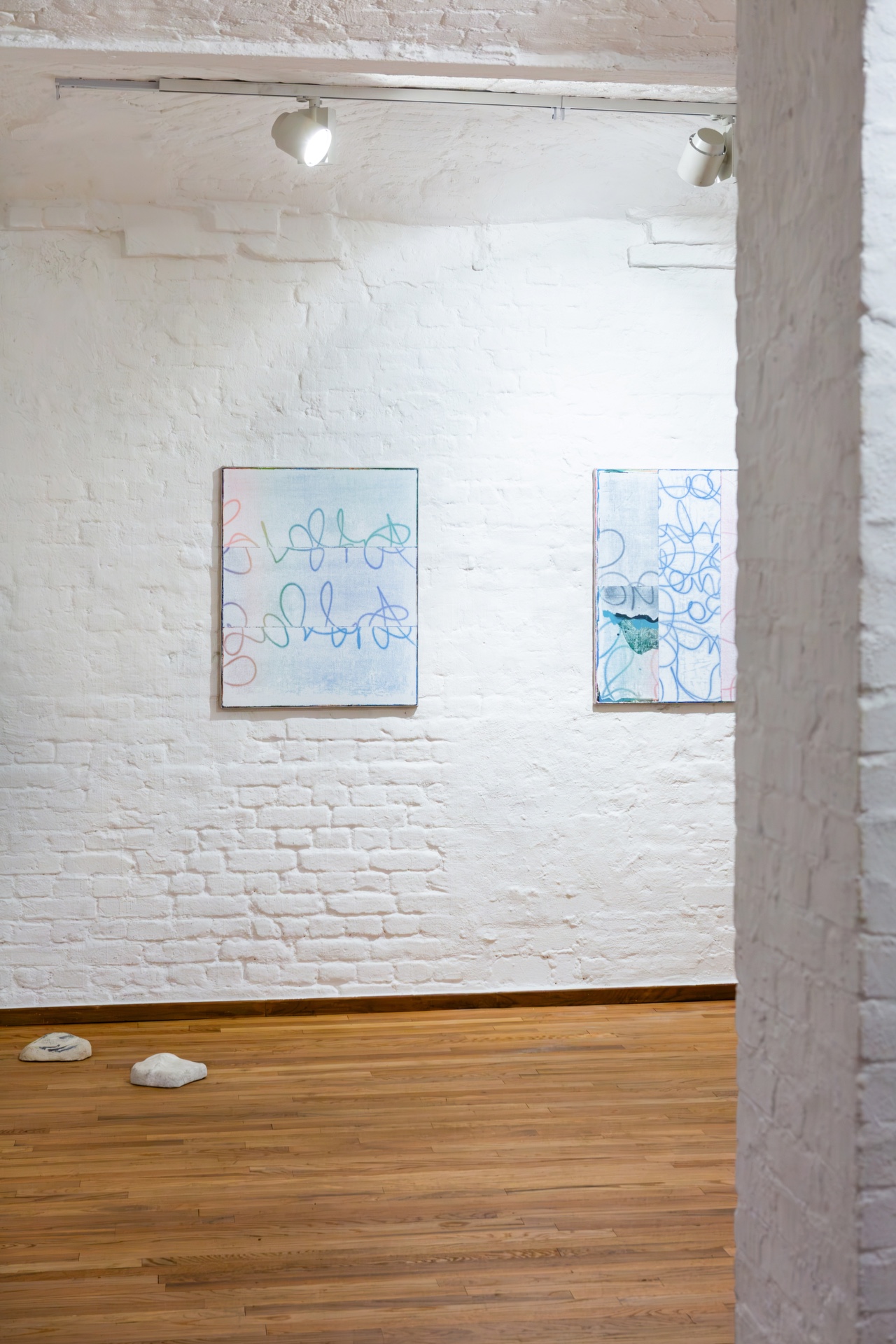
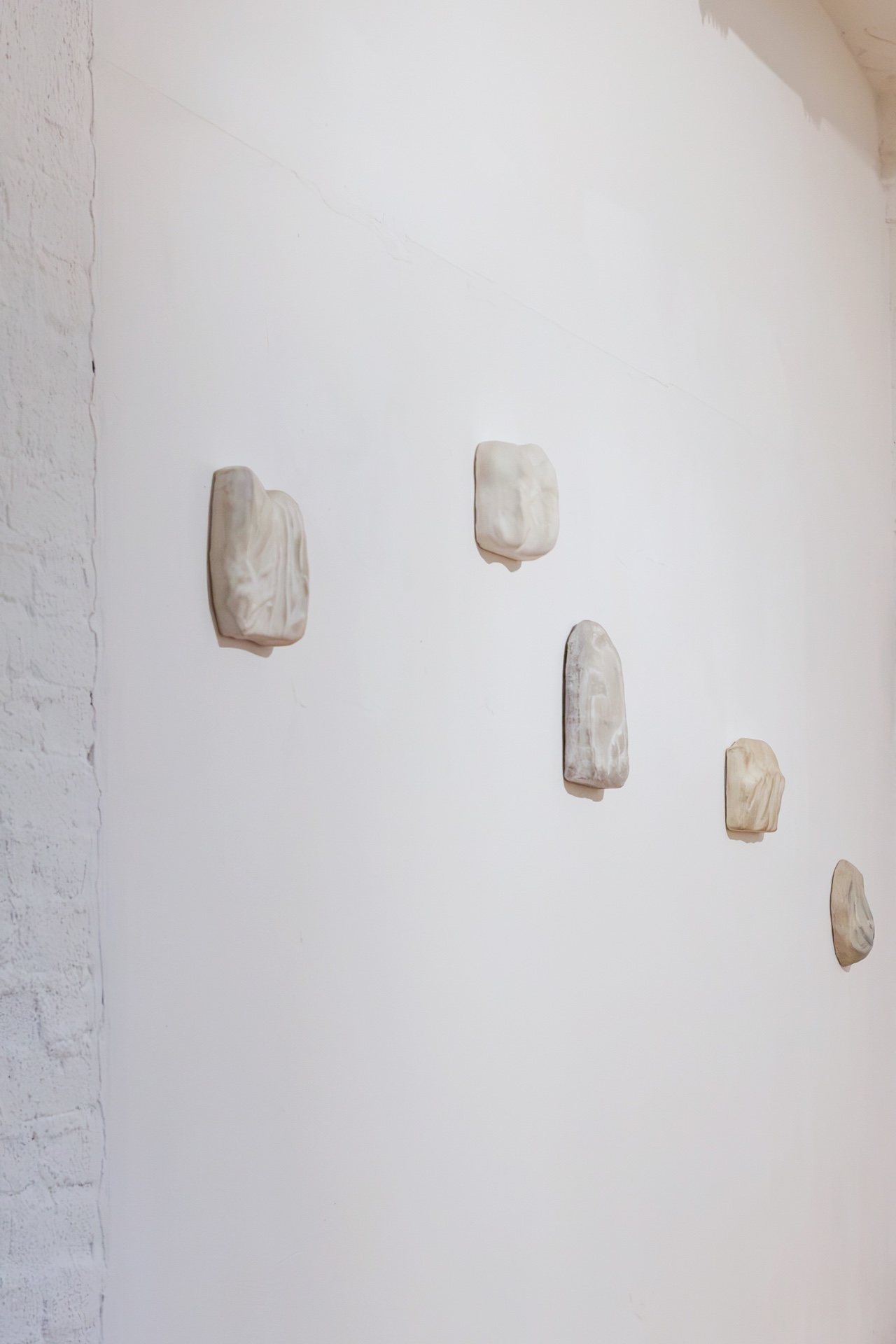
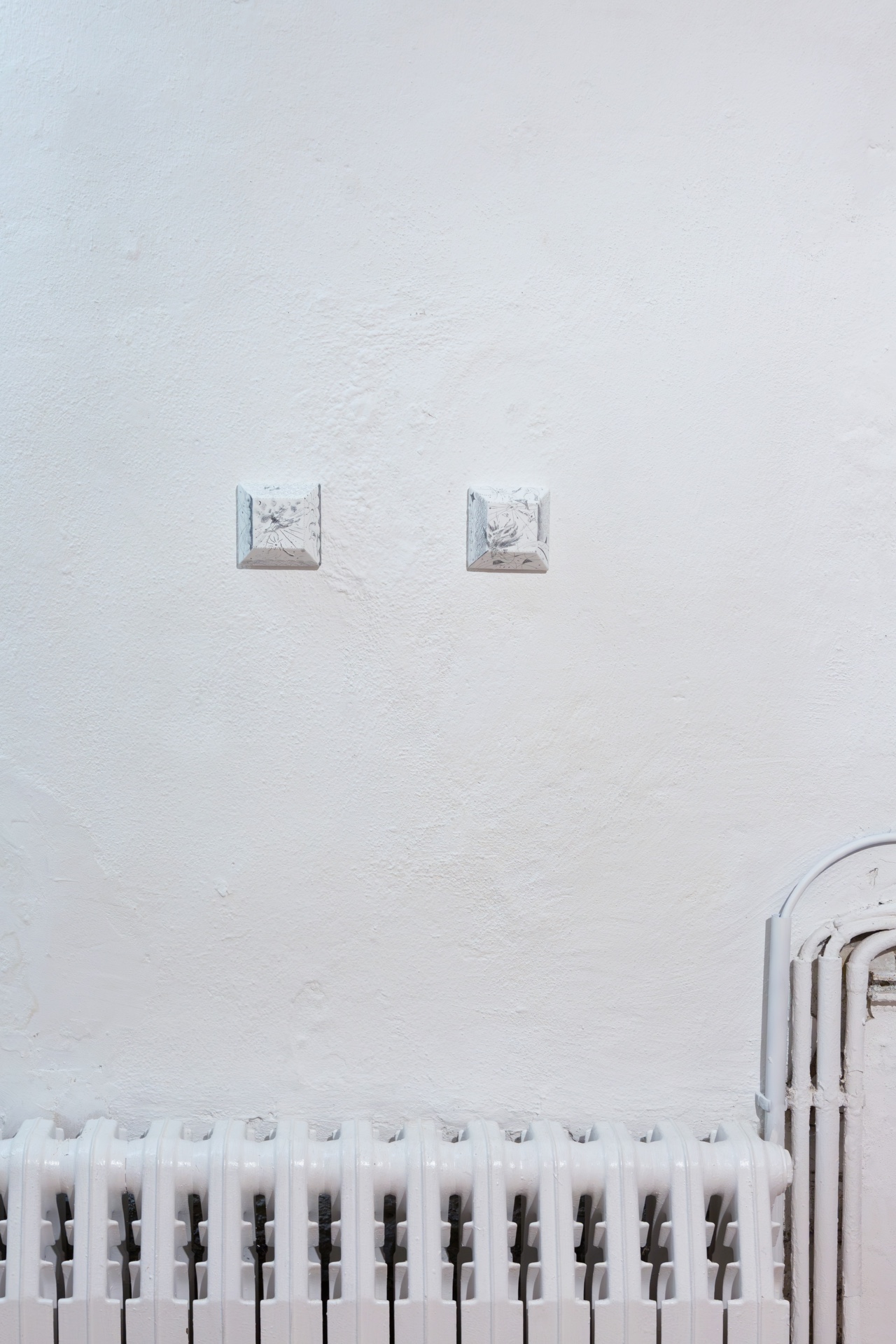
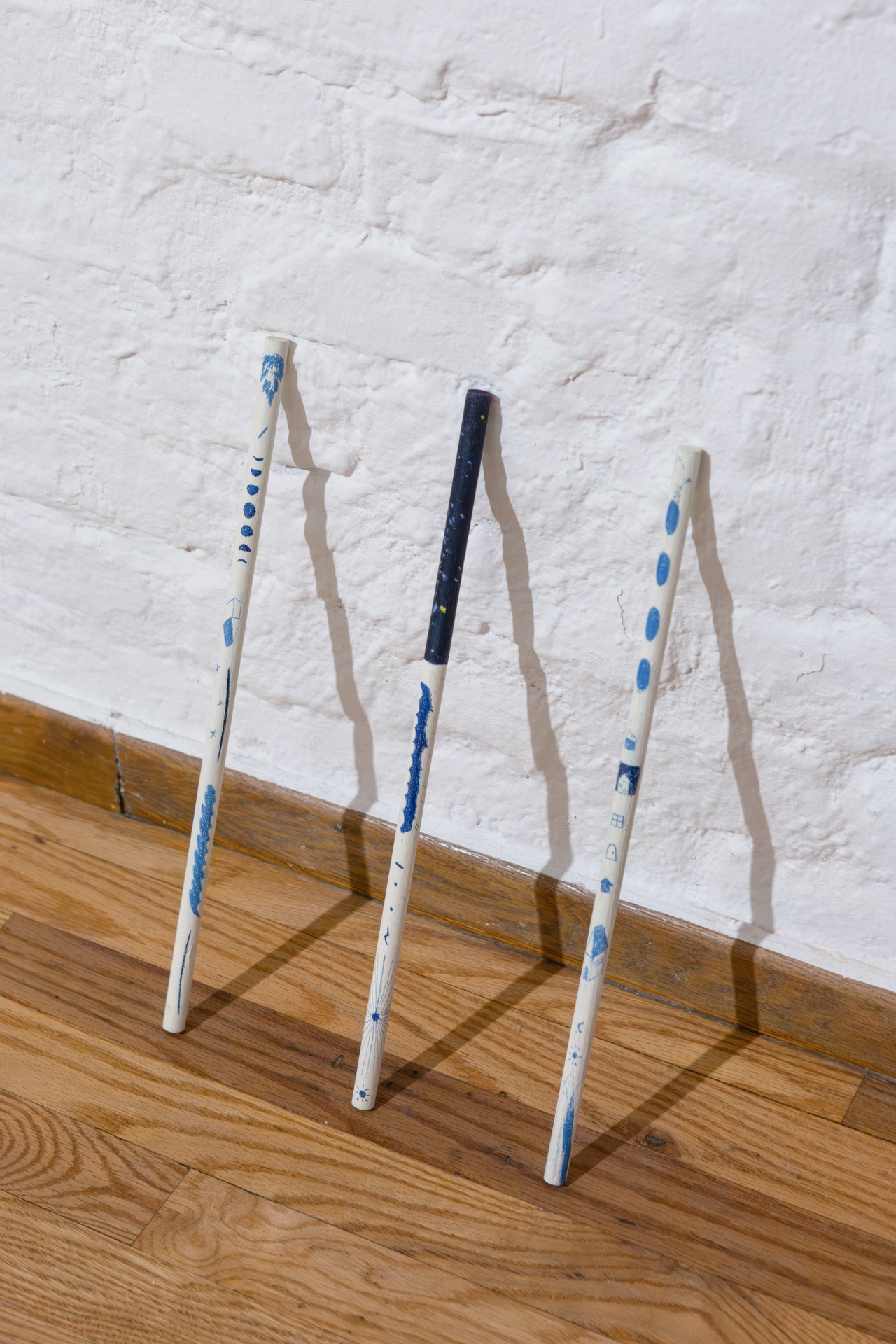
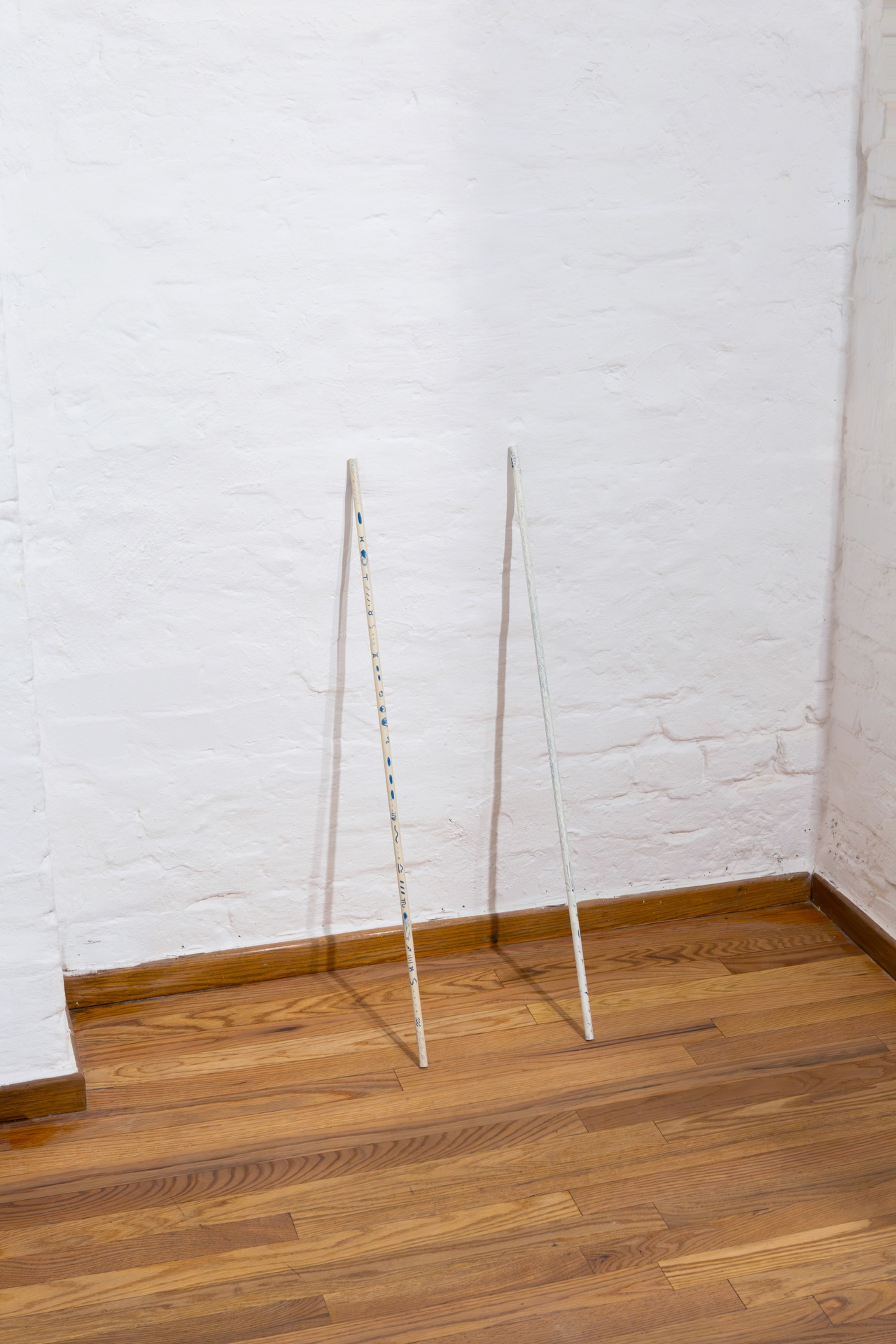
We tend to think of a painting’s surface as a plane—flat, smooth, and above all, horizontal. On this canvas-thin plane, life can roam. It spreads across and upward, towards us, the viewer. If there is depth to be found, it lies beneath thesurface and is covered by it. Extending down through the hidden layers of dust, soil, and rock are the crust, mantle, and Earth’s core. Something of this unseen geology can be sensed in the plaster and clay fragments of Seungyeon Yi, which look as if they were broken off the face of a chalk cliff. Chalk is a sedimentary rock formed from millions of tiny seashells that settled on the ocean floor long ago, hardening under their own weight as the layers accumulated. There, in one of Yi’s pieces, you can almost make out the dark flint that dots natural chalk cliffs, its silica once belonging to ancient sponges. In her practice, Yi works from a place of personal loss, repeatedly speaking about how death has shaped her worldview. That same presence of death is embedded in the material layers accumulating beneath the surface. Depth is where we bury our dead— soil, chalk, and dust are made from the bodies of those who once havelived.
Confining life, however, to the surface only would be a mistake. There are forces at work in the depths, and these have an impact on what happens up above:strata slowly shifting upward, mountains rising and eroding, and weathering rock chemically determining the composition of the soil and which plants can take root.There is life here too, inorganic life, life not purely understood through the structures of the organism. Indeed, it is the very breakdown of organic structures that allows the looser, incomplete bonds of chalk to form, giving the stone its characteristic softness. This is inorganic life at work. It forms a plane of its own, though one organised very differently from a surface. Between these shifting layers of sediment, where matter is endlessly broken down and reformed, lies a dark space— loose enough for the unexpected to happen. Here is a land of the "most disparate things and signs,” where “a semiotic fragment rubs shoulders with a chemical interaction, an electron crashes into a language, a black hole captures a genetic message, a crystallization produces a passion, the wasp and the orchid cross a letter…"[2]
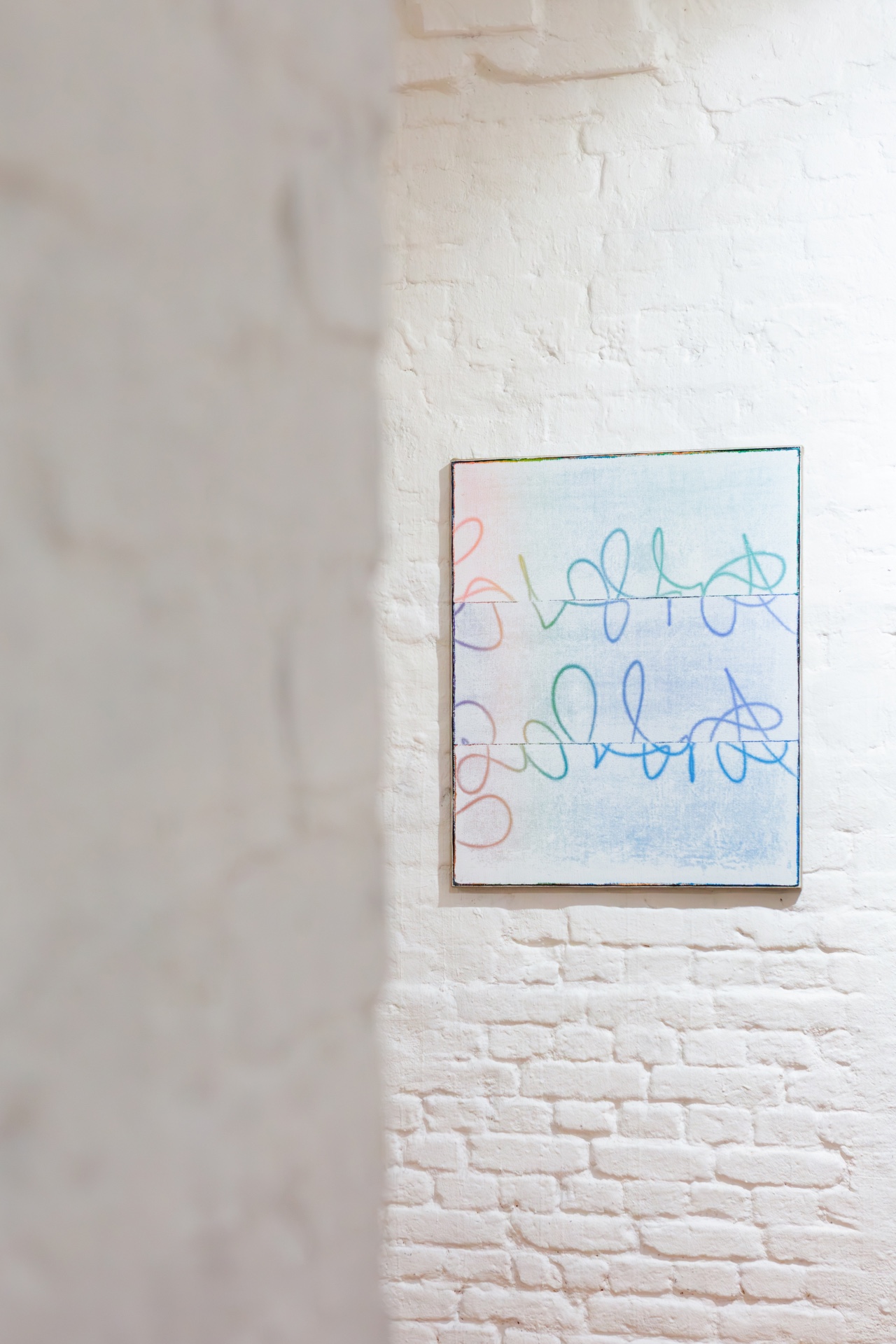
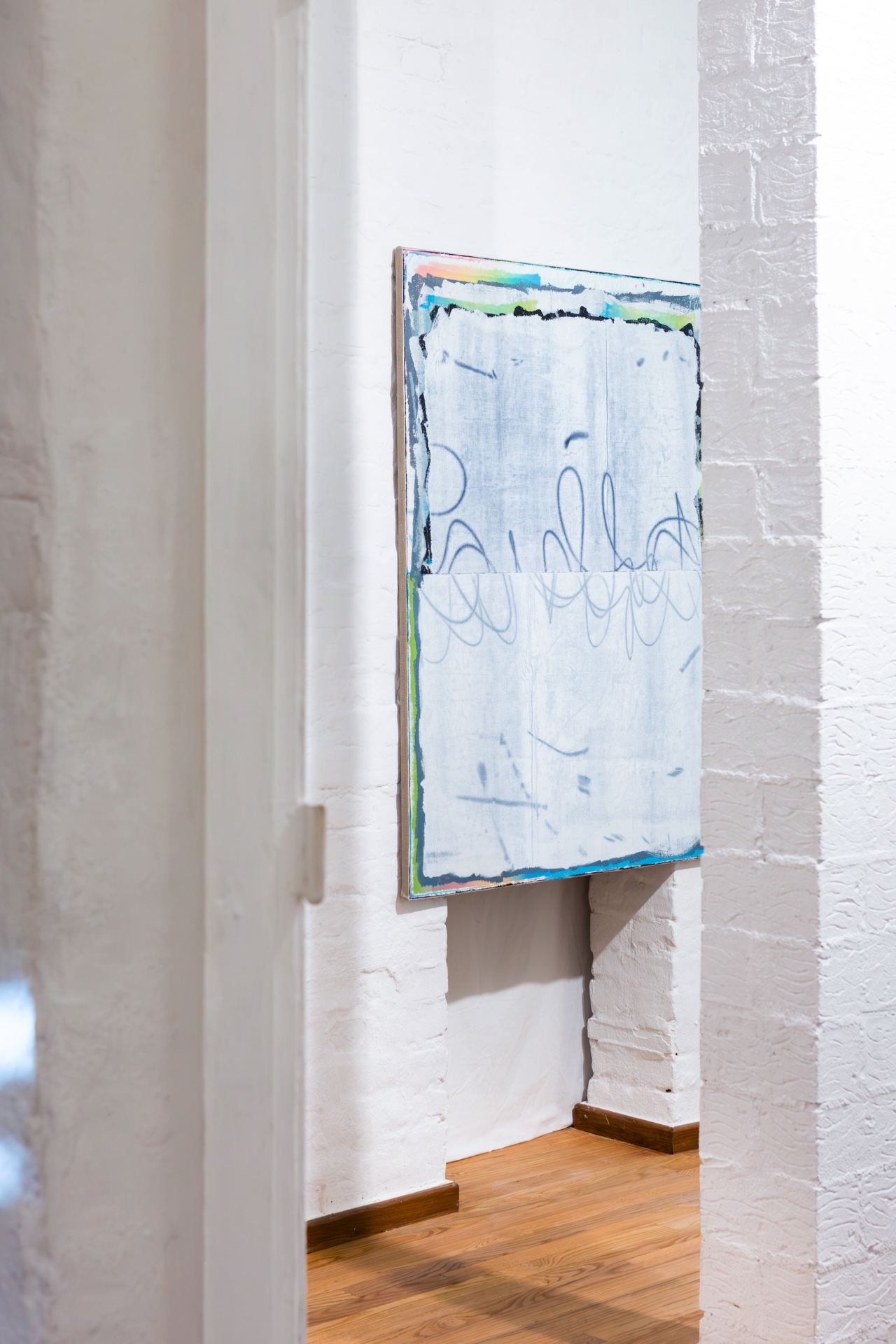
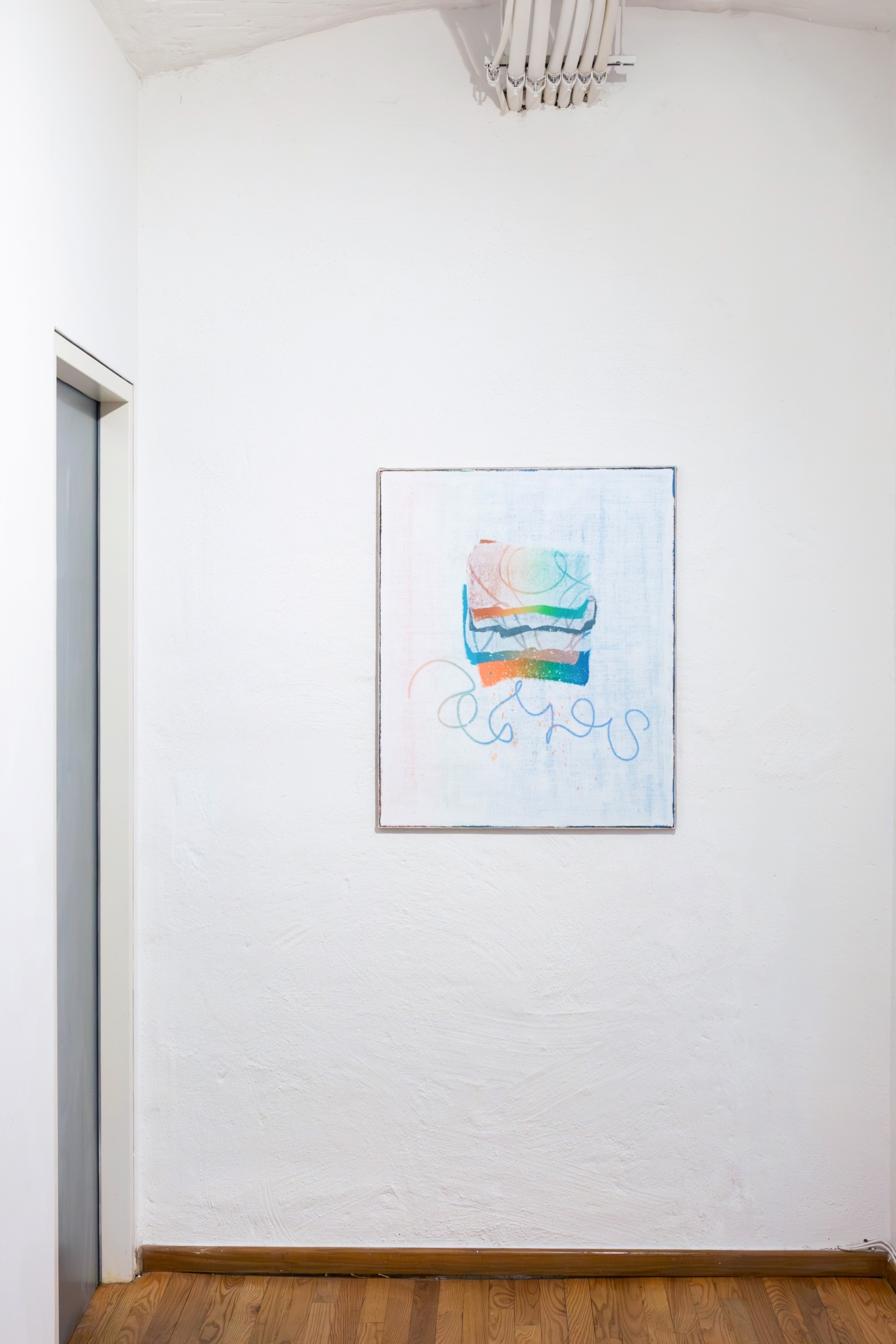
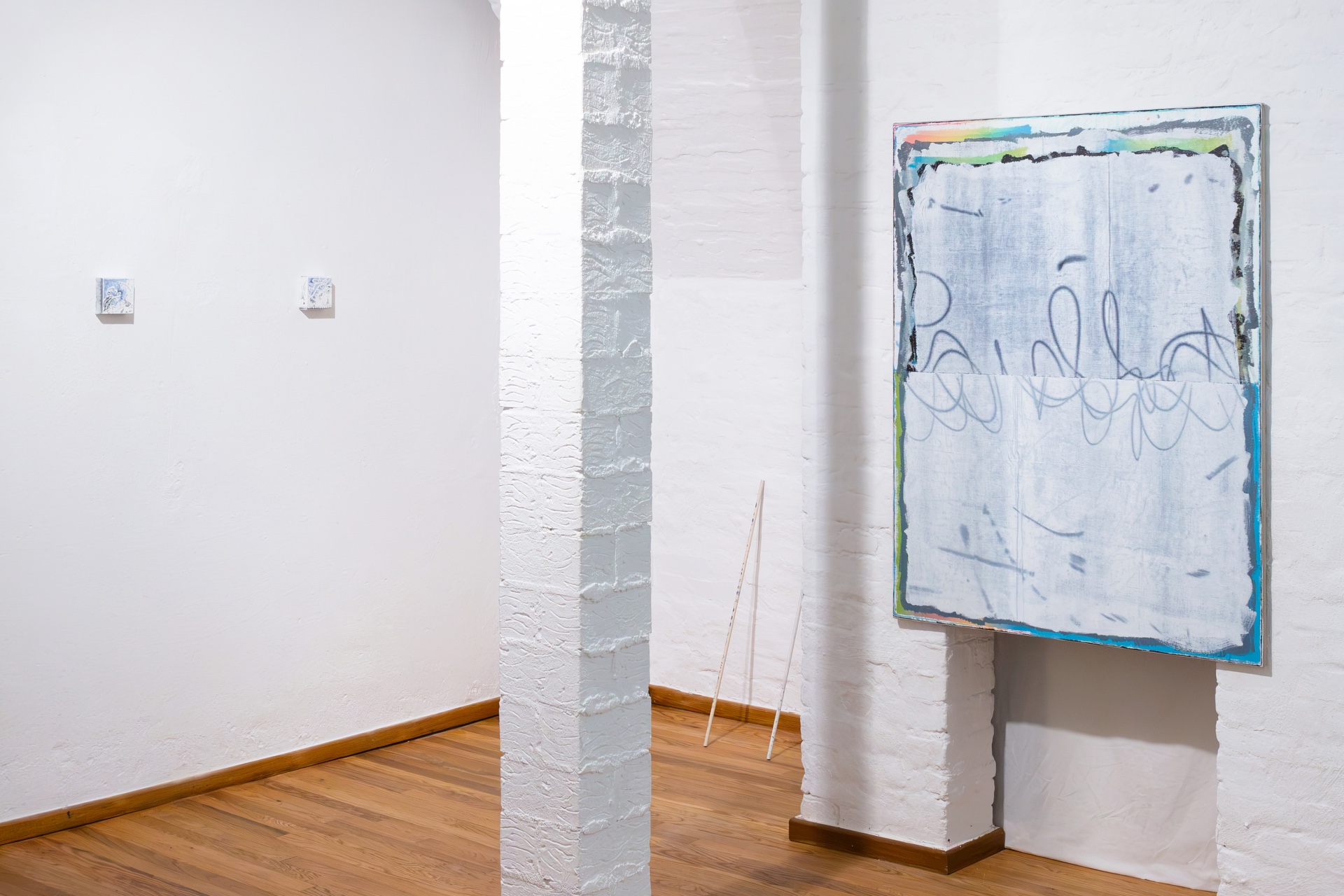
If we now turn to the paintings of Arthur Löwen, we can almost see the interaction of layers where the unexpected takes place. There are almost too many layers in his paintings, glimpses of rainbows visible behind the white monochrome of their surfaces, or sometimes, at the edges. Löwen also works on both sides of the canvas, laying the still-wet painting face down on absorbent cloth and writing on it from behind. Through this one simple gesture, he subverts how painting habitually carries meaning. Rather than being imprinted on the surface from above, meaning rises from below, the reverse side of the canvas. This is not the meaning we are accustomed to, organised around familiar cultural structures. When meaning surfaces from below, like the inscription in Löwen’s paintings, it is often rendered meaningless to us. As with the paintings of Sowan Eum, we cannot understand the plane on which matter and meaning can purely interact - even Deleuze and Guattari’s description of electrons meeting language is too dualistic, matter on one side, meaning on the other. Little wonder, then, that Sowan Eum draws on a tradition of Korean cartography in which understanding a land goes beyond its physical geography and extends towards worlds of mythology, literature and philosophy[3]. As her work shows, the plane of depth, the land of the deep, is the same smooth space of the sky, an open, uninterrupted expanse where nature and humans, past and present, and the visible and invisible can interact. Life can soar in the depths.
------
[1] Sylvester, David, Interviews with Francis Bacon (New York: Pantheon Books, 1975) p. 58.
[2] Deleuze, Gilles and Félix Guattari, A Thousand Plateaus, trans. Brian Massumi, (Minneapolis: Minnesota University Press, 1987) p.69.
[3] Within the Sinocentric worldview of the Cheonhado, the Asian landmass was surrounded by references to mythology and literature of the inner sea; the geomantic concept of “Bibo” allows perceived flaws in a landscape to be supplemented and transformed. In both cases, landscapes have no fixed topography.