- Dead Earth, A Place of No Escape
- 15 Sep ― 01 Oct 2023
- CentrumBerlin, Germanygallery
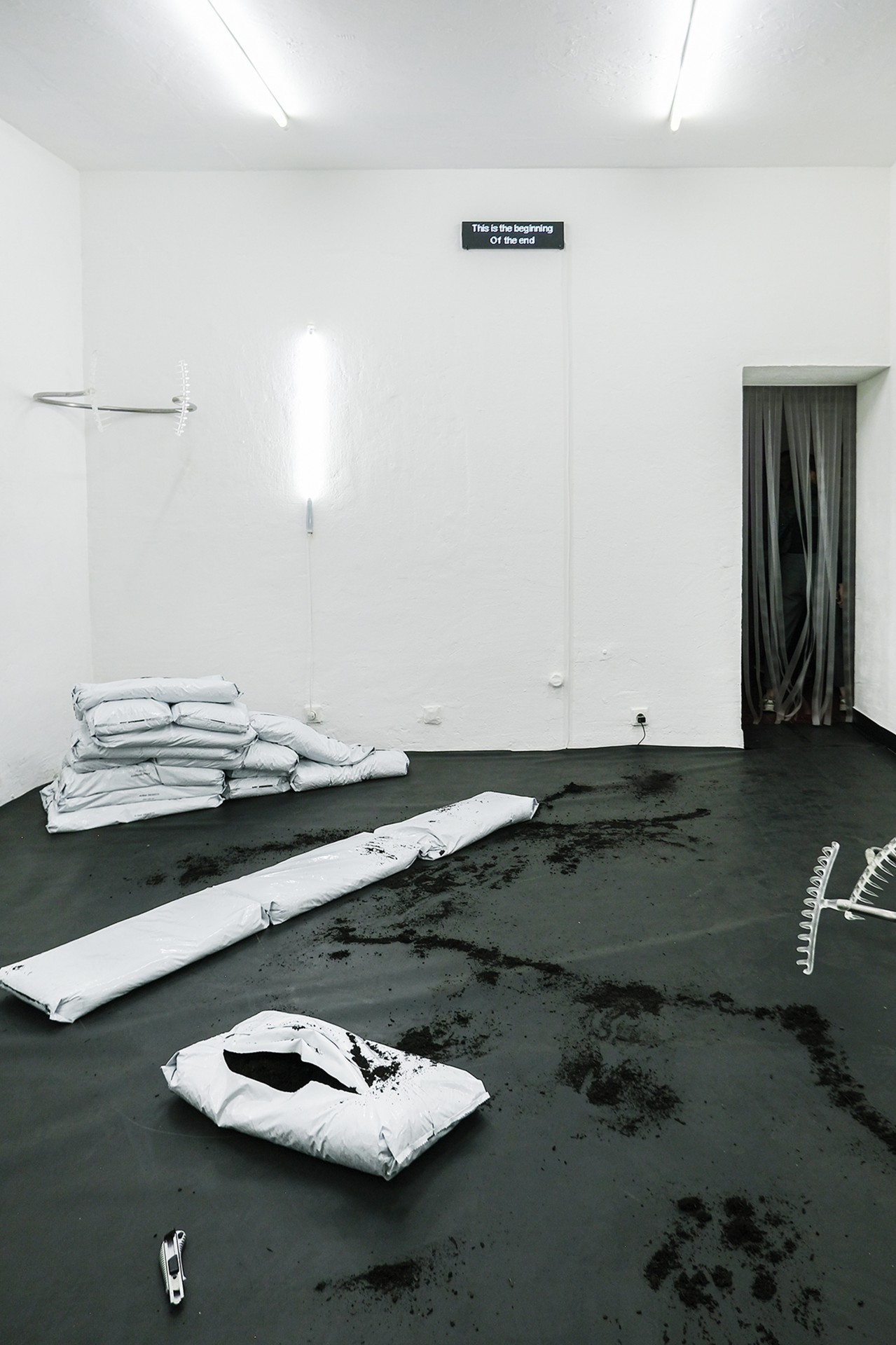
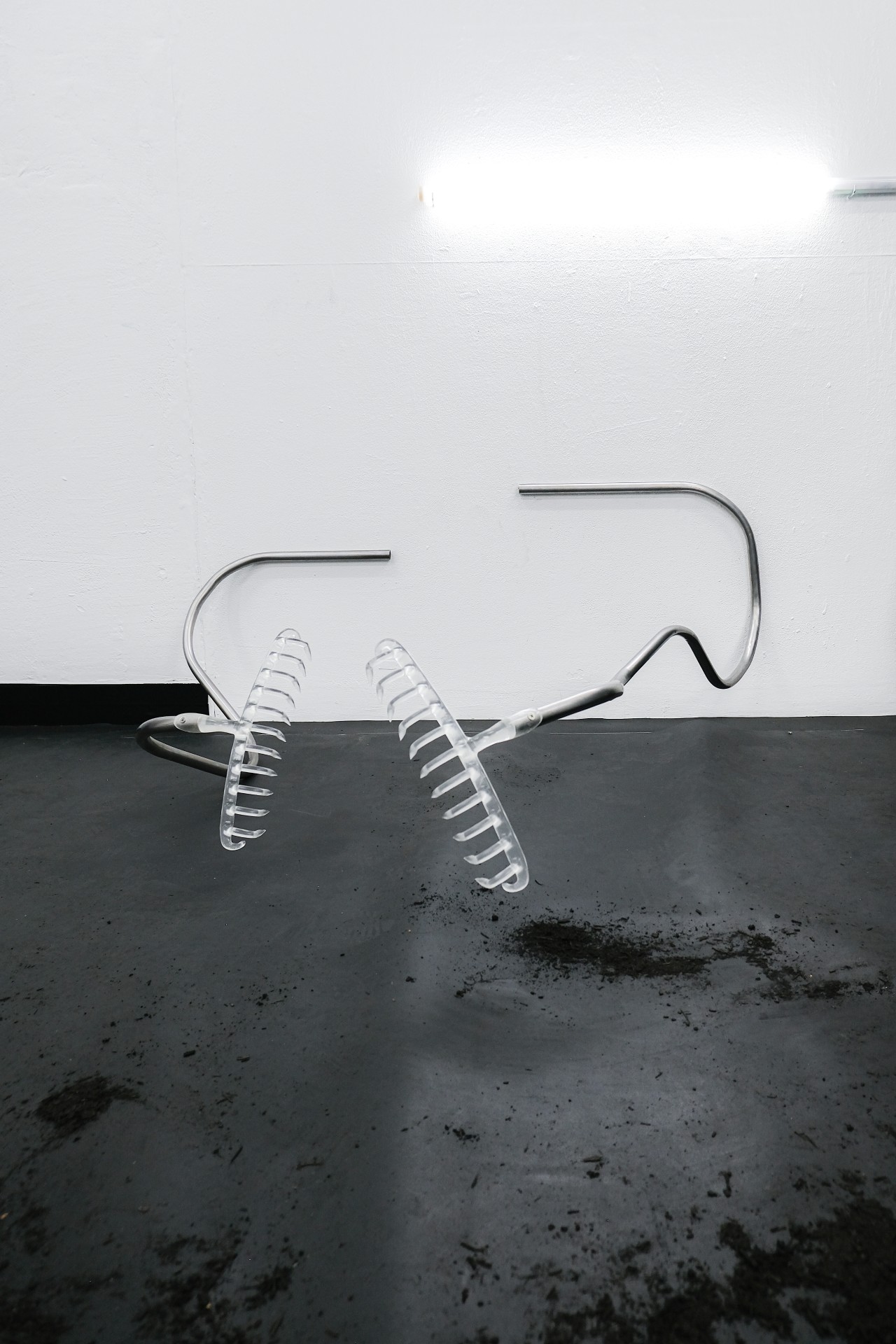
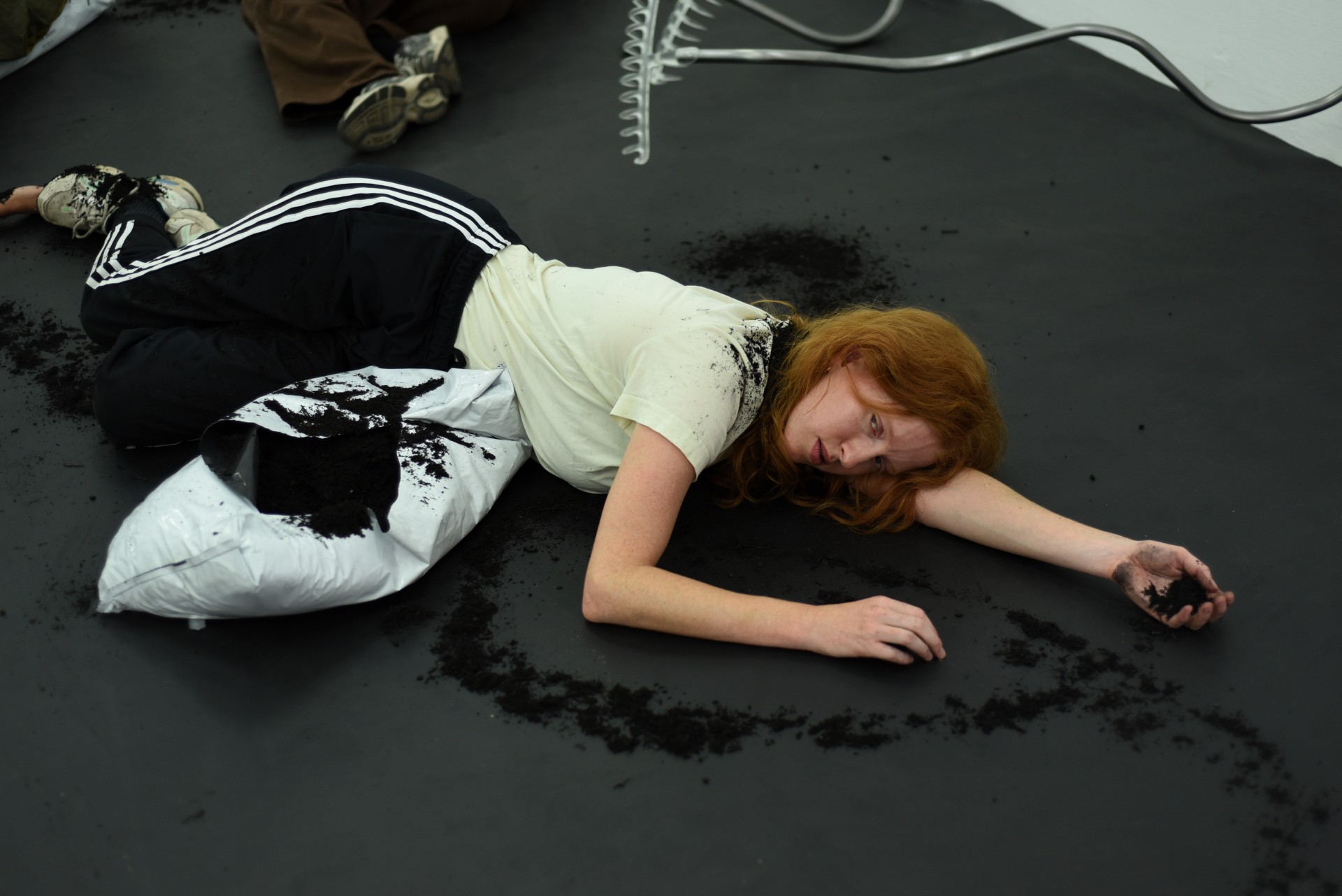
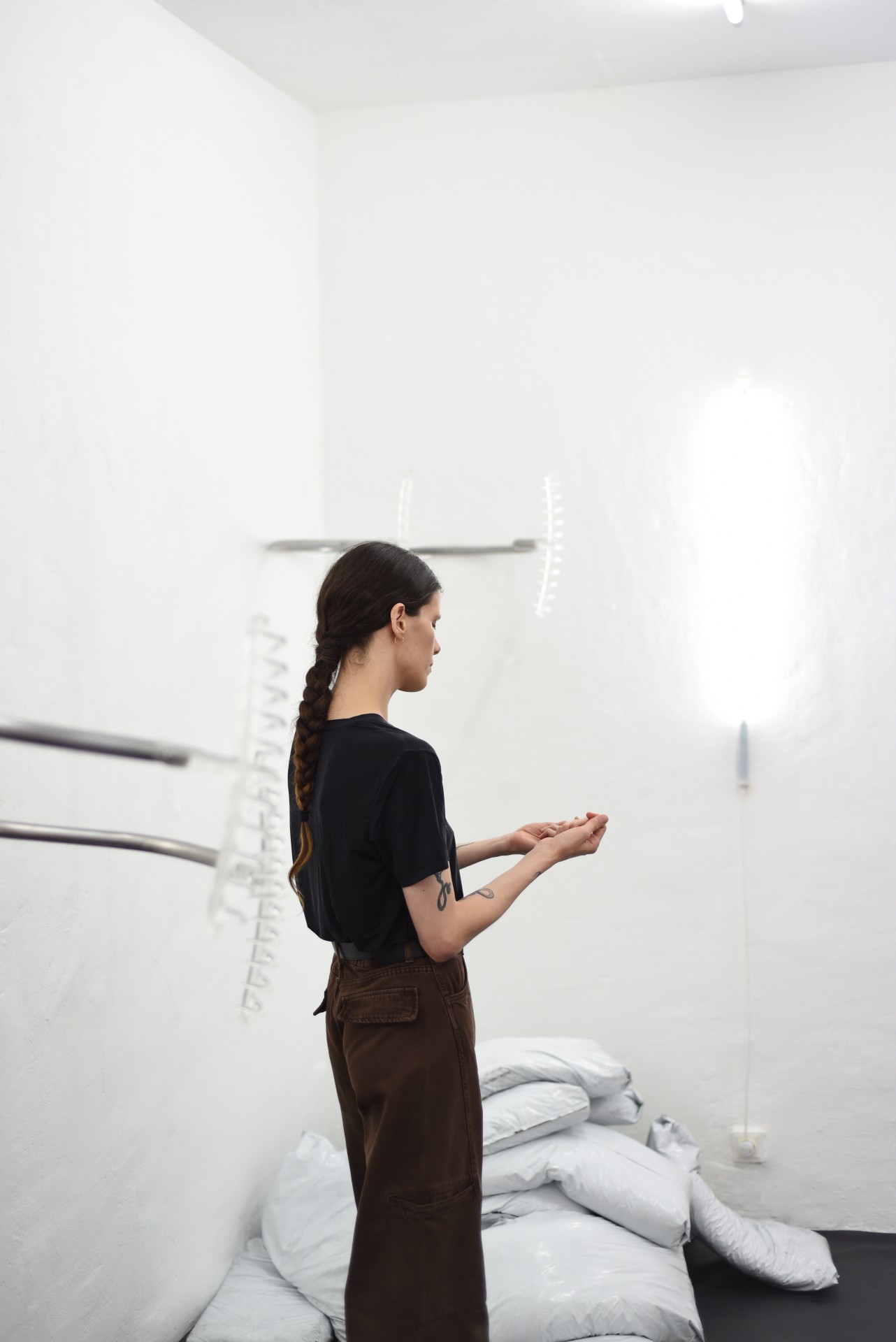
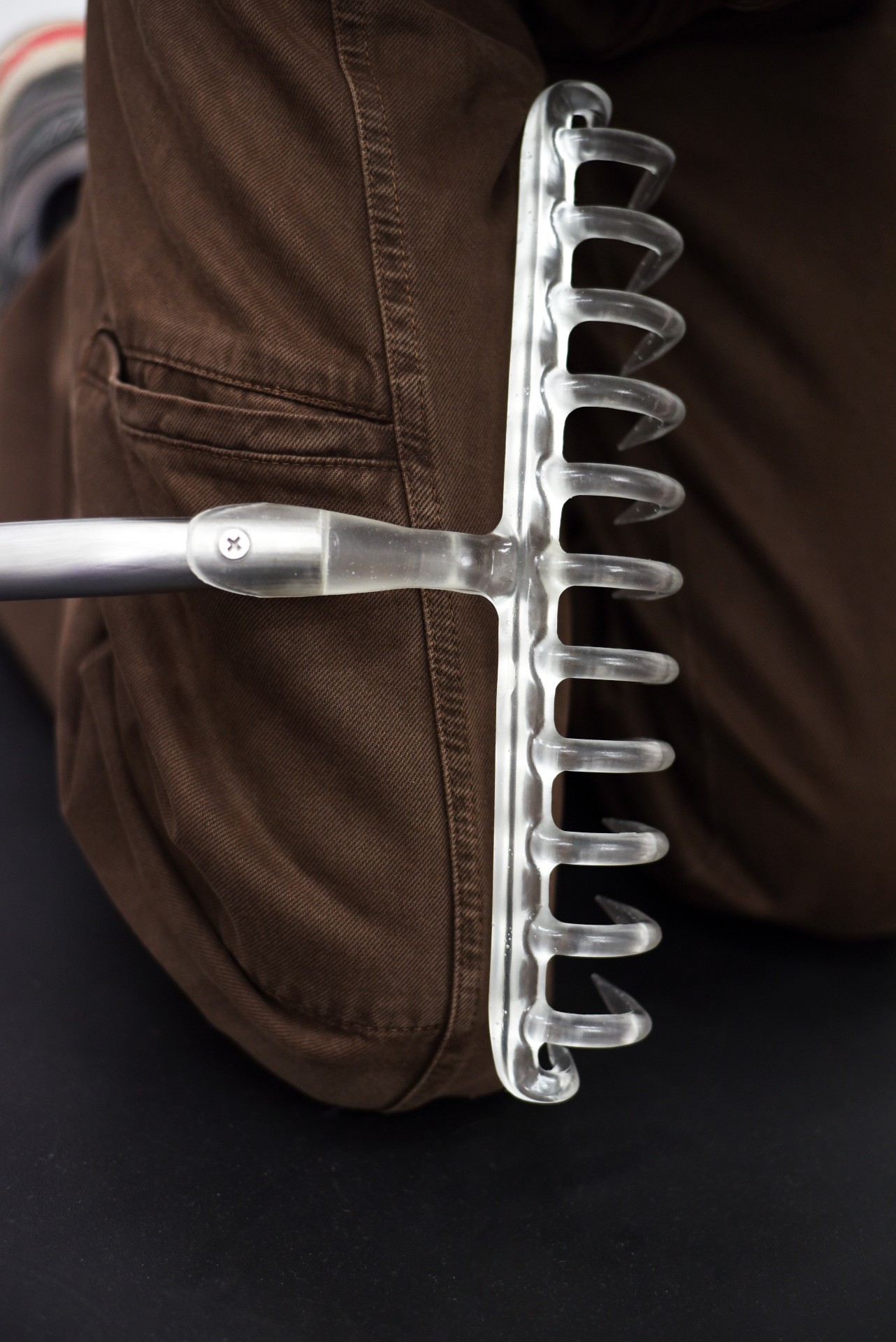
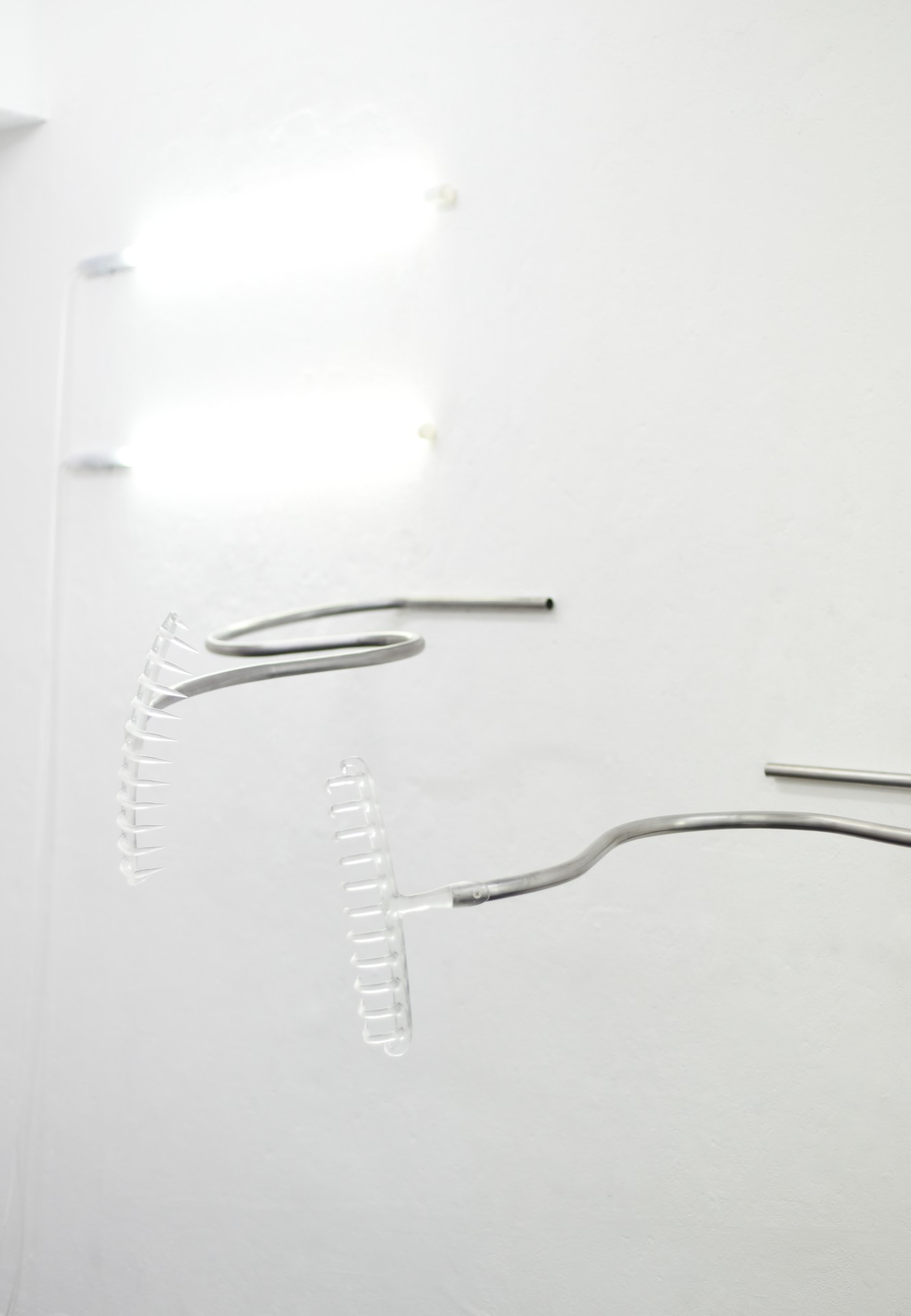
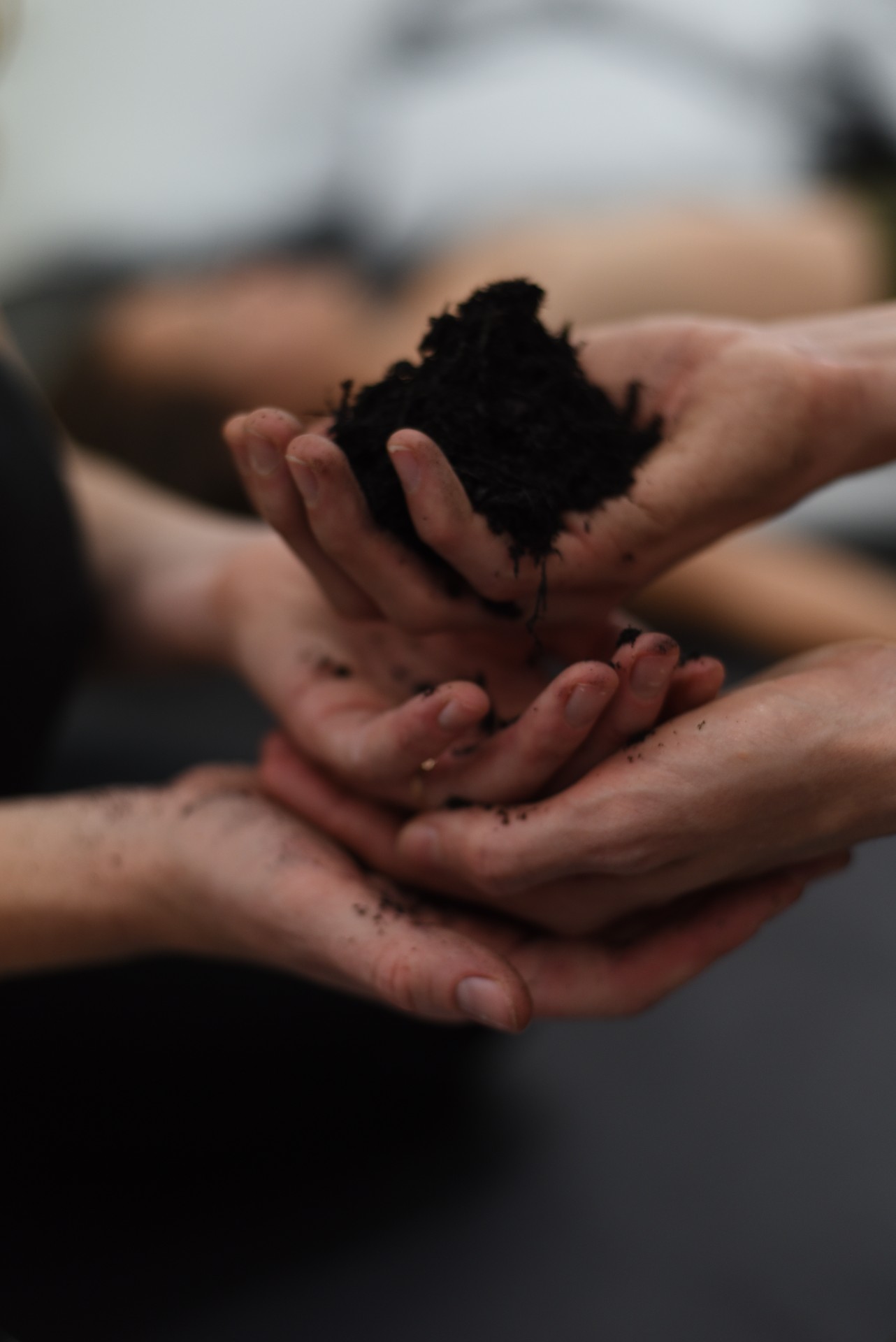
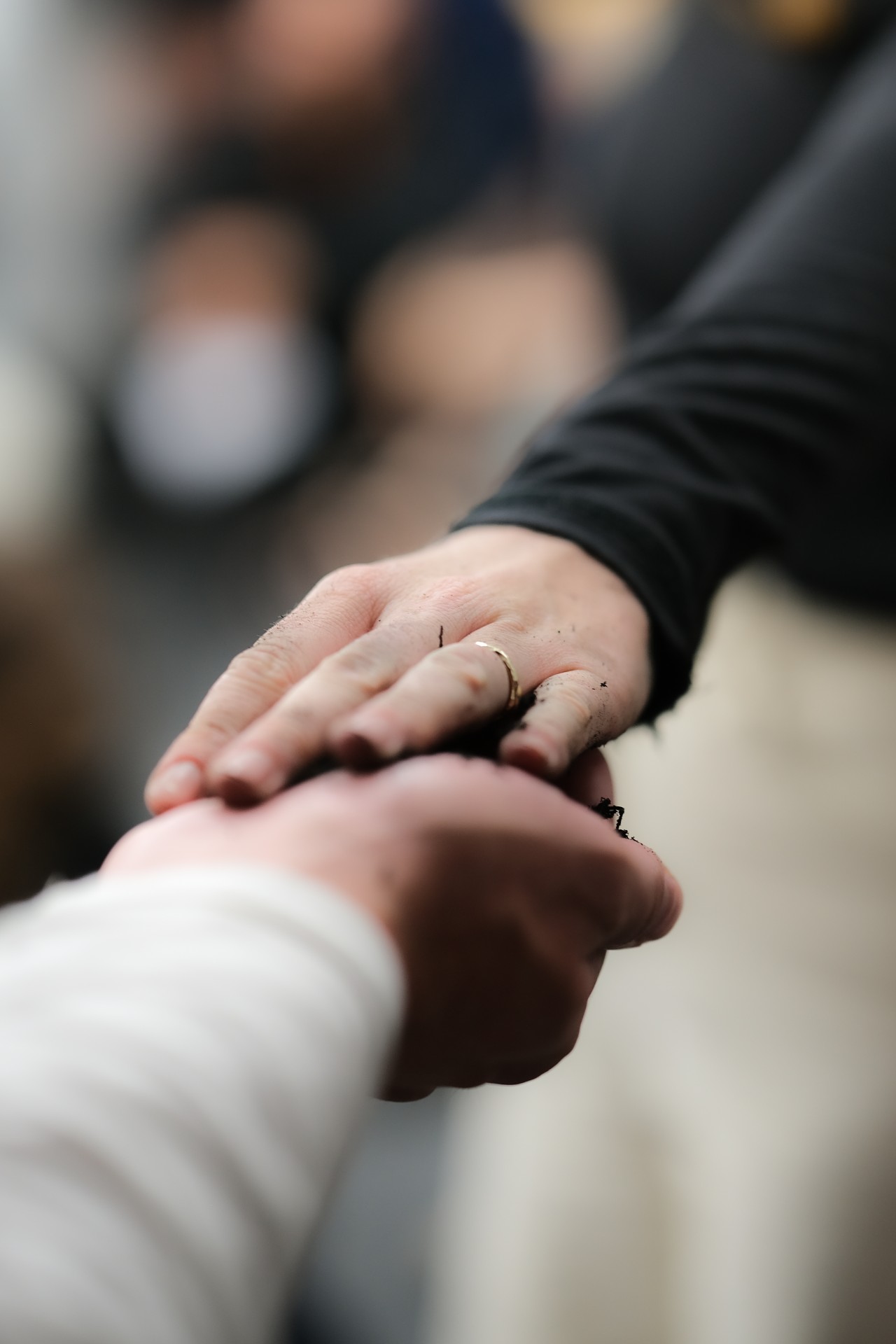
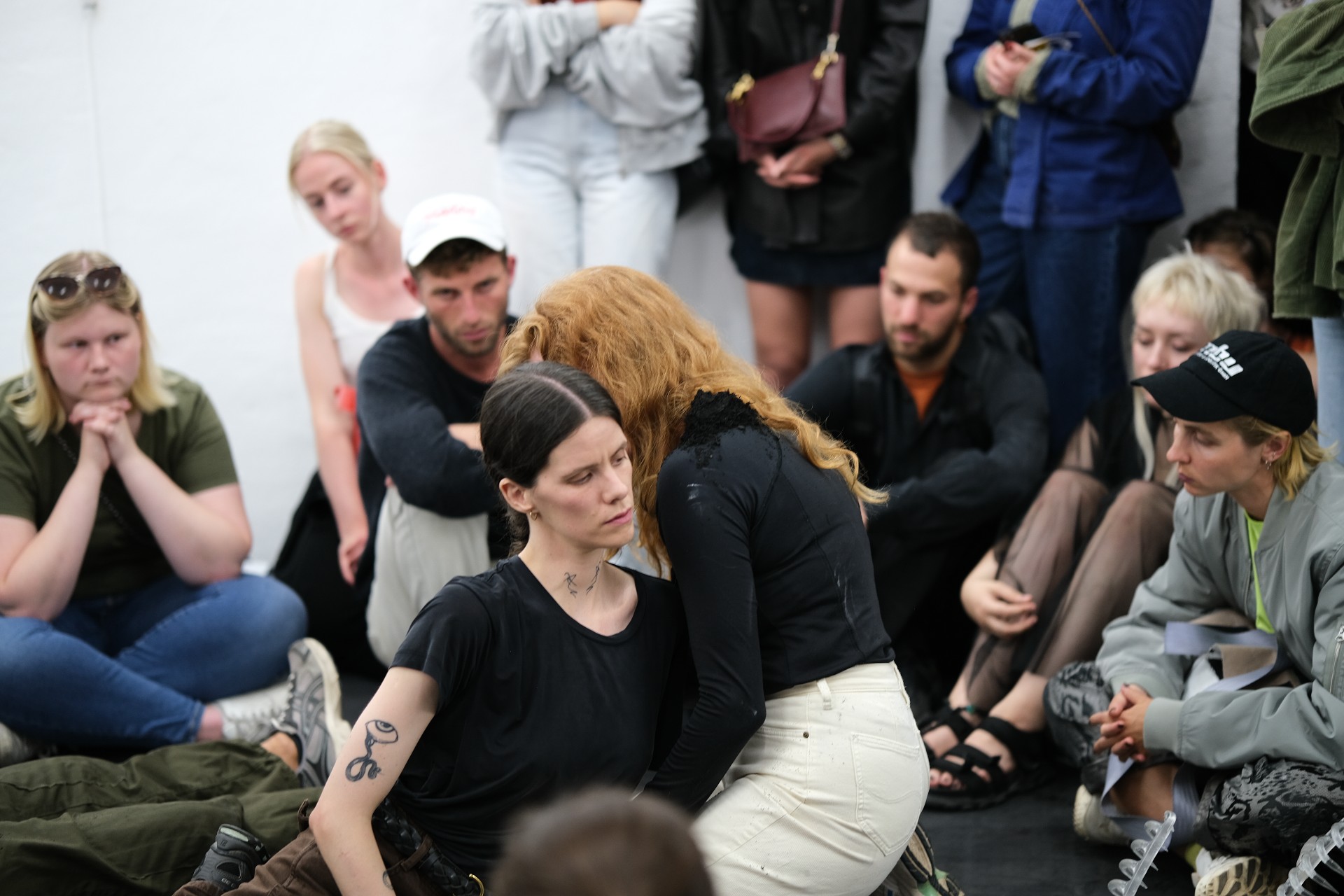
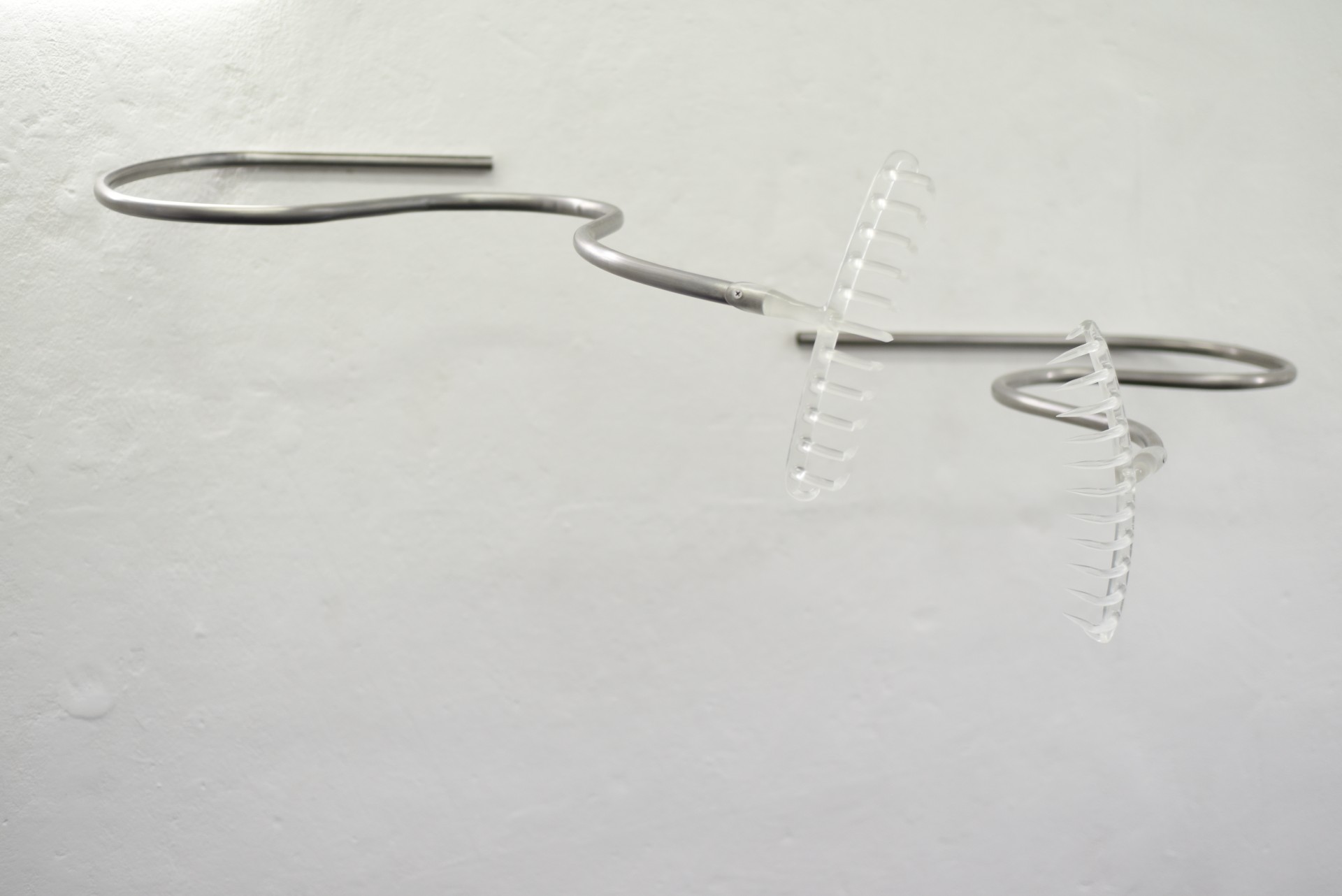
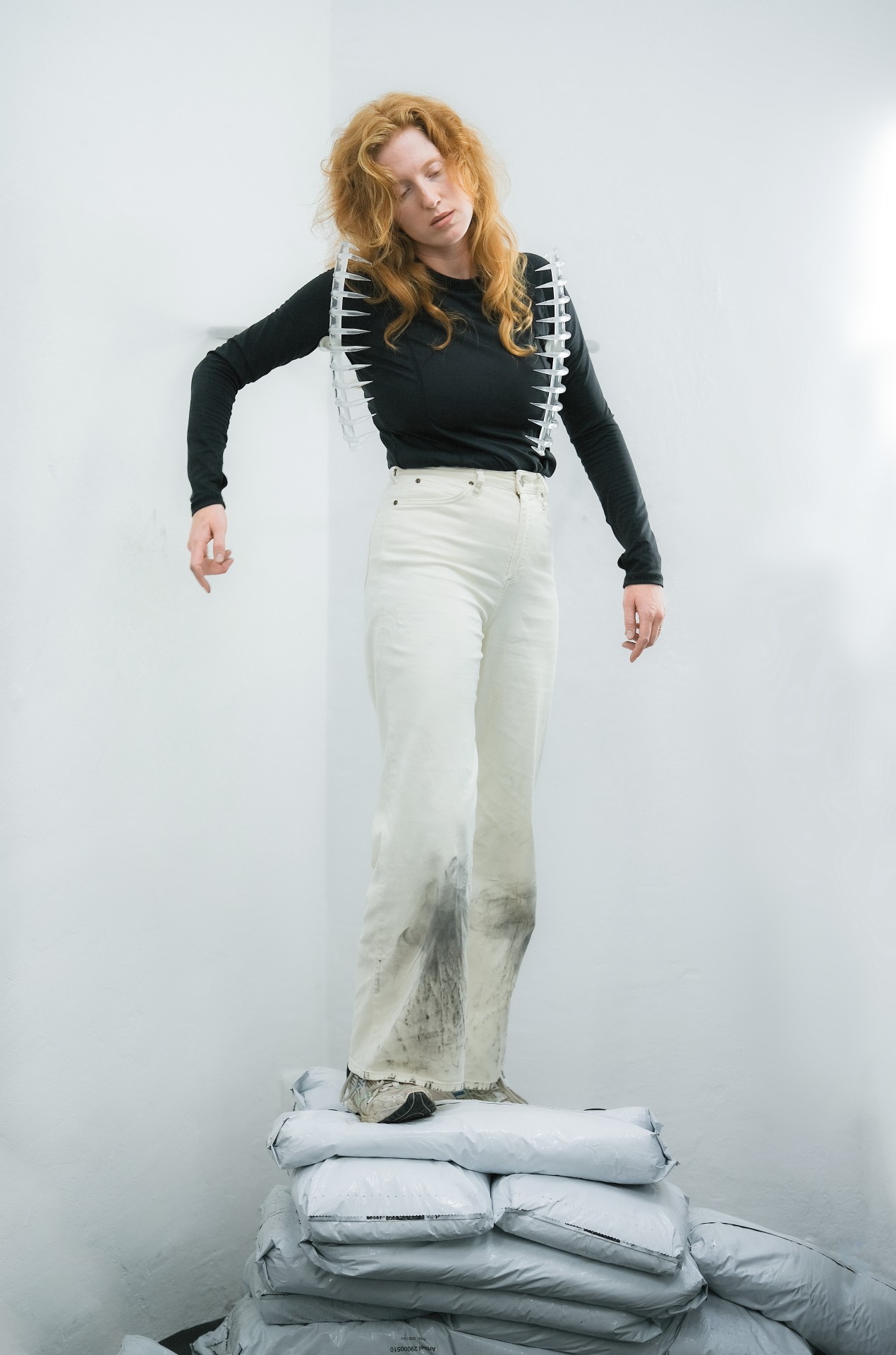
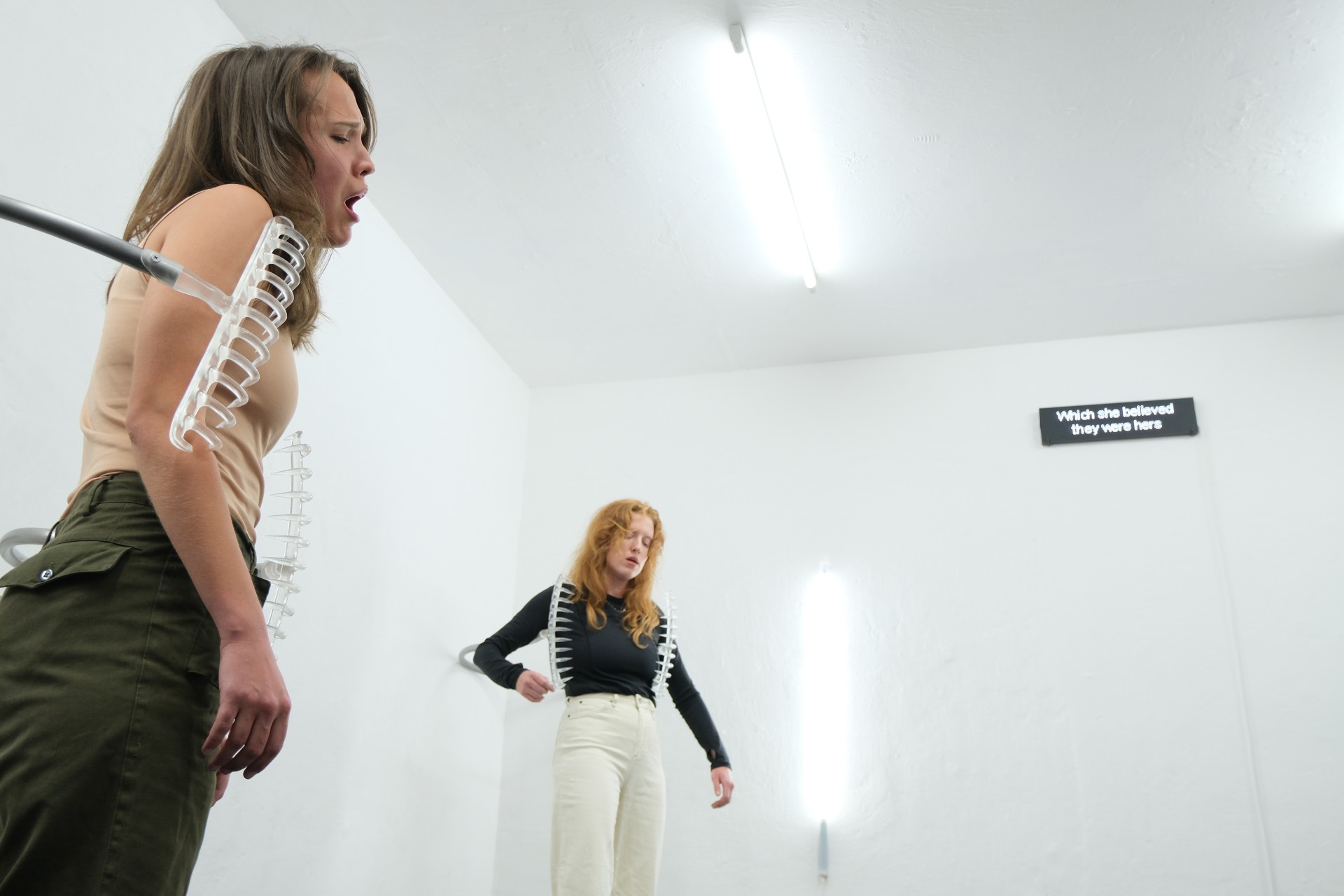
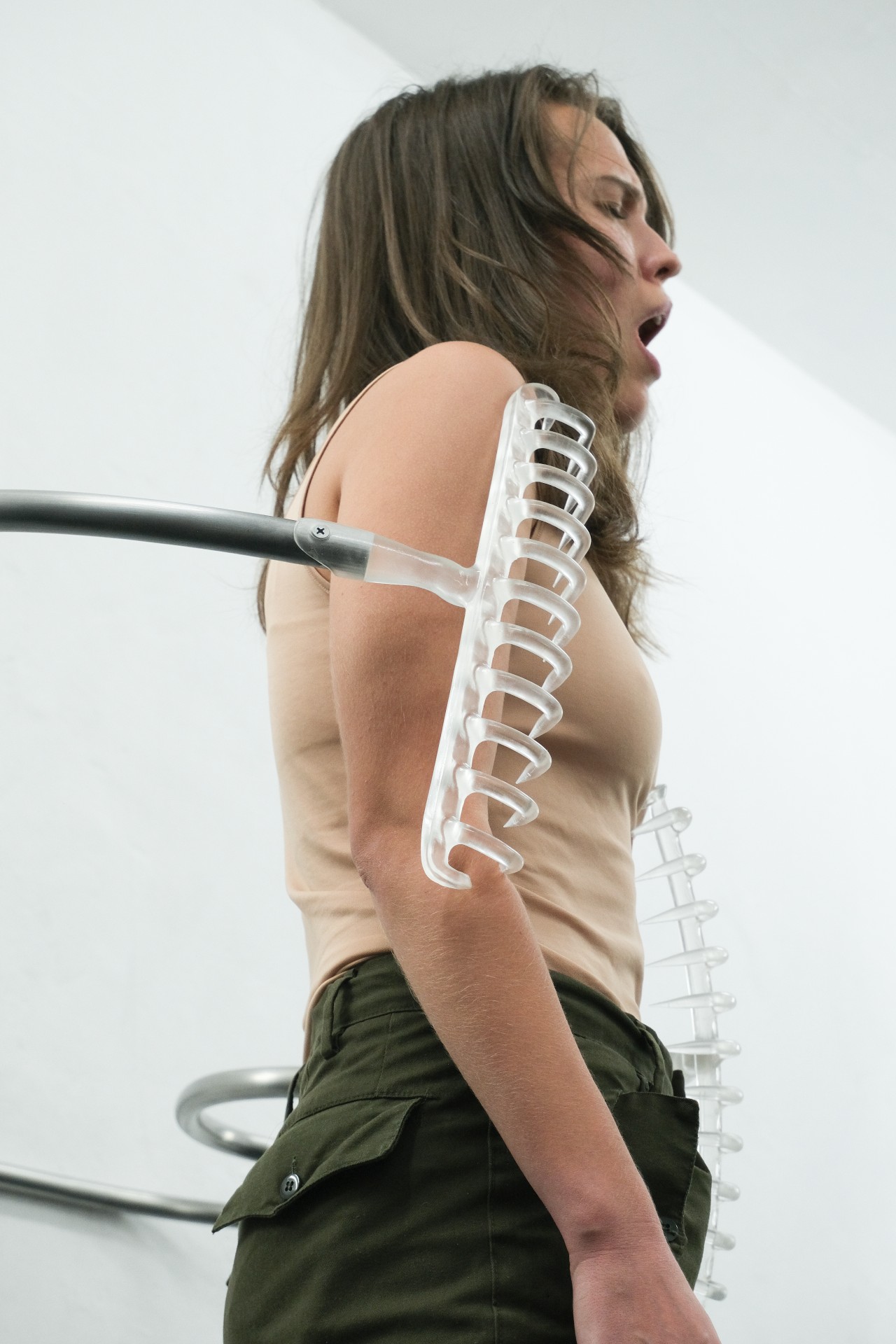
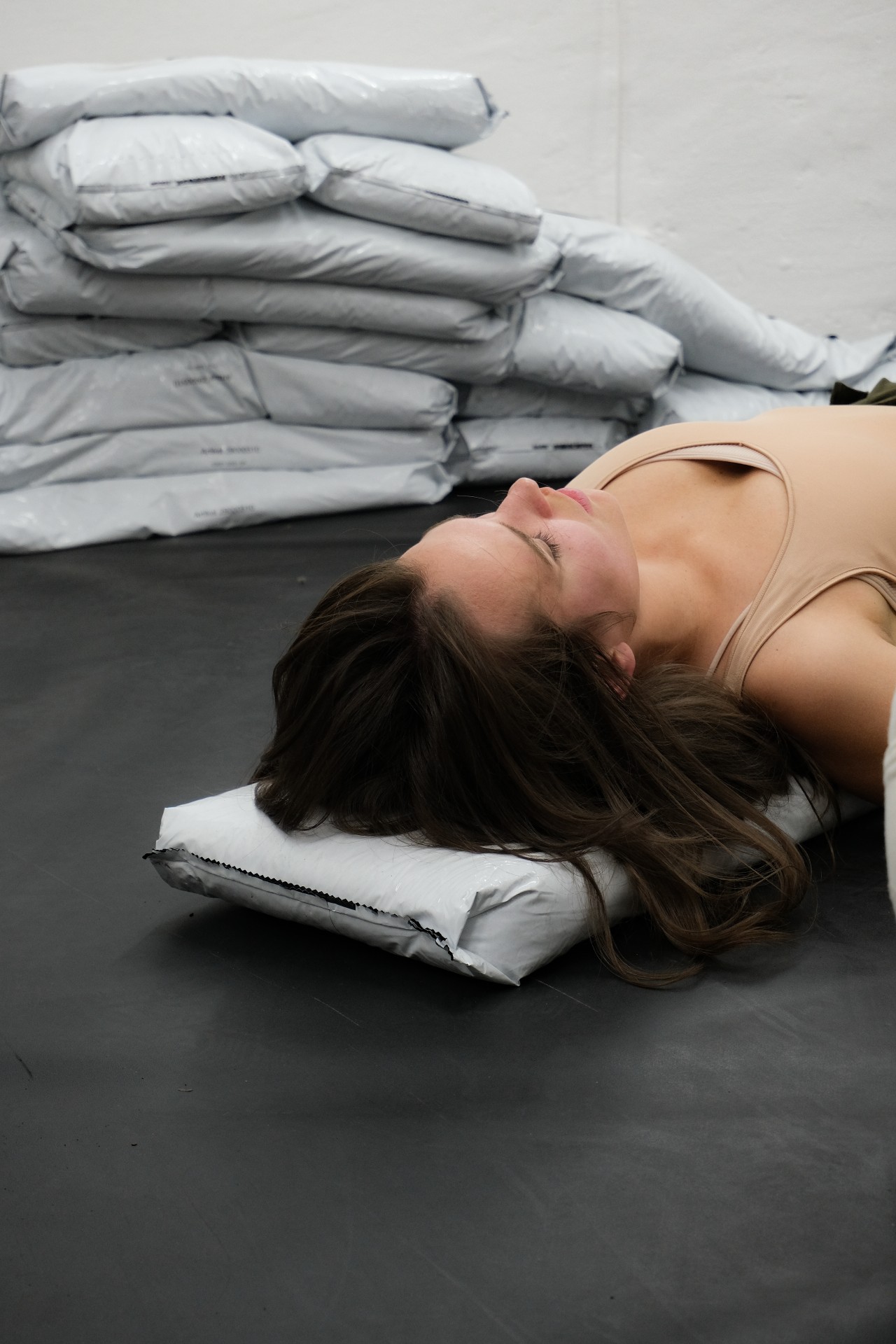
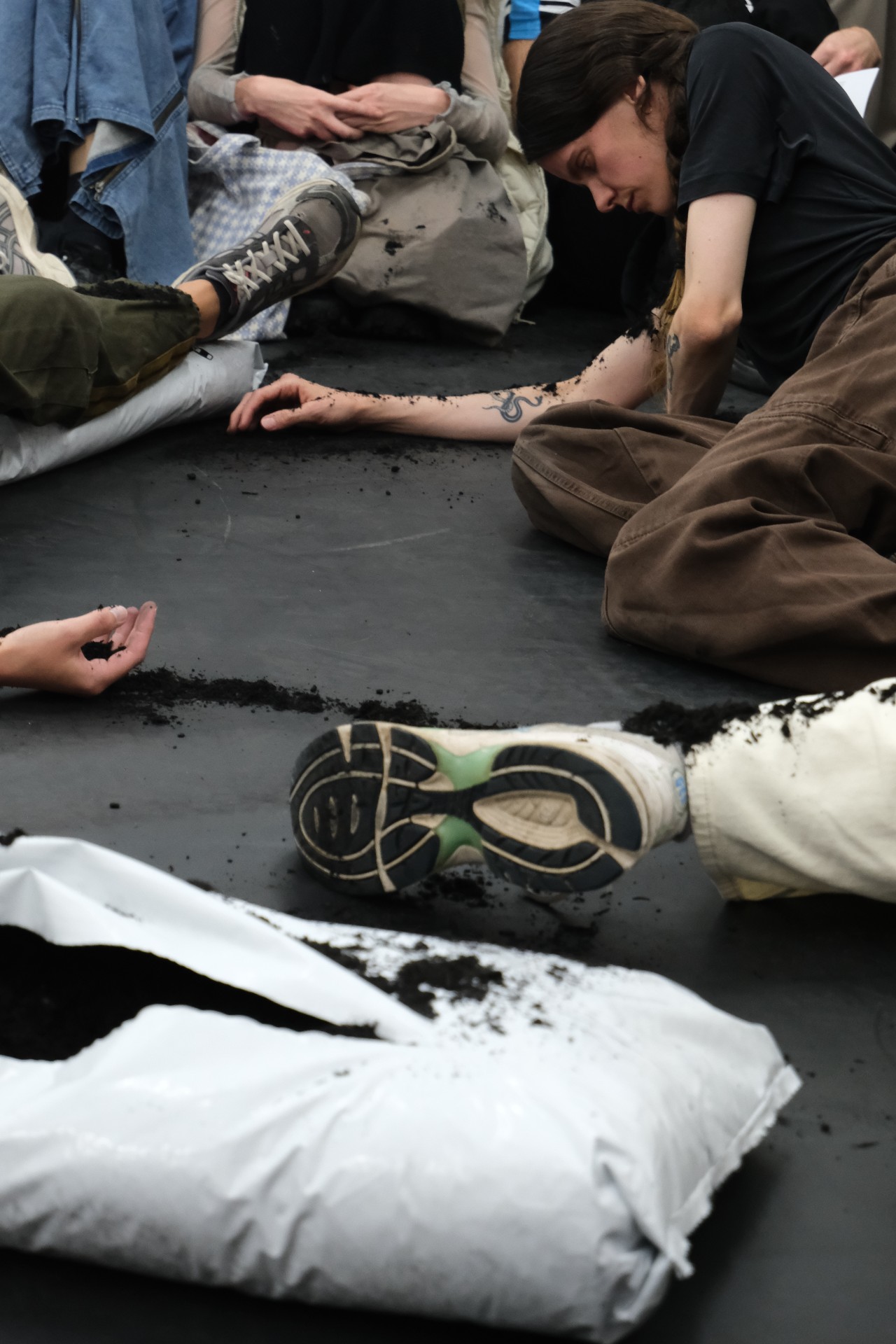
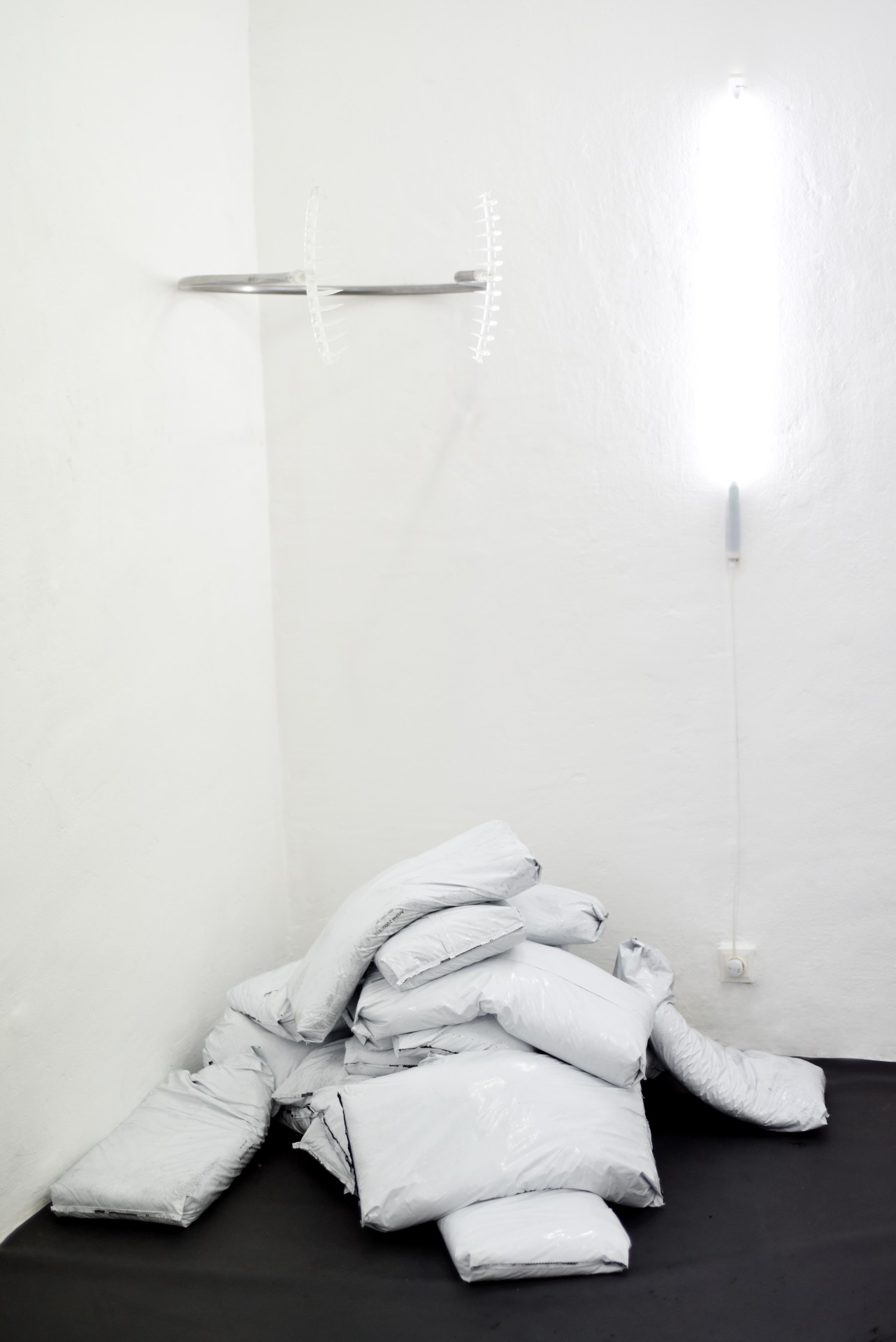
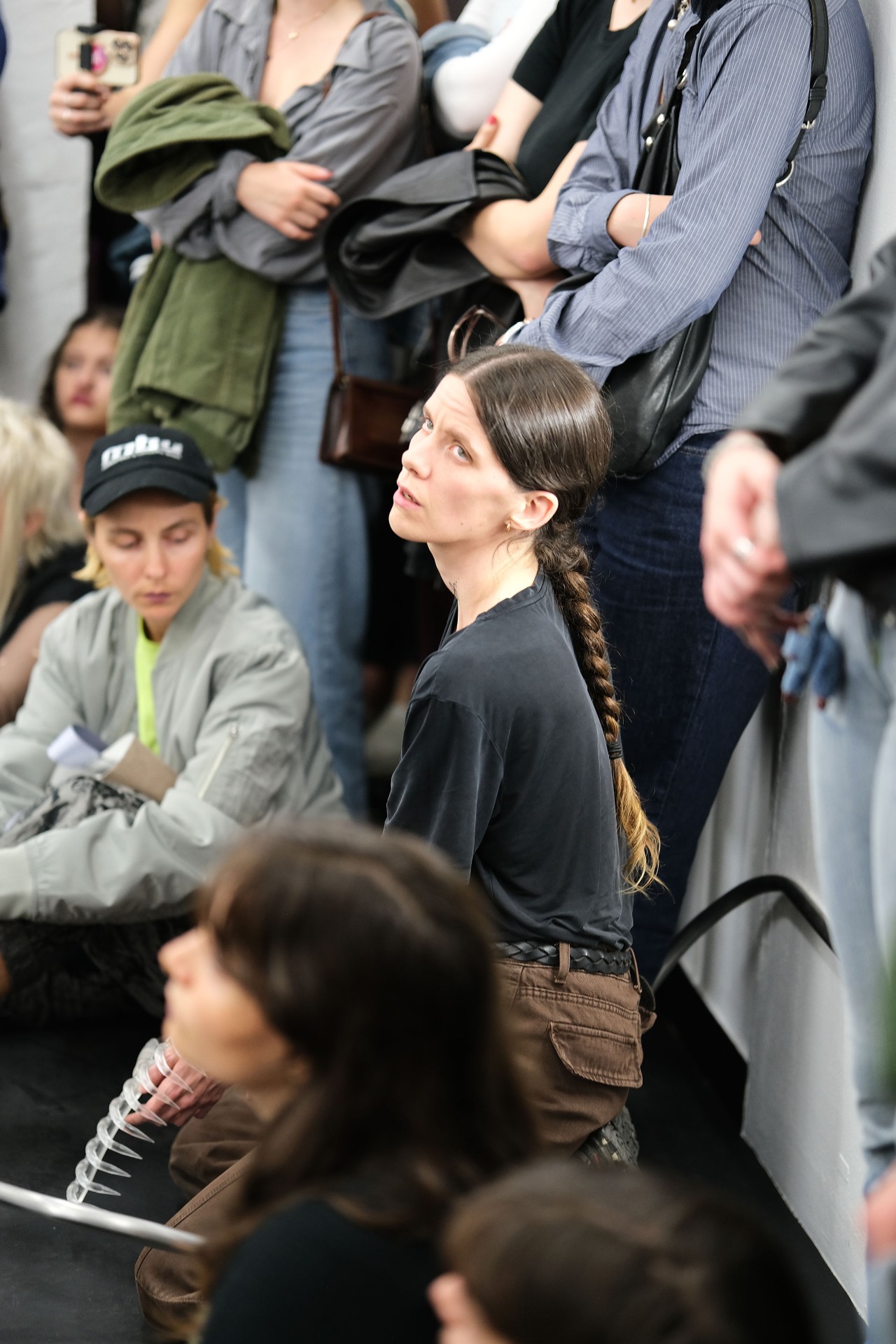
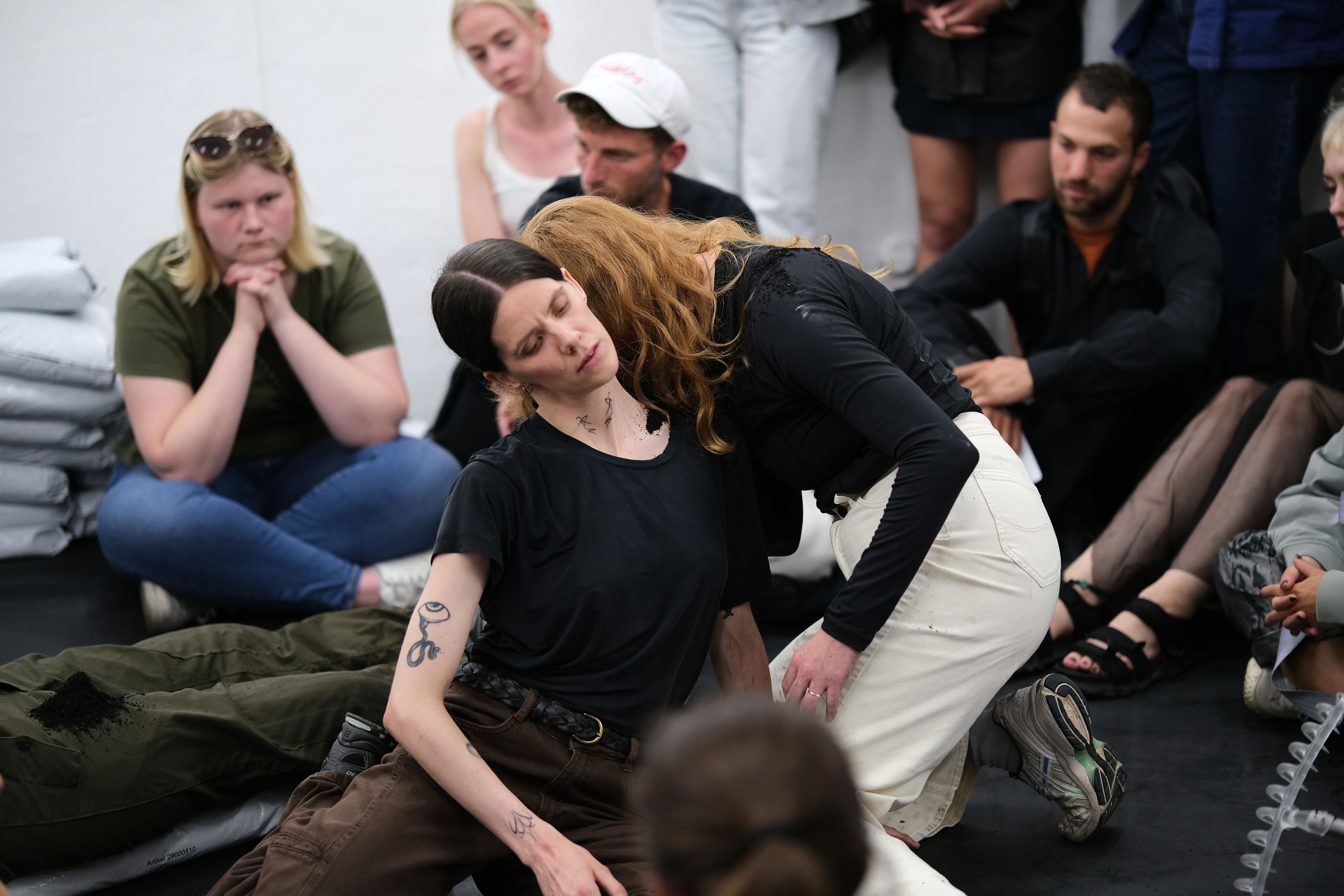
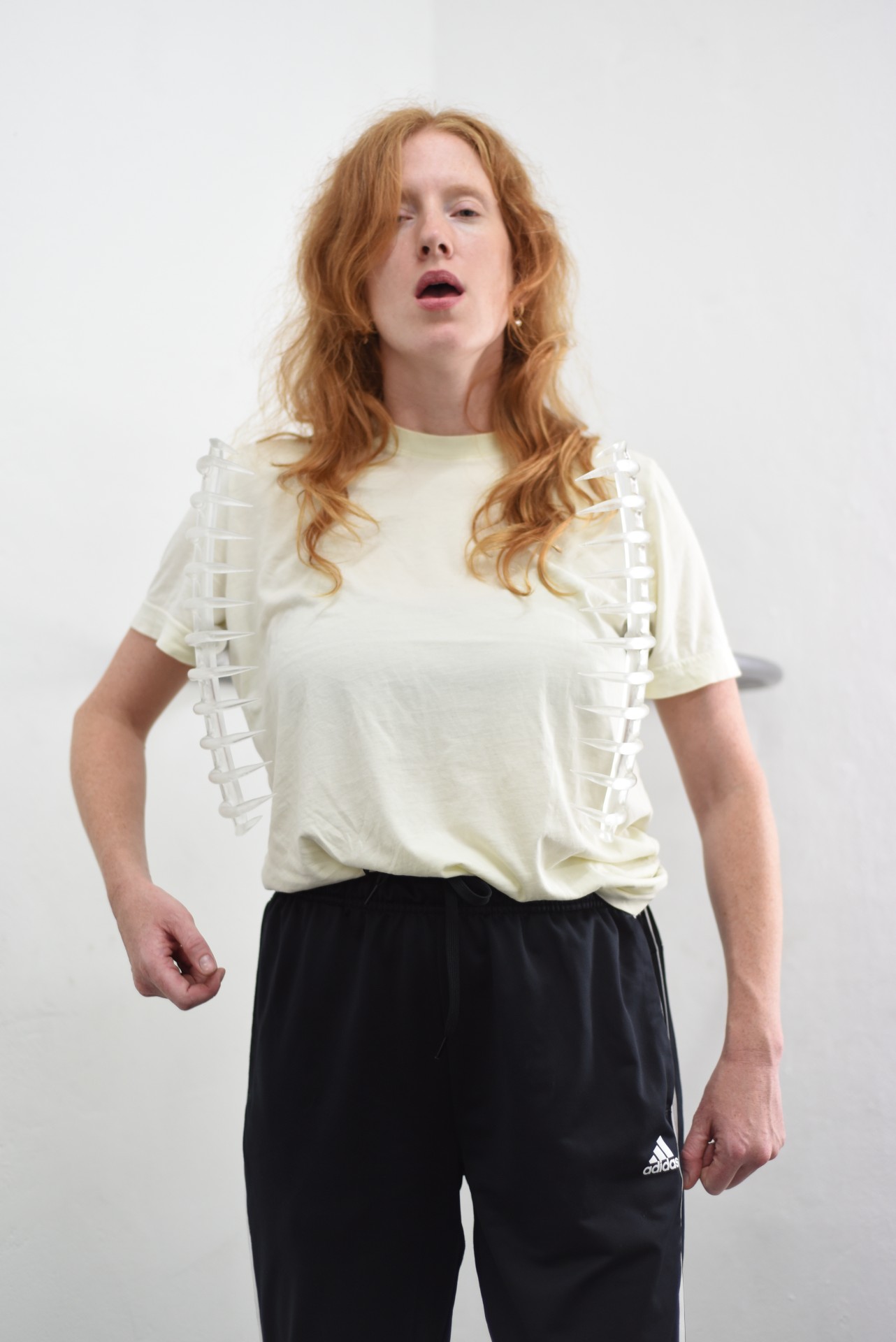
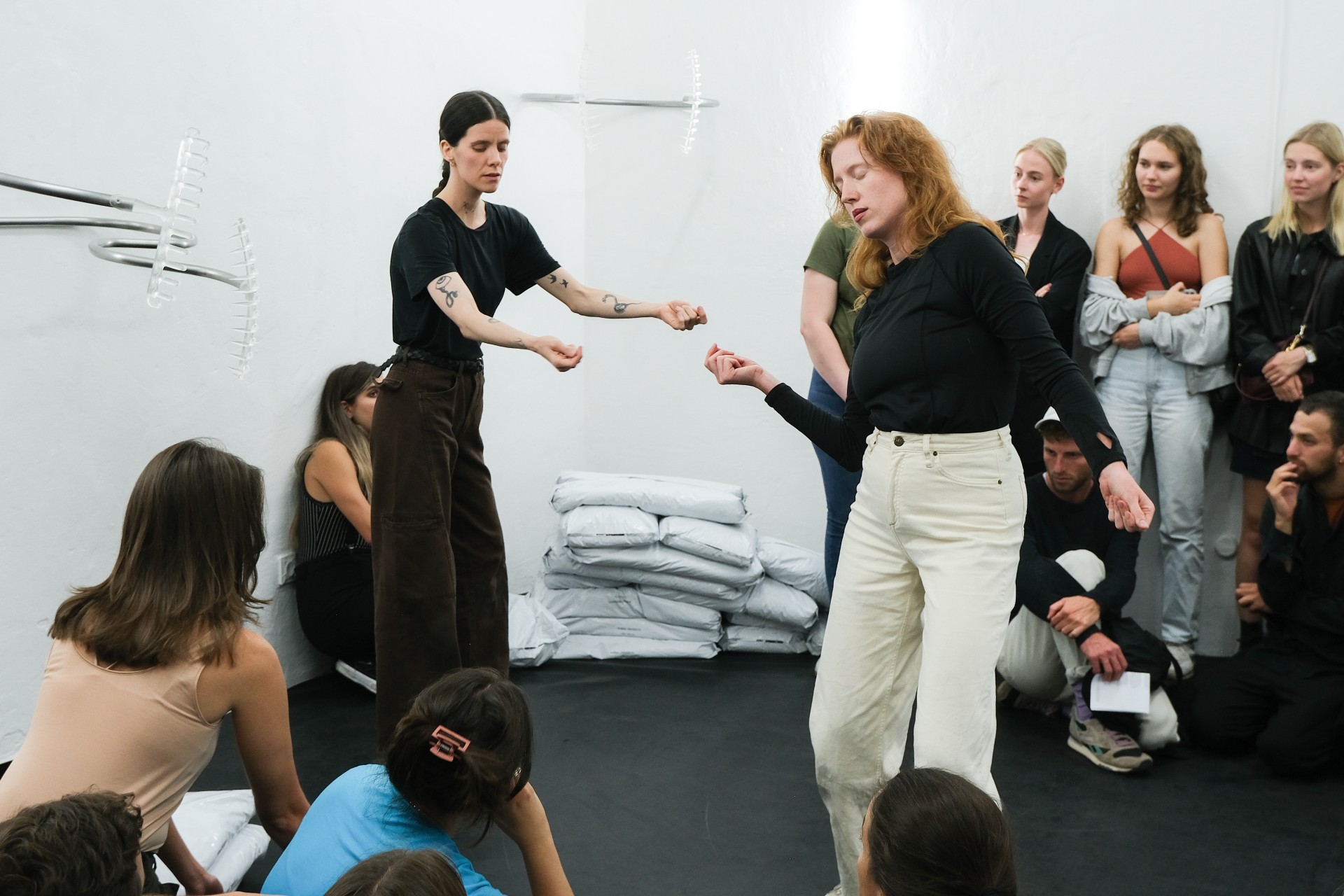
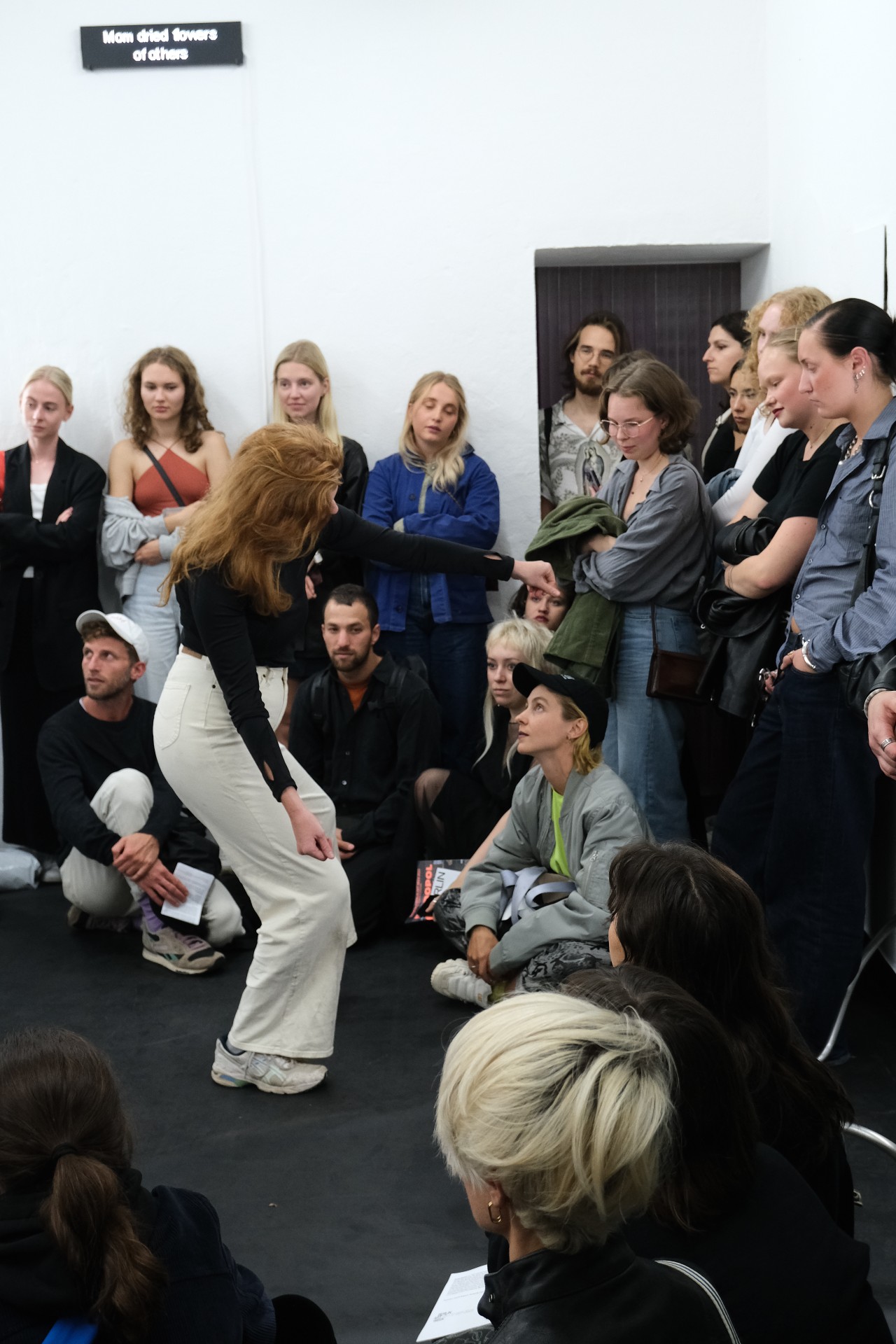
Monosov threads together how geopolitical power struggle takes shape by control of land and resources, implementing nationally or racially segregated labor, manipulating locations of ruins, transforming them into forests, and denying recognition of native land rights through legal means. Dead Earth, A Space of No Escape consists of a sculptural installation which is periodically activated by performative interventions choreographed by the artist in collaboration with performers Camilla Brogaard, Rachell Bo Clark, and the opera singer Julia Shelkovskaia. This first iteration of a work in progress came into being after a series of workshops among the artist and performers who worked site-specifically bearing in mind the aesthetic and architectural parameters of Centrum. Referencing the opera format in her new piece, Monosov emphasizes on the performa- tivity of bodies in public space. Obedient subjects armed with rakes that look as if made of glass. Their heavy labour can bear no fruits in this absurd situation. Something is sickly wrong here. There is a scent of decay. Yet they try, sweating and panting, covering all traces, so that no one could ever recognise what used to be there. The forest will cover the guilt, it will purify the loss. The labour will bond, the sweat will water the soil, it will then unquestionably be their land. Cultivating the land has been used in the past by different regimes as a practice to promote a sense of belonging upon newly occupied territories. By sowing seeds into the soil, a sense of entitlement occurs, a physical bond. Nevertheless, the performers are held by the rakes into stillness; the melody they create is a repetitive and rhythmical soundtrack of an unborn Utopia. Working the land in stillness, the fragile material of the toothed crossbar renders the tool unusable, signaling that the action shall not be performed. This non-action can be seen as the artist’s statement against an ingrained status quo. Dead Earth, A Place of No Escape oscillates between the notions of being active and passive, of stillness over action, and contemplation on the ways in which we relate to the land. Questions of ownership are re-examined and seen through the prism of undoing. Passivity can sometimes be mistaken as innocence, but Monosov invites us to reflect on the responsibility that comes with being a “viewer”. A series of poems written by the artist, displayed on the supertitles screen, serve as the backbone of the dramaturgy of the piece in what can be read as a highly personal and sensitive gesture of solidarity.