- INDICATRIX
- 26 Sep ― 10 Nov 2026
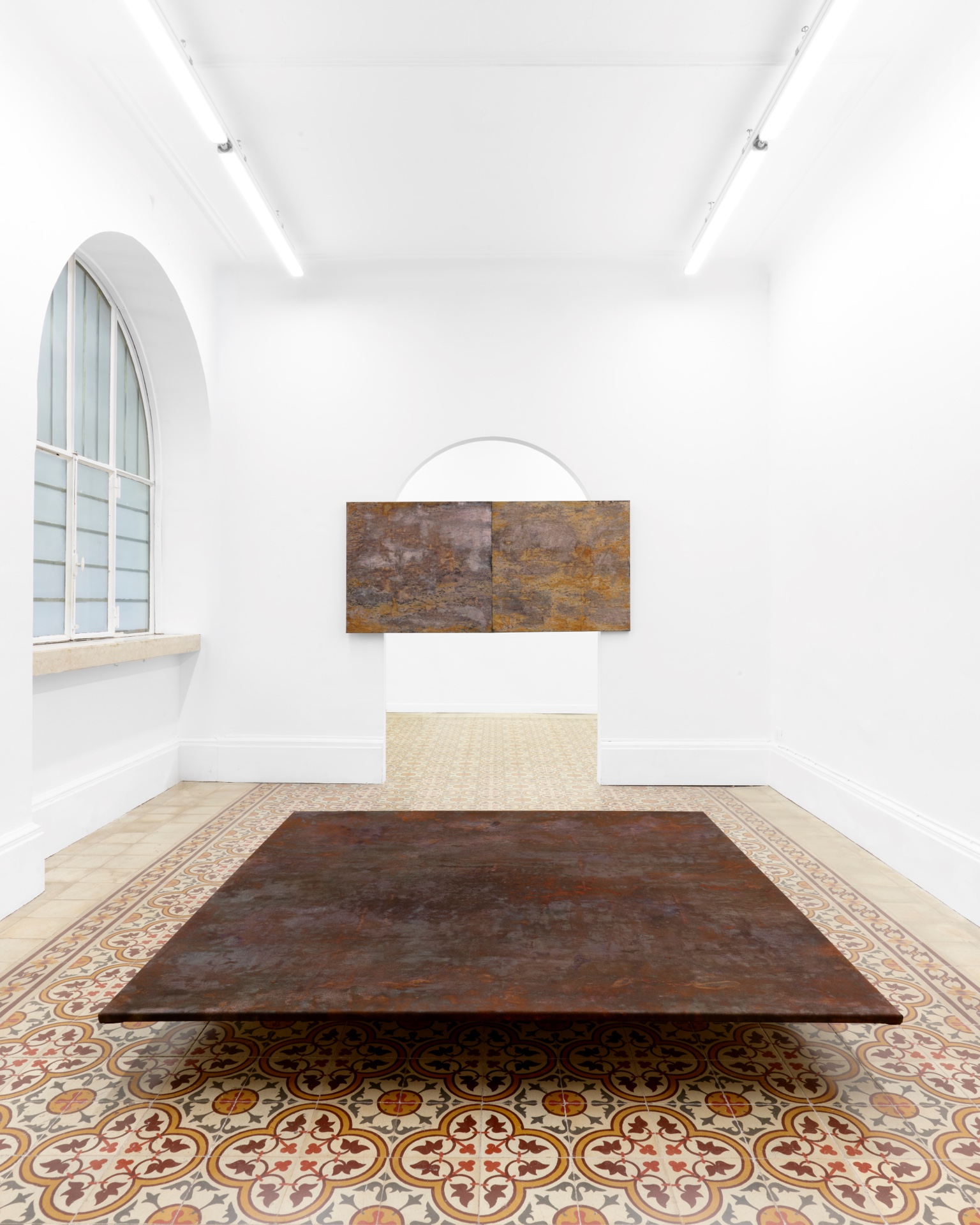
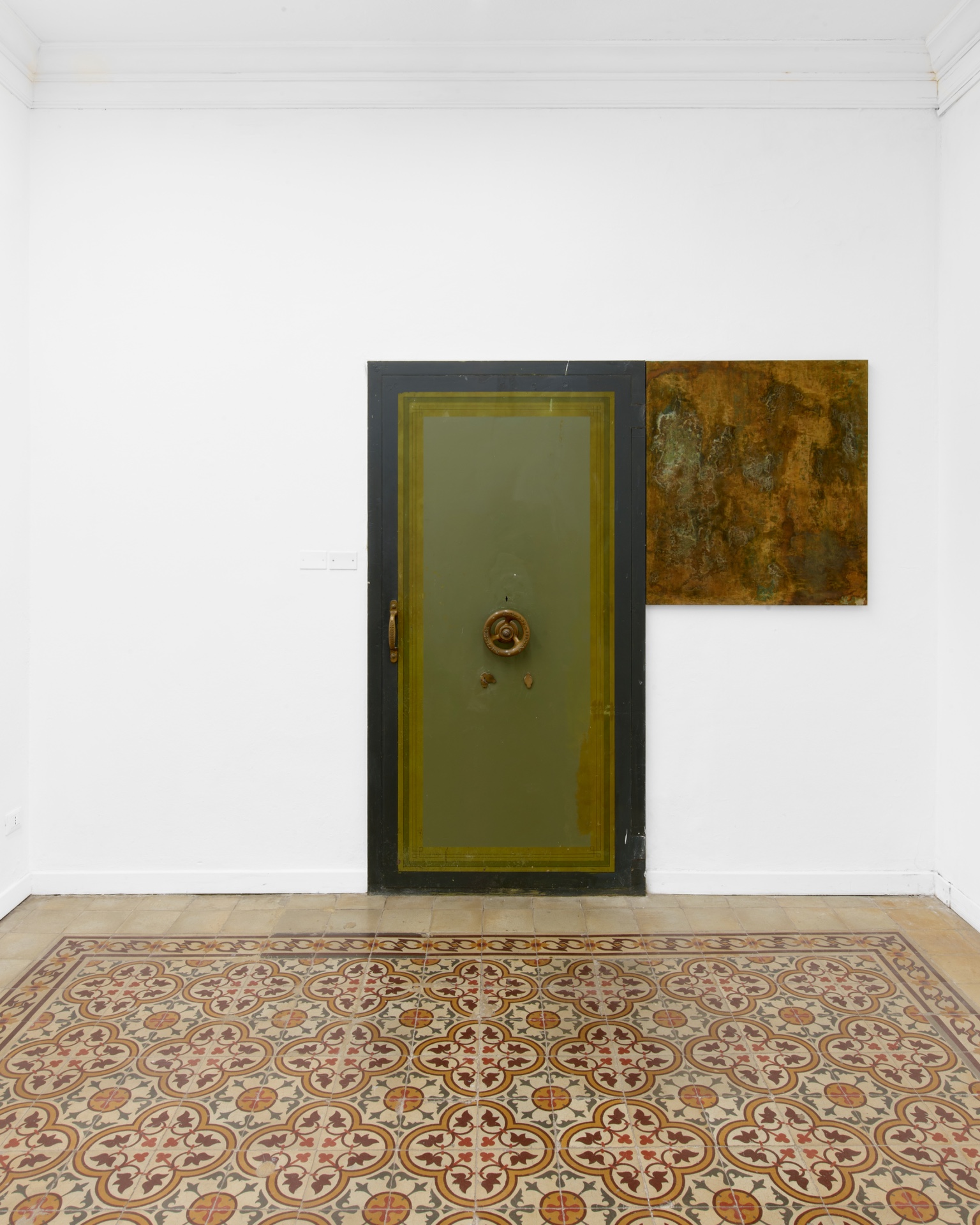
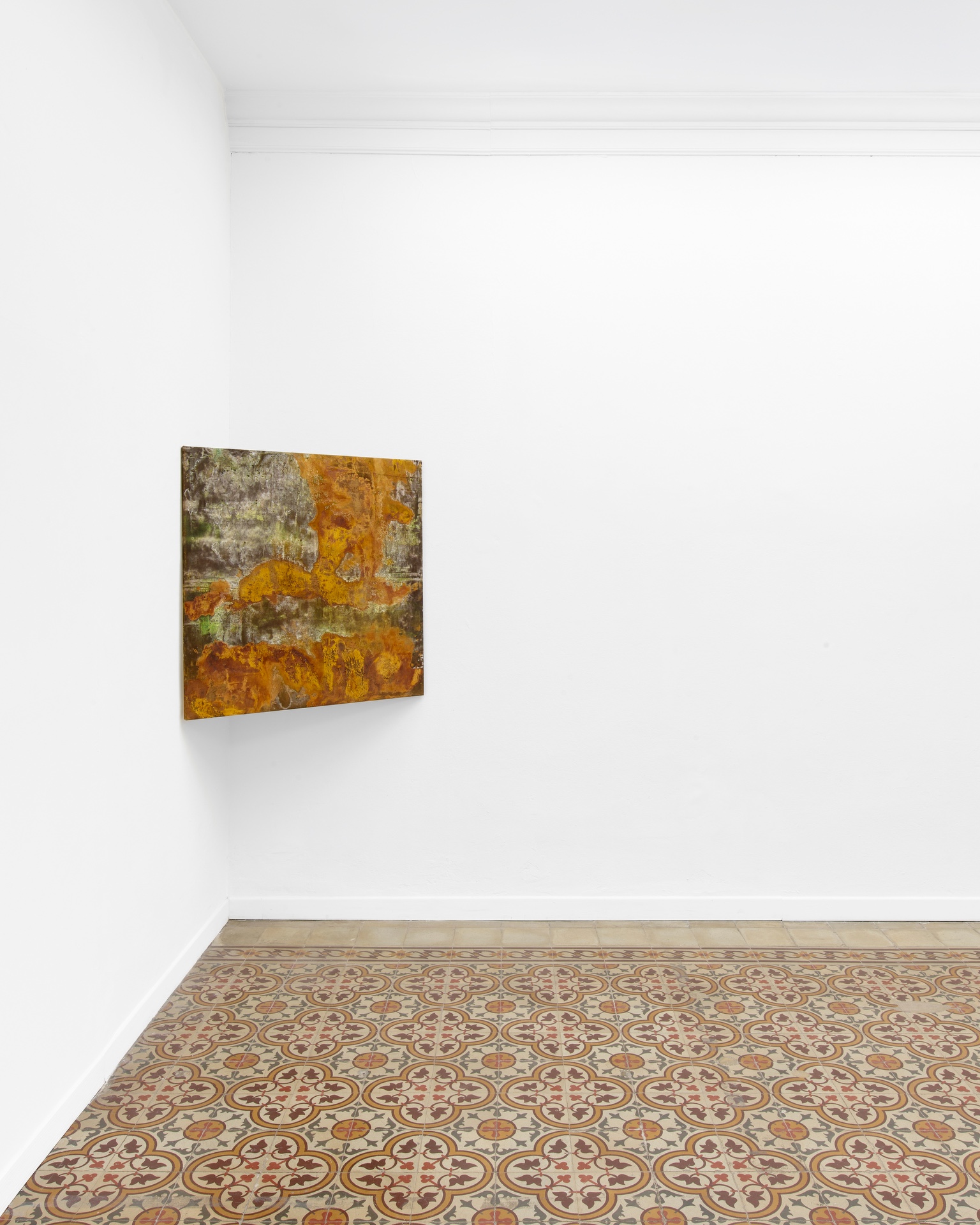
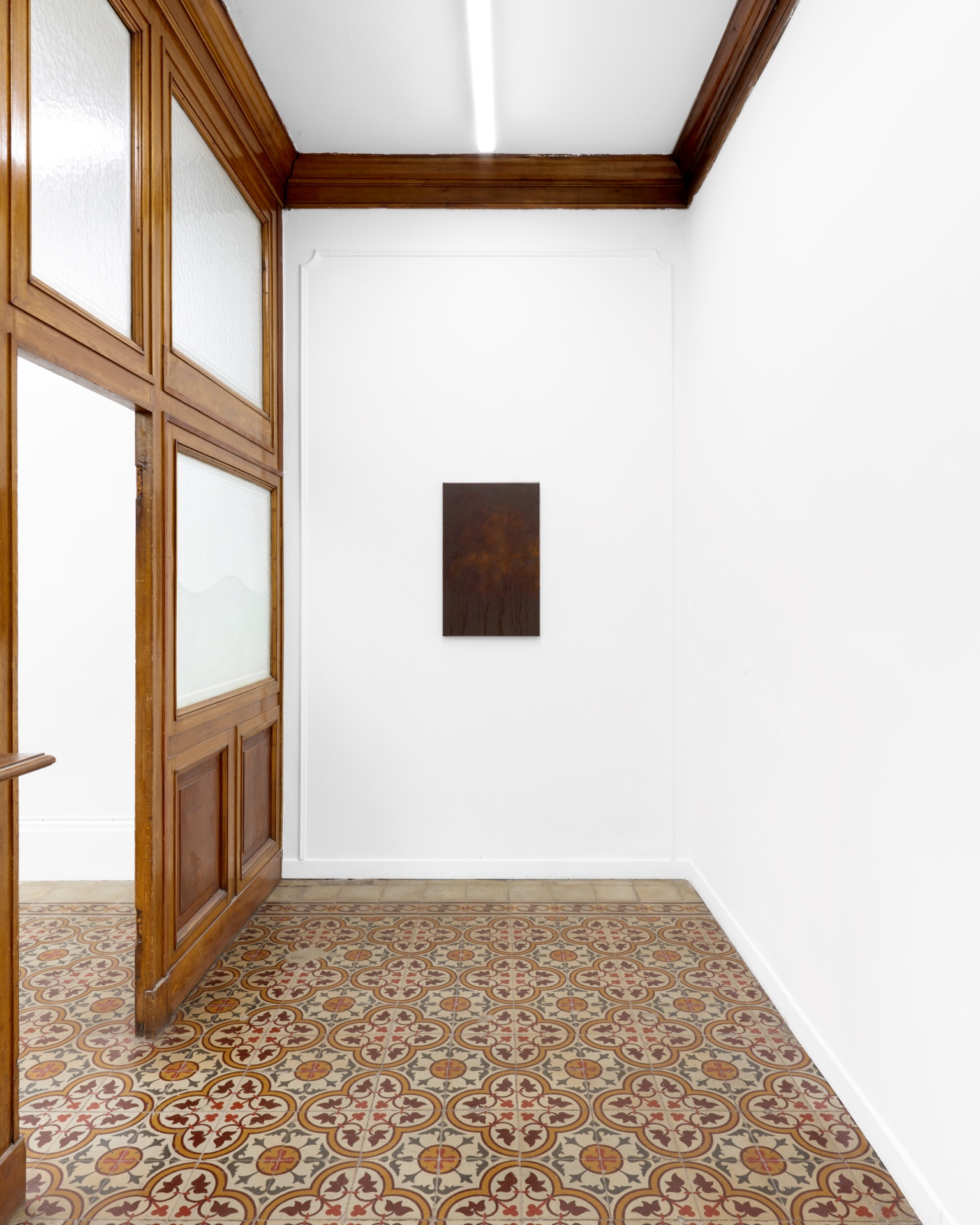
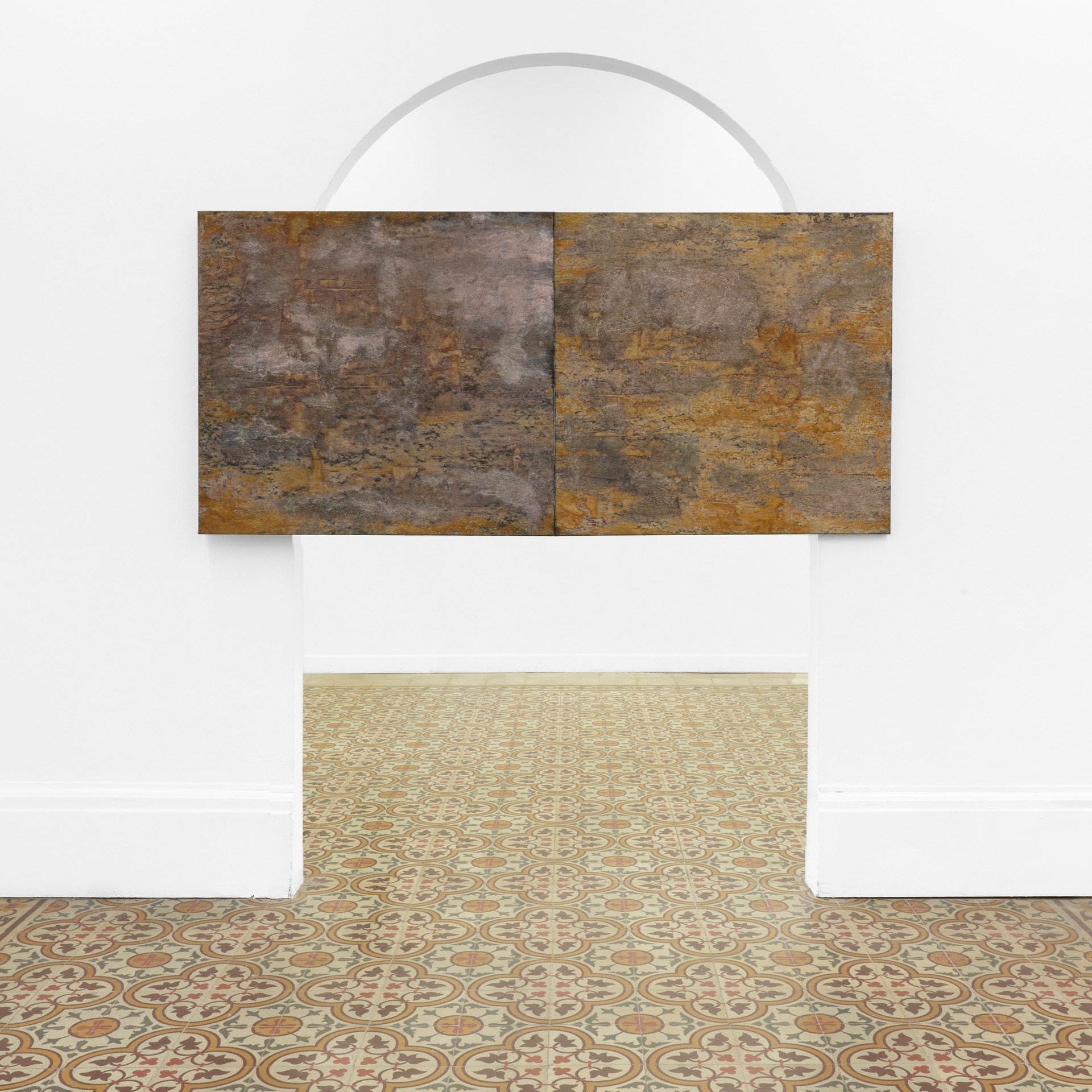
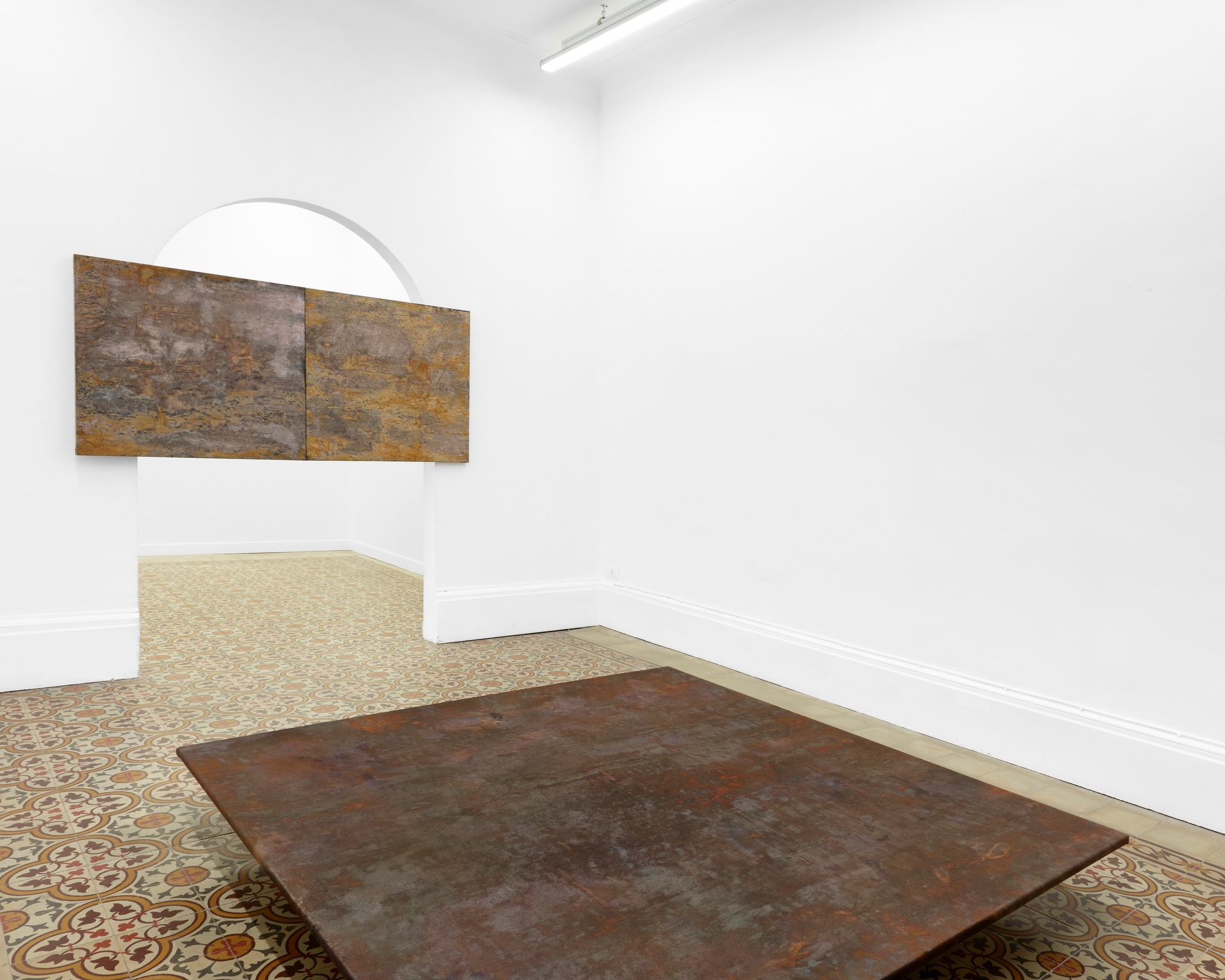
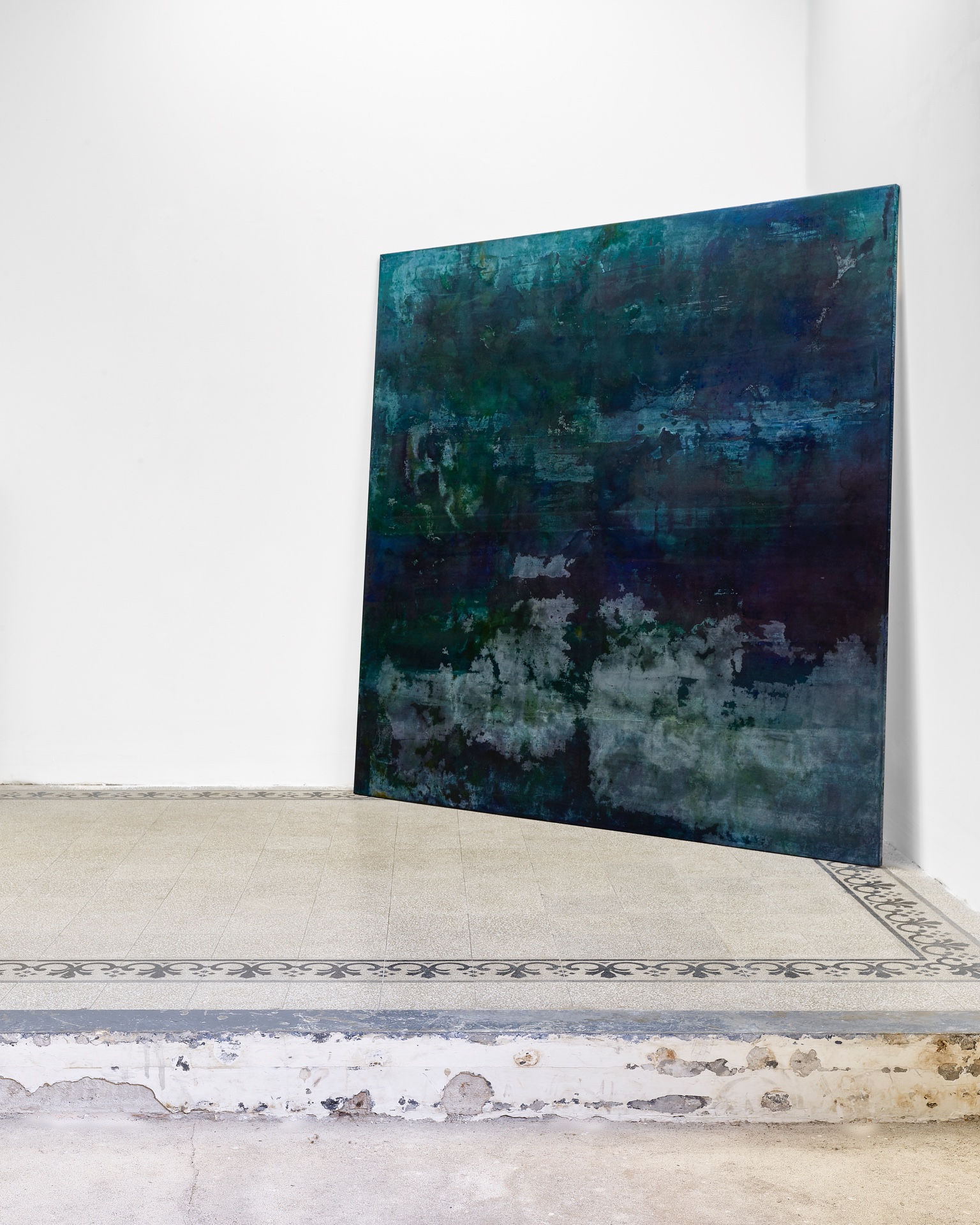
In Jorge Luis Borges’s stories, the labyrinth resists the idea of rigid symmetries; it is a perceptualand interior condition, a space in which every passage alters the shape of the path, and where the exit coincides with the transformation of the one who crosses it. A similar labyrinthine quality runsthrough Taylah Hasaballah’s surfaces. Born in Australia to an Egyptian father, Hasaballah works against the idea of linear development and resists any notion of an intention belonging exclusivelyto the artist. Her works emerge within a regime of uncertainty, a sustained questioning of the self as“creator/producer” of form. From this conceptual stance, she unfolds a practice that replaces the willfulness of the gesture with the logic of processes: surfaces generated through chemicalreactions, accumulations, drifts, and successive erasures produce forms that remain in flux. In herown way, Hasaballah retrieves the idea of the labyrinth found in Borges and James Graham Ballard—a condition in which every deviation becomes generative.
Within this framework, INDICATRIX: Time Leaks / Causes of Extinction Unknown, Hasaballah’sfirst solo exhibition in Europe, unfolds as a material labyrinth. Her sensitivity to stratification, to minimal marks and shifts within matter, has gradually pushed her practice away from the rigidity of oil painting. The transience of her surfaces exceeds the intentionality of the gesture and results from processes in which matter is no longer guided but acts on its own; the surface becomes an organismto be observed. Abandoning oil was not merely a change of medium—it marked an ontologicalshift, a decision to entrust form to the mutations and drifts of matter.
Hasaballah’s practice begins with this principle of subtraction. She allows the surface to registerwhatever occurs above or beneath it—traction, falling objects, wind, accidental contact—withoutletting the gesture determine its form. I think of them as “entropic surfaces,” structures that react, deform, and stratify. Chemistry becomes a generative system: the morphology of the works arisesfrom the behavior of linen, from accumulations of salts and metals, ionic acetates, pigments, and substances that react unpredictably with one another. If her oil painting still belonged to an ancestral idea of the artist as the original producer of form, her recent work embraces a processuality that escapes the auratic question of the artwork and yields to the transience of matter. In giving way to matter, her practice meets entropy. Beyond its physical definition—measuringdisorder and the dispersion of energy within a system—entropy in art theory destabilizes and reconfigures our visual and temporal perception: an ineluctable drift toward transformation. Robert Smithson described it as an irreversible process, an “evolution in reverse” that dissolves form and reshapes it over time. These surfaces owe something to Land Art, to Smithson’s entropy, and to the labyrinthine imagination of Borges and Ballard, which Hasaballah sees as a manifestation of entropy itself.
Within this entropic landscape, INDICATRIX becomes a lens through which to observe whatdeforms when a surface is translated elsewhere—when matter becomes organism and when the artist serves only as the initial impulse. The title refers to Tissot’s indicatrix, a cartographic device that visualizes distortions produced when one surface is projected onto another: infinitesimal circlesthat, once displaced, become ellipses, revealing tension, stretching, compression. It is a tool of perception that makes visible what shifts when something is moved out of place.
This logic structures the exhibition’s two chapters: Time Leaks (Milan) and Causes of ExtinctionUnknown (Brescia), two temporal conditions of porous matter. Their formulation emerged from an analysis of the temporal and entropic architecture running through Hasaballah’s work, where the deepest conceptual engine is the instability of time itself: a time that crystallizes or collapses, as in Ballard’s anti-time; a time that stratifies into images in which past, present, and future coexist, echoing Deleuze’s time-image. Time Leaks stages an accelerated, precarious temporality—surfacesreacting to light, showing slippages, distortions, metamorphoses in progress (all works 2026). Itmarks the threshold of temporal escape, where time manifests as loss. Causes of ExtinctionUnknown, by contrast, reveals a geological temporality: surfaces that have reached an osmotic poisewith their environment, showing sedimentations, crystallizations, and forms emerging under the pressure of time (2023–2024).
The works take shape as geologic formations. Each layer alters what precedes it, producingswellings, collapses, micro-fractures. The morphology generated by the linen—an Italian linen, soft and easily deformed—recalls rivers and valleys. In some works, the imprint of the studio floor foldsinto the form; others, made on glossy polyester, react to light; in others still, the fall of a liquiddetermines direction, or the reaction between metals and salts produces unpredictablecrystallizations. They have no before and after: they register as material phases held within spans of time.
Sound extends this temporality. INDICATRIX is permeated by a soundscape composed by Blu Aloé—a sound artist shaped by Cologne’s experimental techno scene—built from granular synthesis, distorted drones, dense modular textures, and contact-microphone recordings made in producer Boris Wilsdorf’s studio. The old oil tank in the studio—once used by Einstürzende Neubauten to capture reverberations and textures—becomes a medium that translates entropy, oxidation, and the precarious relation between matter and its environment into sound. Aloé worked with samples of materials found in the works—metals, surfaces, droplets, rusted tanks—and with modular synthesizers generating feedback loops and recursive systems. In Time Leaks and Causes of Extinction Unknown, sound reverberates the metamorphoses and stages of matter, becoming the audible trace of Ballard’s anti-time, where worlds crystallize or collapse, making temporalslippages and sedimentations perceptible. In this way, the two chapters of INDICATRIX inhabit a shared entropic dynamic, with sound extending the internal logic of the works and revealingfractures in time as vibration, residue, and persistence.
Taylah Hasaballah (b.1994, Melbourne) lives and works in Paris. Her practice centers on entropy, with chemically driven paintings that investigate transformation, matter, and time. Working across painting, digital media, and sound installation ––she has presented solo exhibitions and large-scale public works is Australia and Europe. Her work is held in public and private collections across Australia and the United States. She holds a degree in science from the University of Queensland, Brisbane and certificate in painting from the National Art School, Sydney