- To drink and drown in pools of ourselves
- 09 Oct ― 18 Jan 2027
To Drink and Drown In Pools of Ourselves
Entropy comes from the Greek entropē: a turning toward, a transformation. When Rudolf Clausius
coined the term in 1865, he borrowed from tropē, “a turning,” to name a process through which
energy changes in its availability, becoming increasingly dispersed and less capable of being put to
work. Entropy has since become synonymous with disorder, decay, ruin, but these associations
obscure something in the word. Nothing necessarily disappears. Matter remains matter; energy
remains energy. What entropy refers to is a change in its arrangement, and with it the possibility of
return. A glass shatters and remains entirely present in its fragments, yet no amount of reversing the
gesture that broke it will gather those fragments back into a glass. Entropy gives transformation a
direction. It doesn’t just describe the fact that things change, but the accumulation of change into
history: the moment at which a previous arrangement becomes irretrievable. Before disorder, then,
there is the turn—something becoming otherwise, carrying the evidence of what it was without any
promise that it might become so again.
Jemima and I are talking over a birthday lunch, sitting next to each other and discussing this word
and how ridiculous it is that it has never come up in relation to her practice before. I’ve previously
in other conversations used the word misbehave to describe how her materiality functions,
something about these materials not performing their duty and in so doing becoming something
else. This may have once been the case, but this word feels too petulant now or something. There is
a neat and useful ambiguity to how entropy functions in art sense, and it also makes me sound
smart. But despite my indulgent introduction, the word entropy actually came to me from a Grimes
song. I was on the bus in high school when I heard Grimes sing the word in a song of the same
name (before her fall from grace a-la Musk). I doubt I looked it up. It lodged itself somewhere in
my head regardless, stored alongside the melody without requiring much comprehension. Music is
good at keeping things for us like that. Hearing the word again years later felt less like learning it
than retrieving it, except this time it seemed to describe something I had been watching happen in
Jemima’s work. Misbehave had located the strangeness in the material, as though steel or liquid
could be disobedient. Entropy relocates it in the system around them. Nothing is behaving badly; it
is simply doing what matter does. Things leak, corrode, circulate, strain, disperse and become
otherwise. The question is what structures we build in the hope that they won’t. Perhaps all
structure does is make change slow enough to look like permanence. There’s something naive in
that hope, I think: the wish to hold something in place despite knowing that contact with it has
already begun to change its arrangement.
To Drink and Drown In Pools of Ourselves turns on this axis. It got me thinking about desire in
relation to entropy, or more specifically, about desire as another kind of irreversibility. I think about
Robert Smithson’s famous thought experiment: a sandbox divided between black and white sand,
around which a child runs clockwise until the colours mix into grey. Asking the child to run
counter-clockwise does not restore the sand to its previous arrangement; it only mixes it further.
There is no backwards. Anne Carson writes that desire requires something similar: an interval. In
Eros the Bittersweet, desire emerges through the distance between the lover and the beloved,
between what is held and what remains beyond reach. Desire attempts to close this distance while
depending upon it for its continued existence. Getting what you want does not return you to the
state you occupied before wanting it. If anything, desire has already interfered with the
arrangement. The sand has been mixed.
Jemima tells me about a scene from Scary Movie 3 in which a woman is impaled during a car crash.
The thing that should kill her somehow misses everything important, and removing it would now
cause her to bleed to death. She survives, but only for as long as the thing remains lodged inside
her. I haven't seen the film, but this is how Jemima tells it to me, which is probably more useful
anyway. Something about desire again. The object of injury becomes the condition of survival;
removing it would not restore the body but injure it again. There is no intact body waiting
underneath.
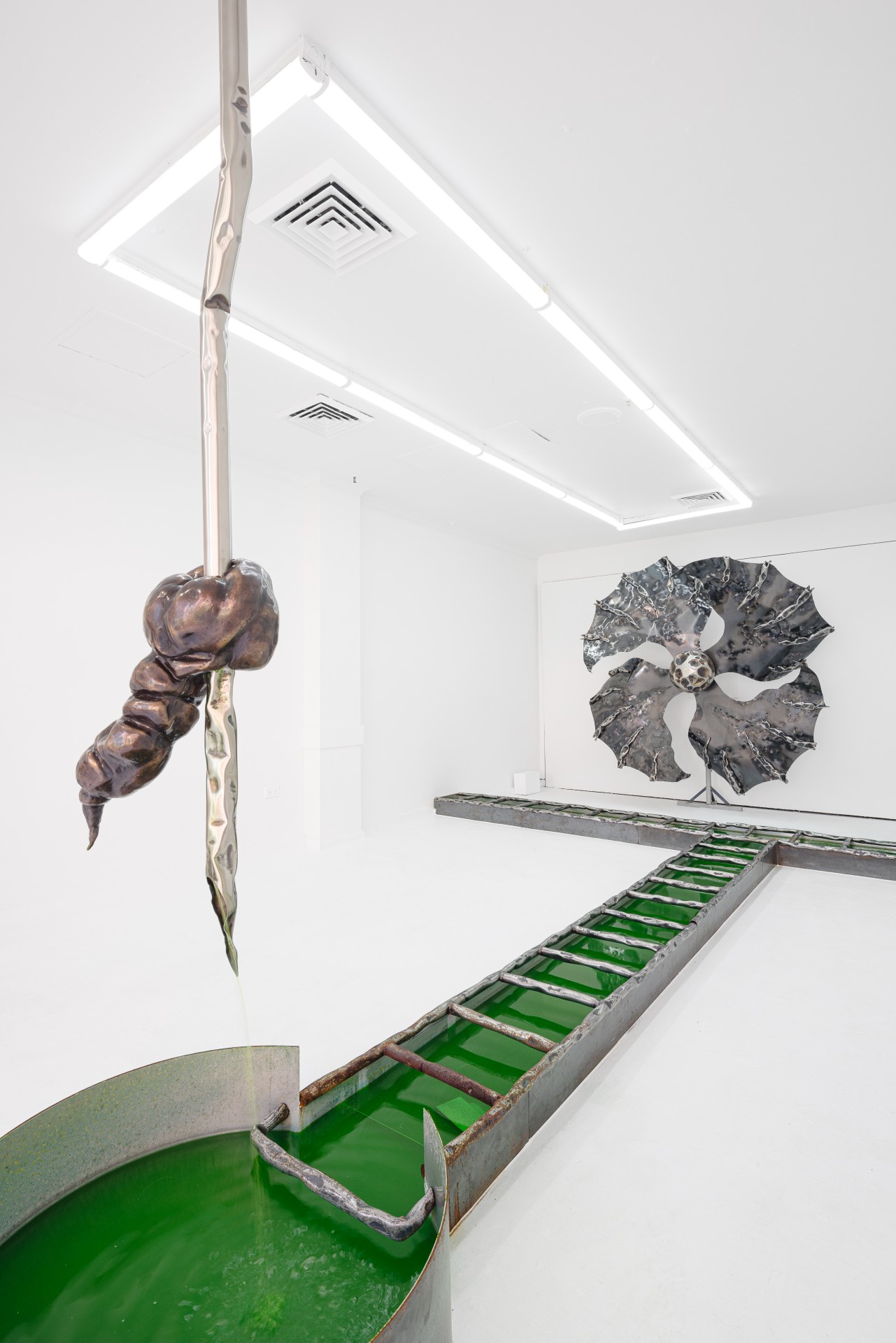
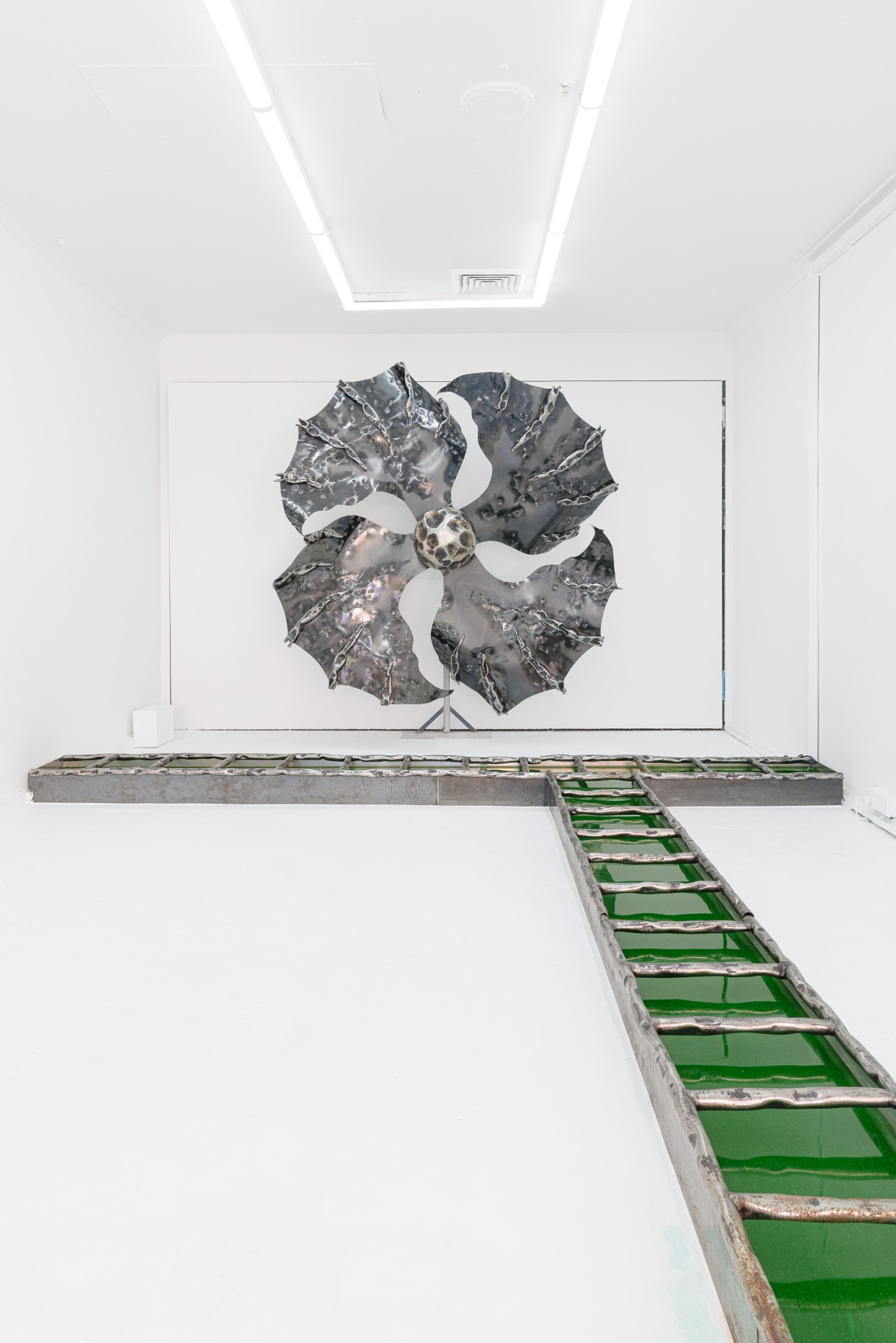
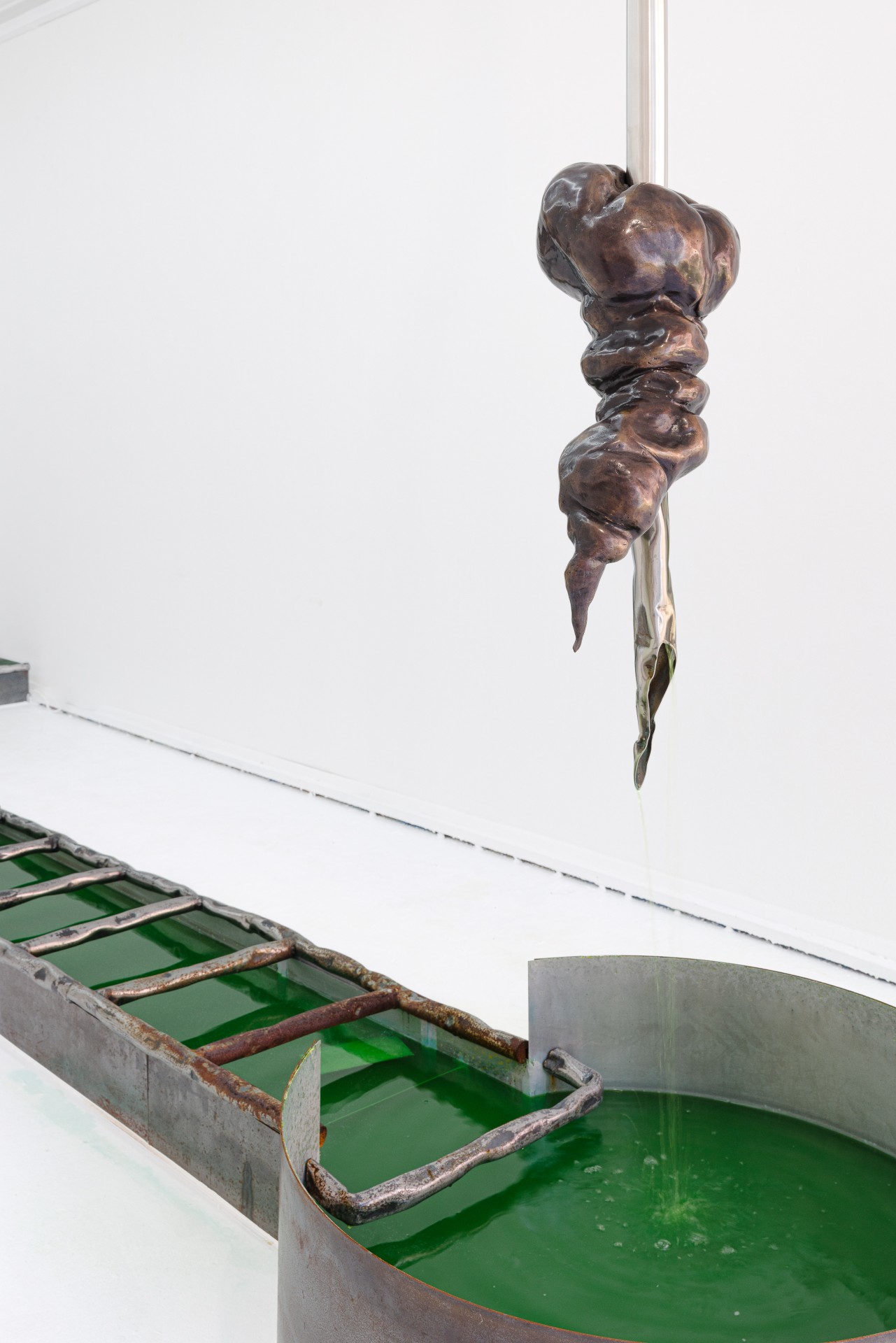
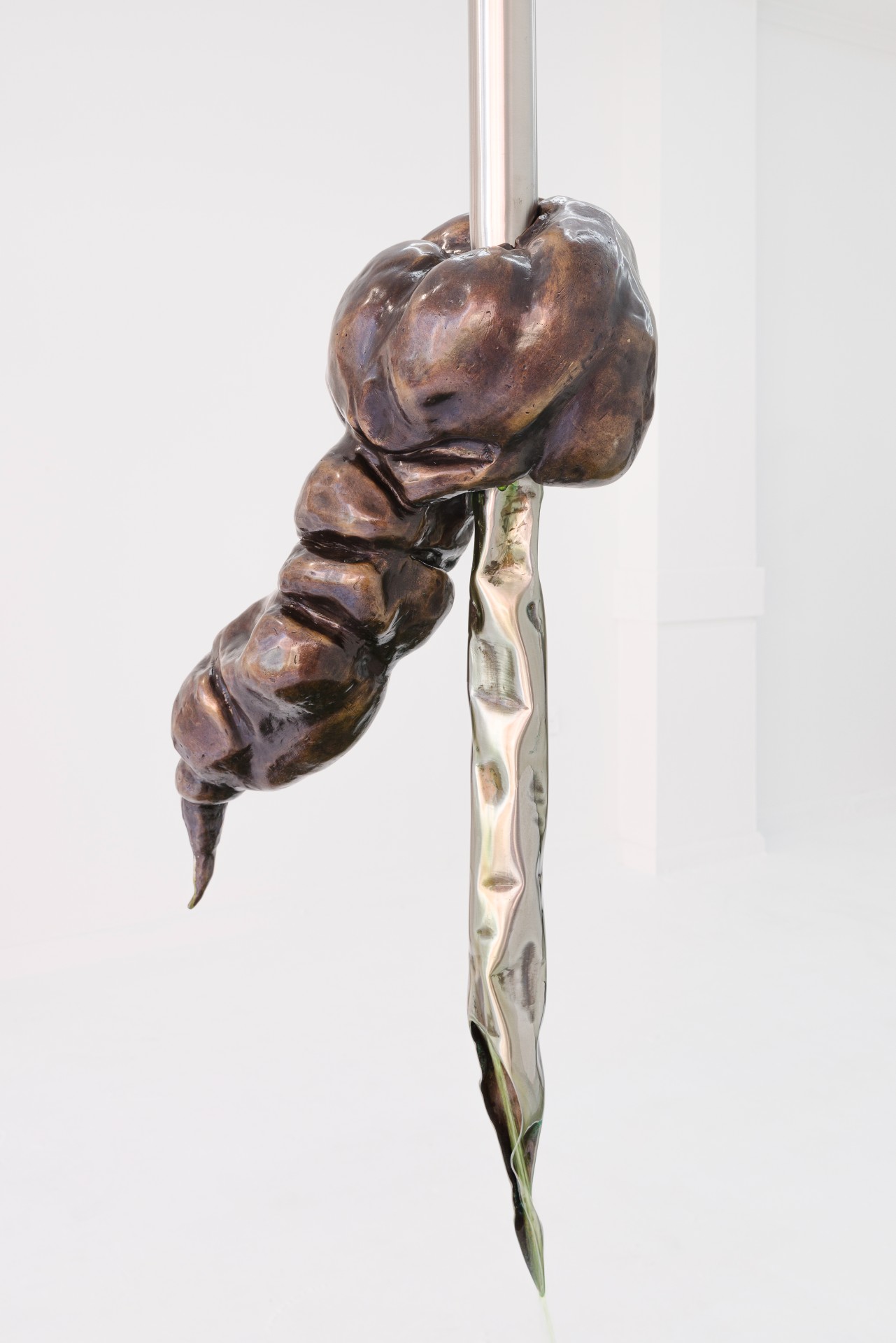
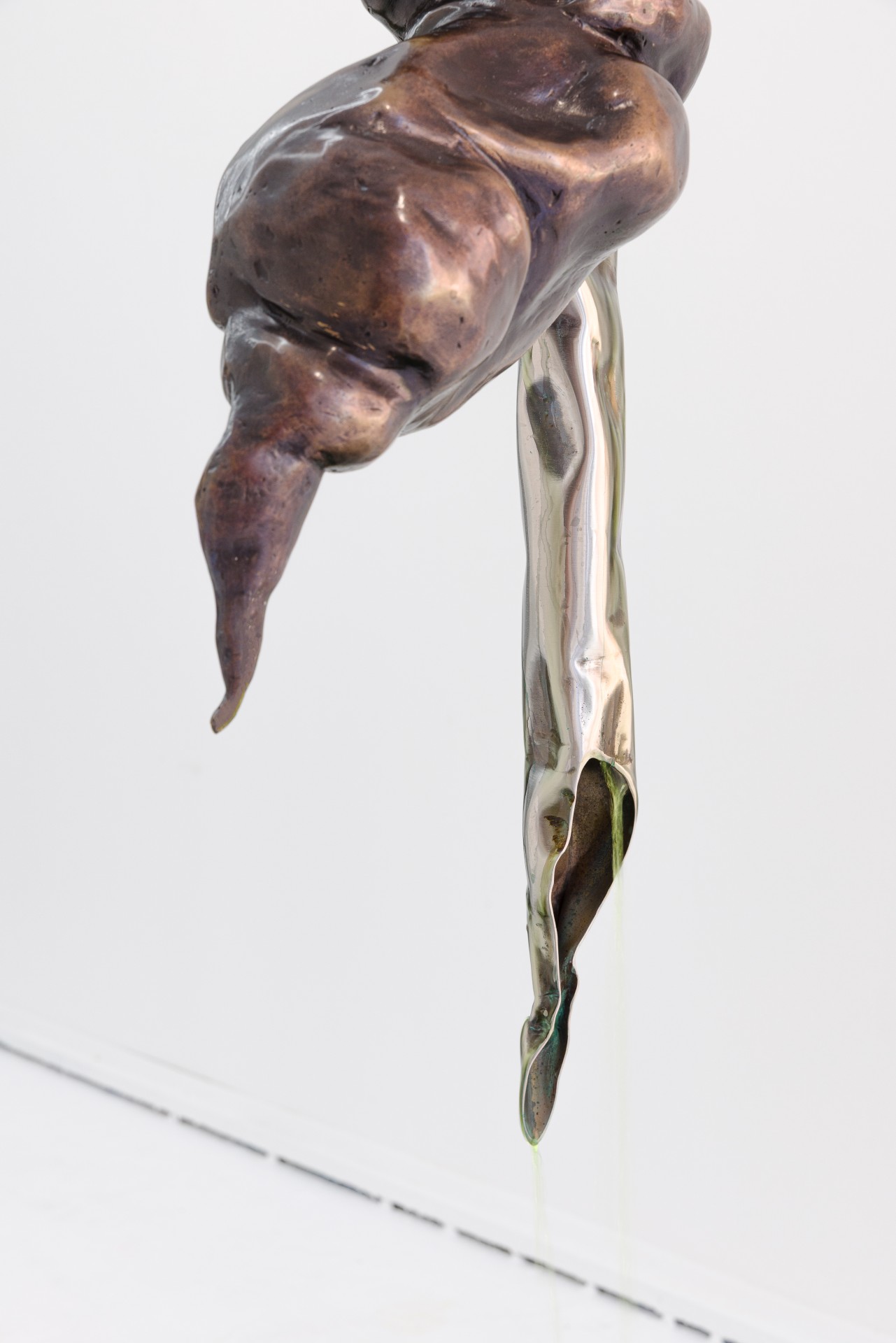
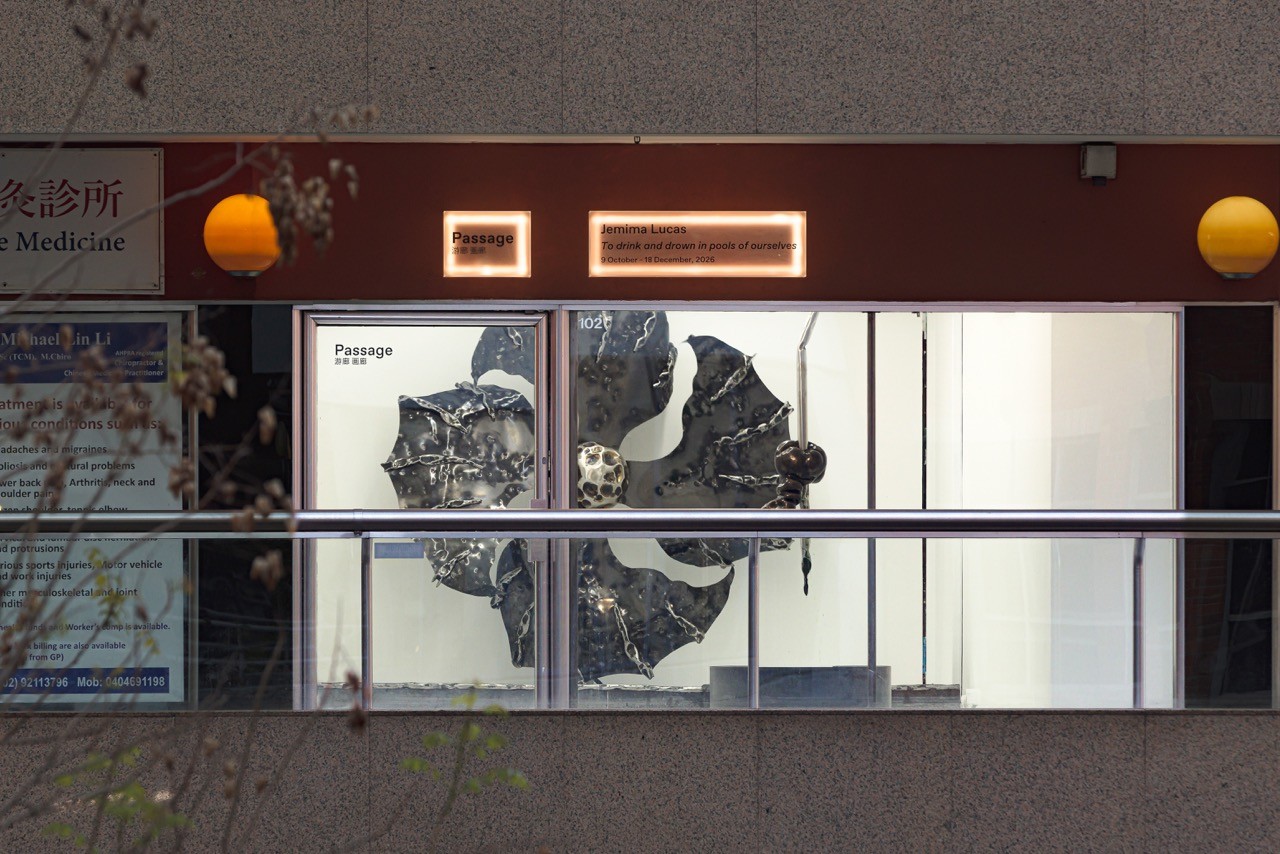
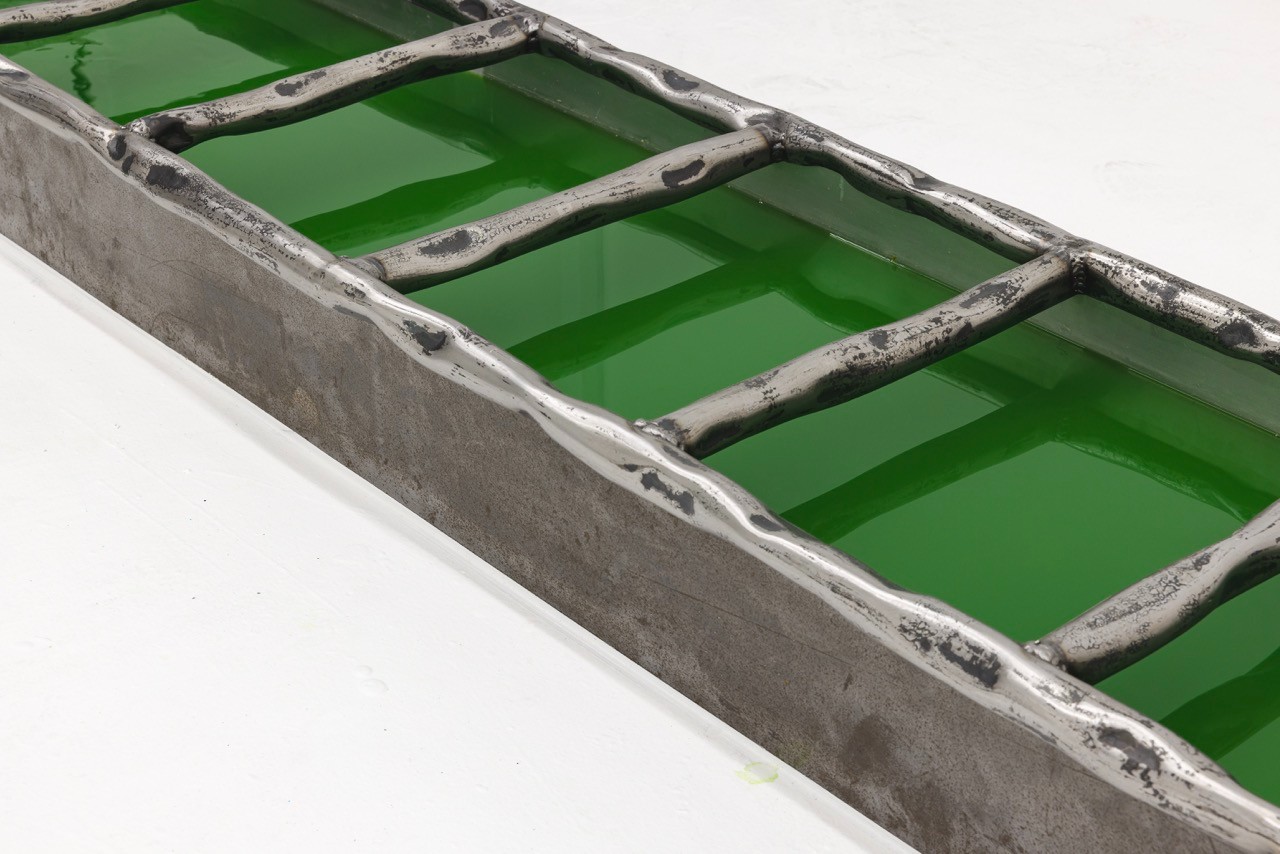
A spike impales the suspended form in To Drink and Drown In Pools of Ourselves. From this point
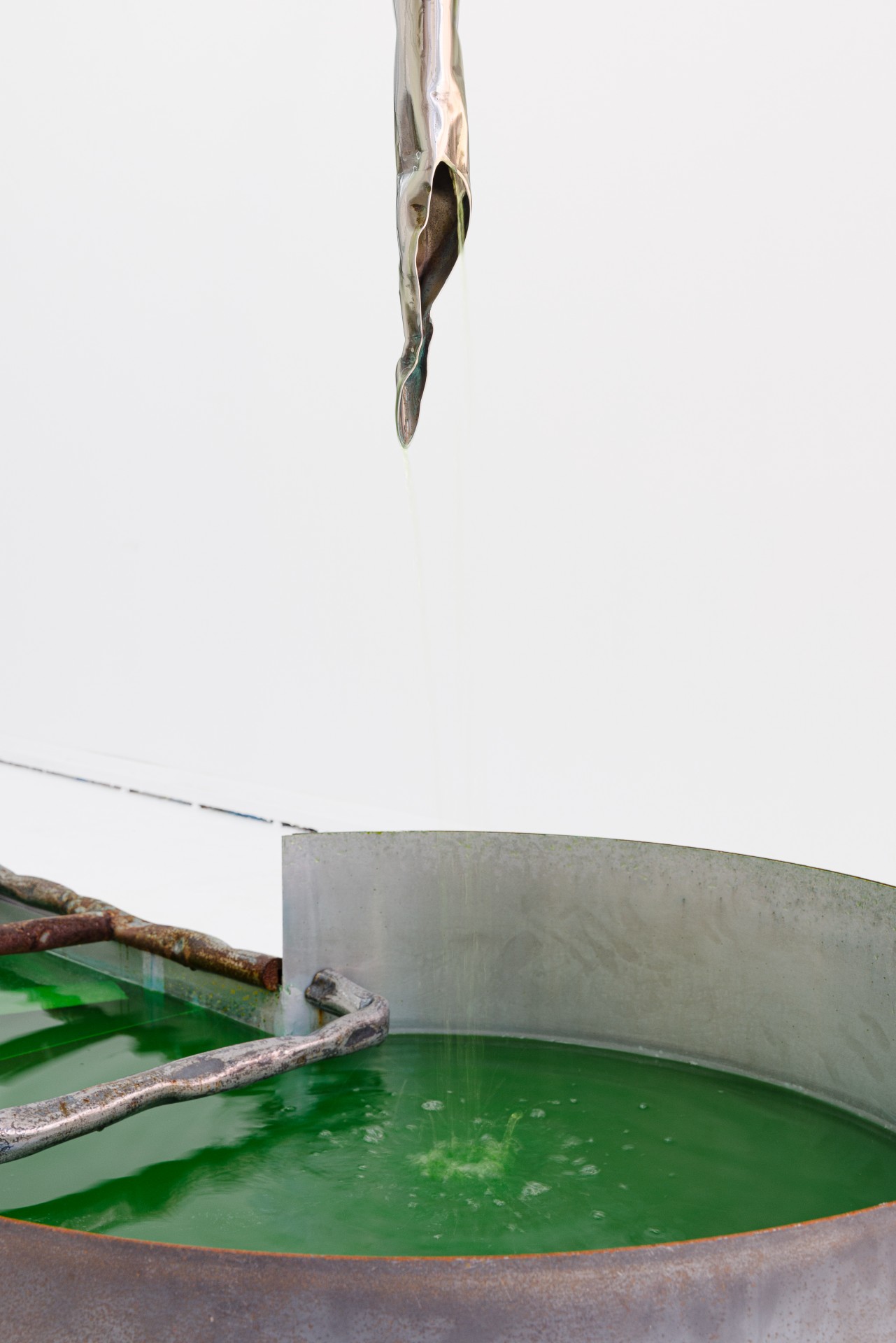
of penetration, something resembling green coolant leaves the sculpture and is carried along storm
drains laid across the gallery floor. Coolant is supposed to preserve a system by taking its excess
heat elsewhere. Here it looks more like the system is bleeding out. Or maybe keeping itself alive.
The distinction becomes difficult to maintain. The spike wounds the body but also gives the liquid
somewhere to go; the drain removes what has escaped while making that escape visible. Like the
woman who cannot be separated from the thing that impales her, the sculpture cannot simply be
returned to some imagined state before penetration. The wound has become structural. Maybe this
is what desire shares with entropy. Not disorder exactly, and definitely not destruction, but the
impossibility of remaining unchanged by contact. To desire something is already to have entered
into relation with it, to allow its presence or absence to reorganise the system around it. Carson’s
lover reaches across the interval toward the beloved, but the interval can never quite be abolished
without also abolishing desire. Something must remain between. Jemima’s sculpture takes this
proposition rather literally: object enters body, body holds object, and what punctures it becomes
inseparable from what keeps it going. Desire does not resolve the distance between two things so
much as give that distance a form.
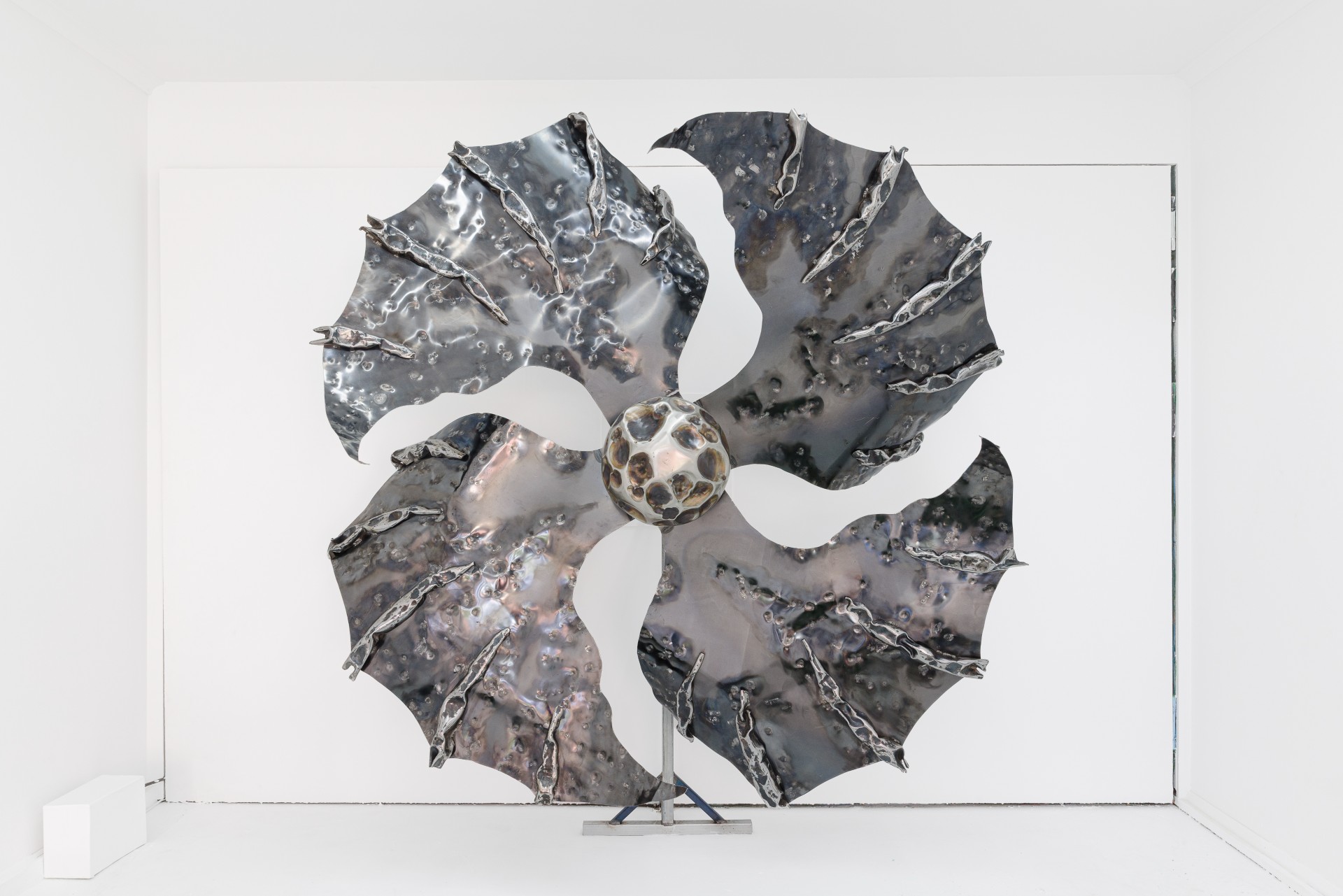
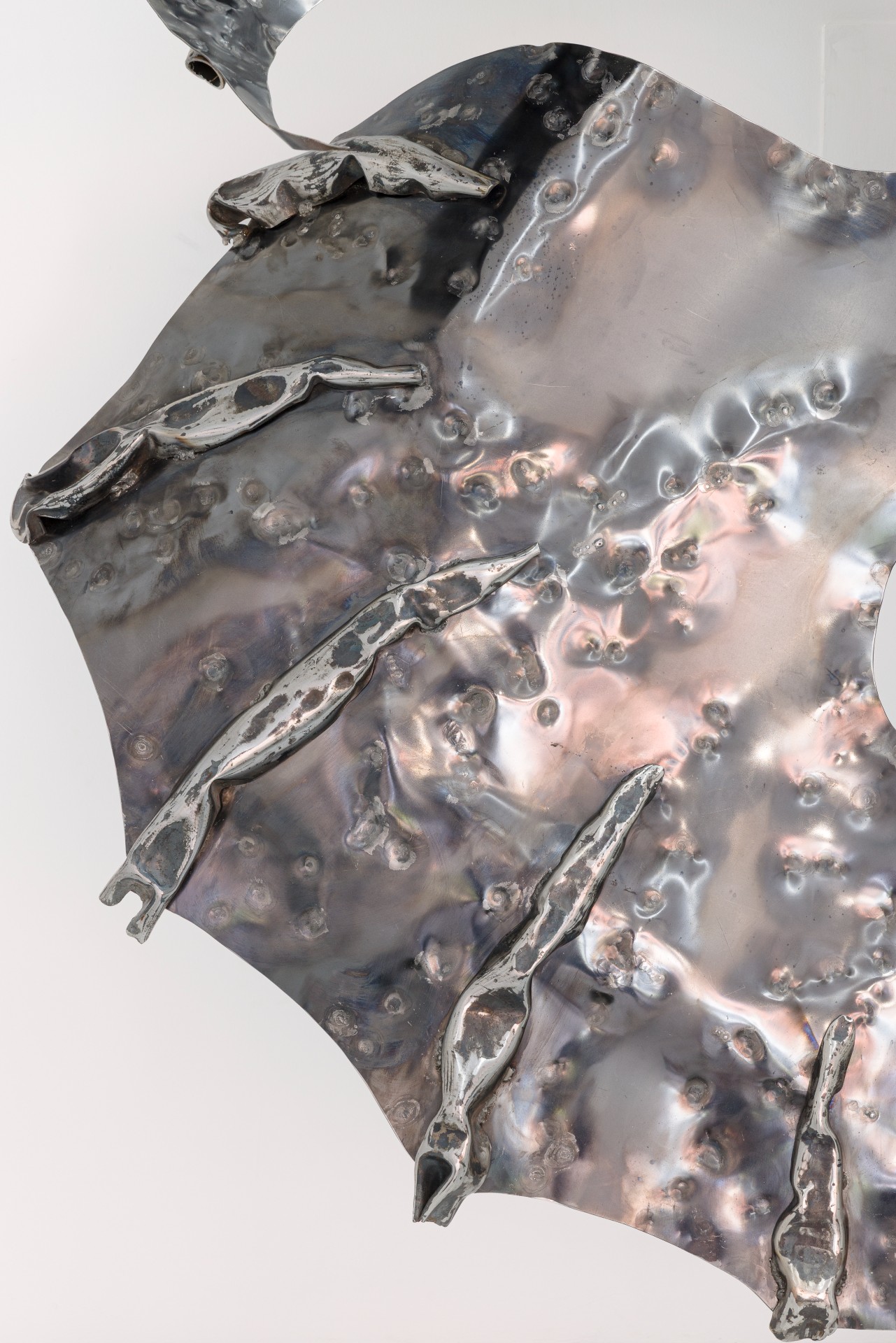
Across the room, the propeller turns. Unlike the punctured body, there is no obvious wound here,
only the steady conversion of one force into another. A propeller is useful precisely because
something passes through it; its function depends on being acted upon, and in turn acting upon
something else. Nothing enters the system without leaving it altered. I keep returning to this in
Jemima’s work: the impossibility of contact without consequence. Even desire, for all its fixation on
the distance between things, is evidence that something has already crossed it. To Drink and Drown
In Pools of Ourselves gives us no untouched state to return to, only matter rearranging itself through
relation. Perhaps this is why the propeller feels less like an image of endless motion than an image
of exchange. It turns because something has passed through it.
-