 Selected
- Apis Mellifera Concerto
- 02 Oct ― 27 Nov 2026
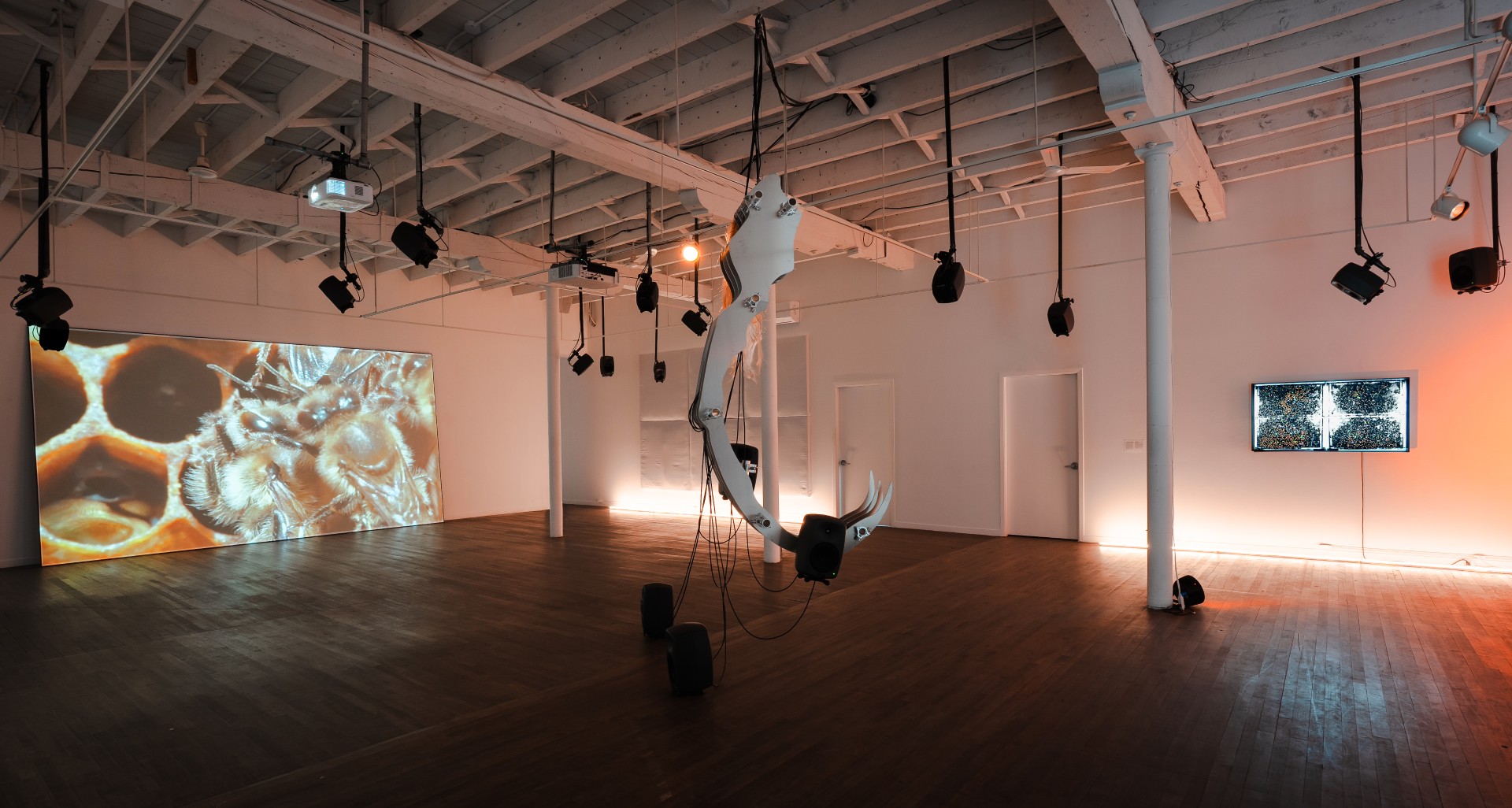
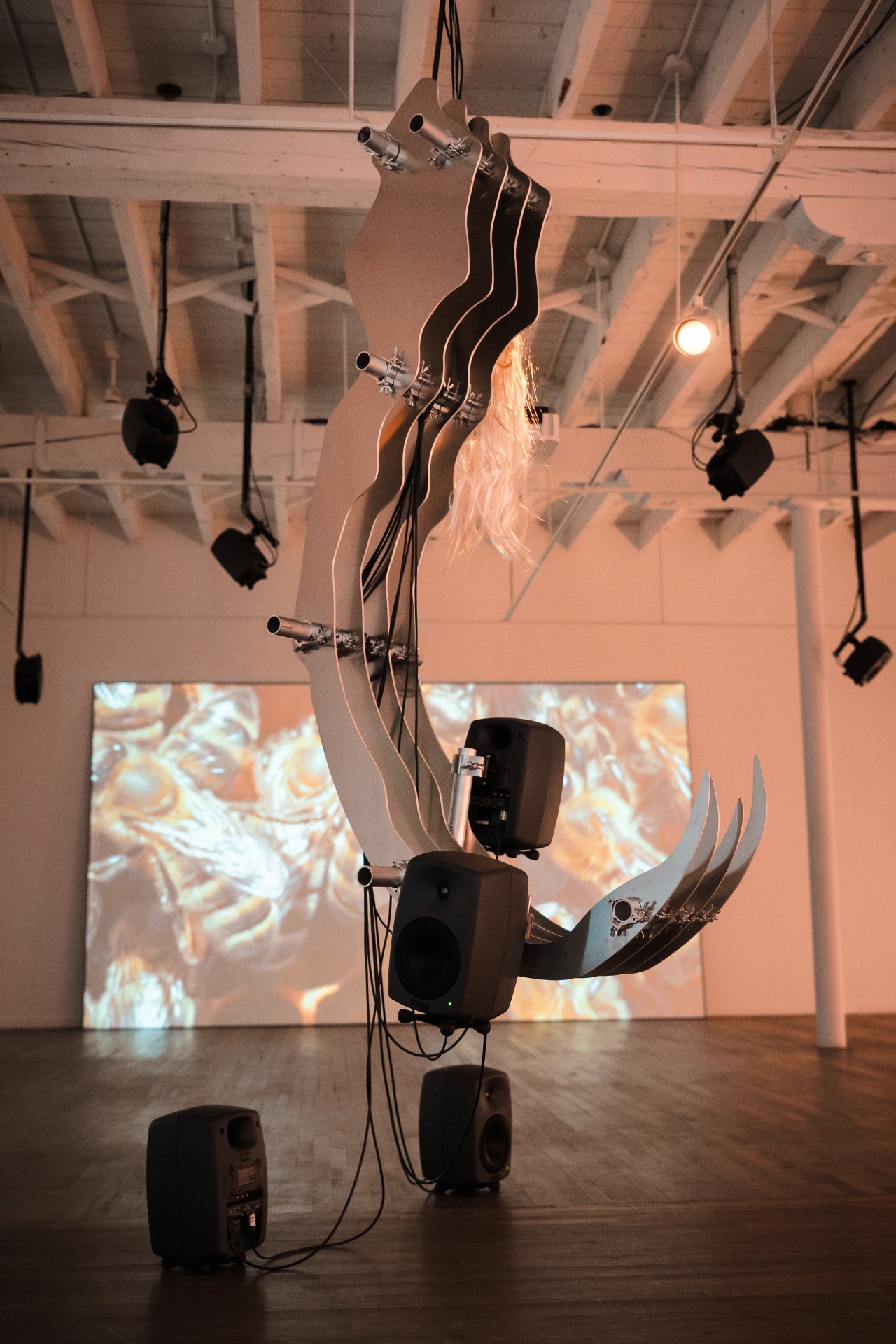
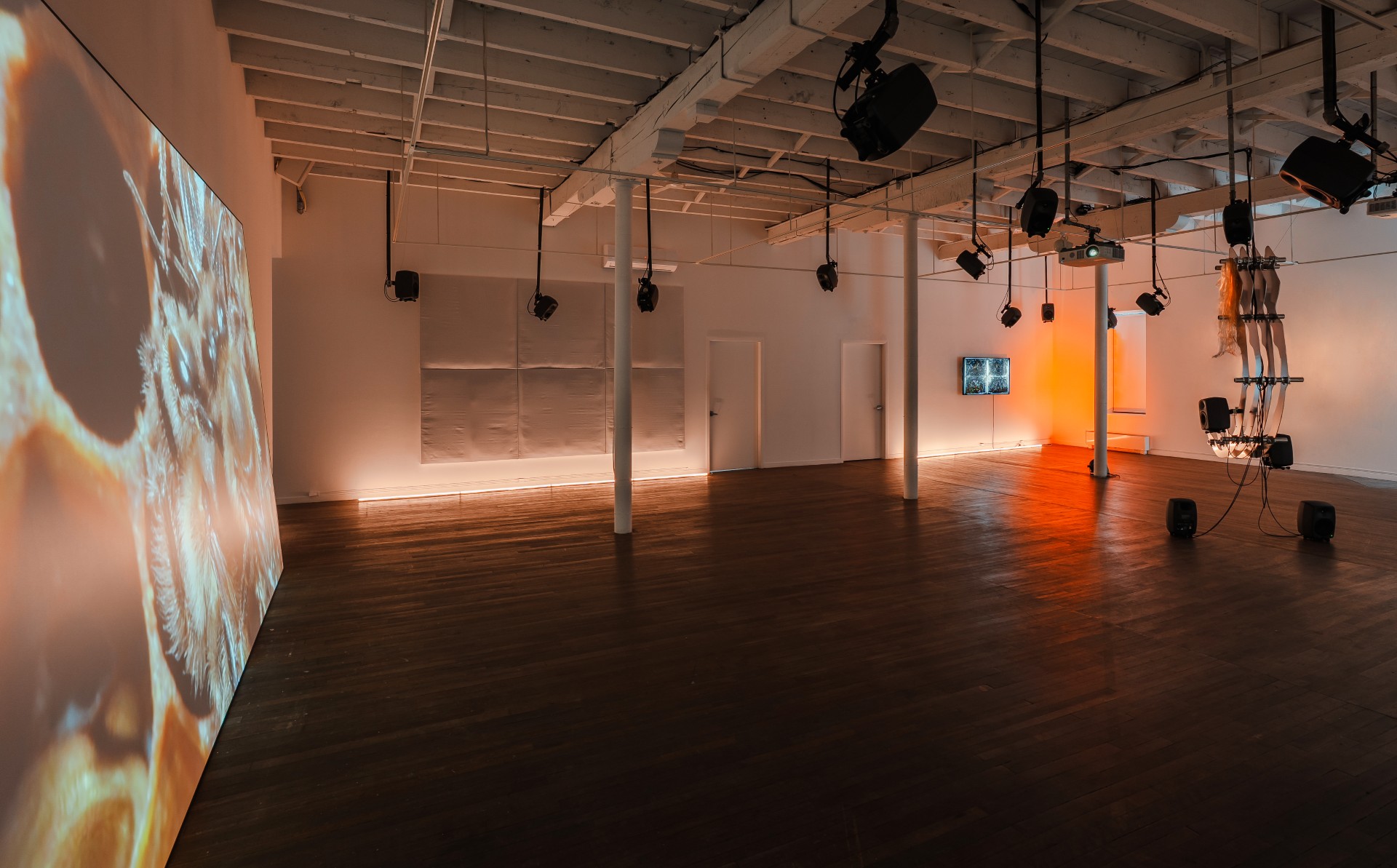
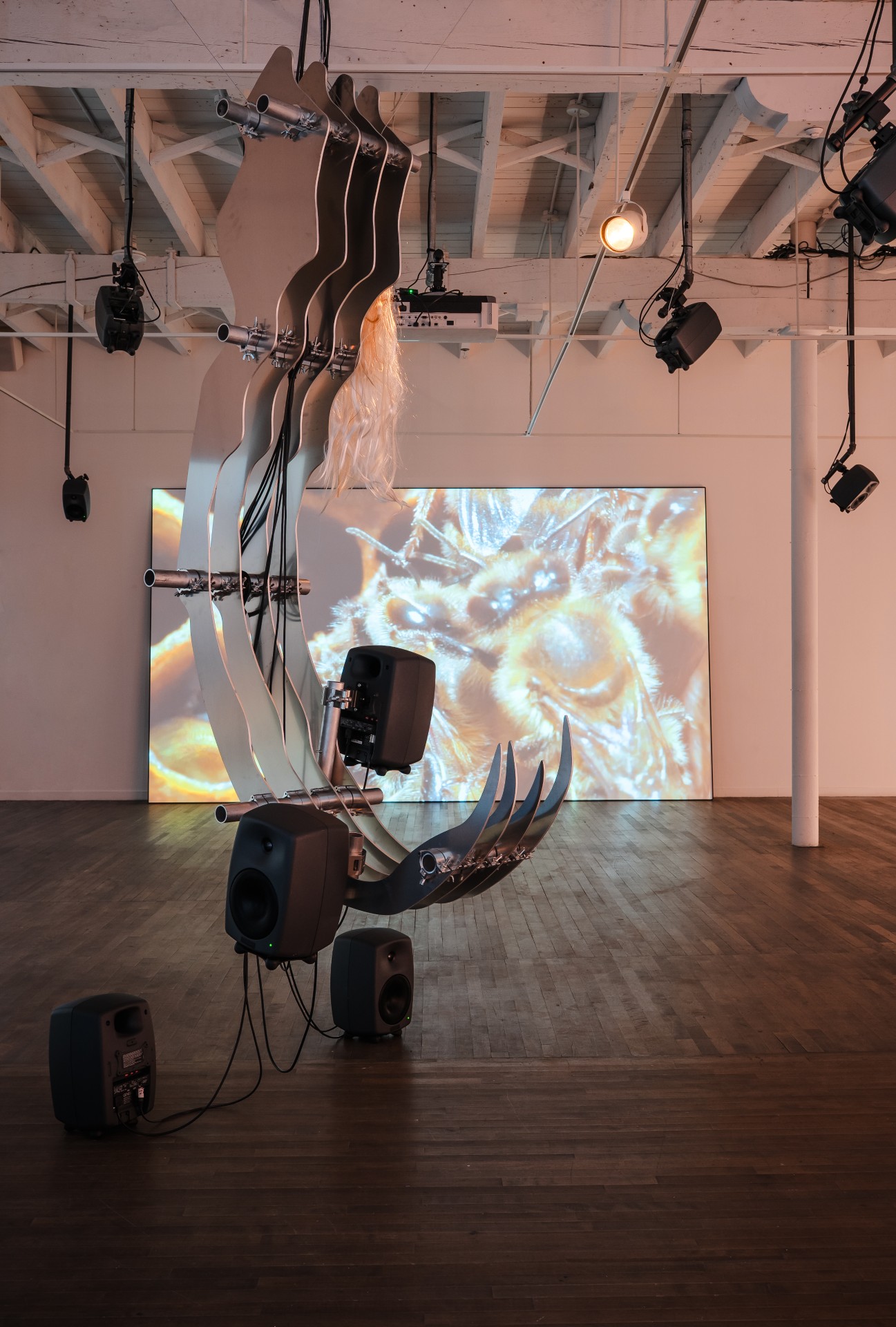
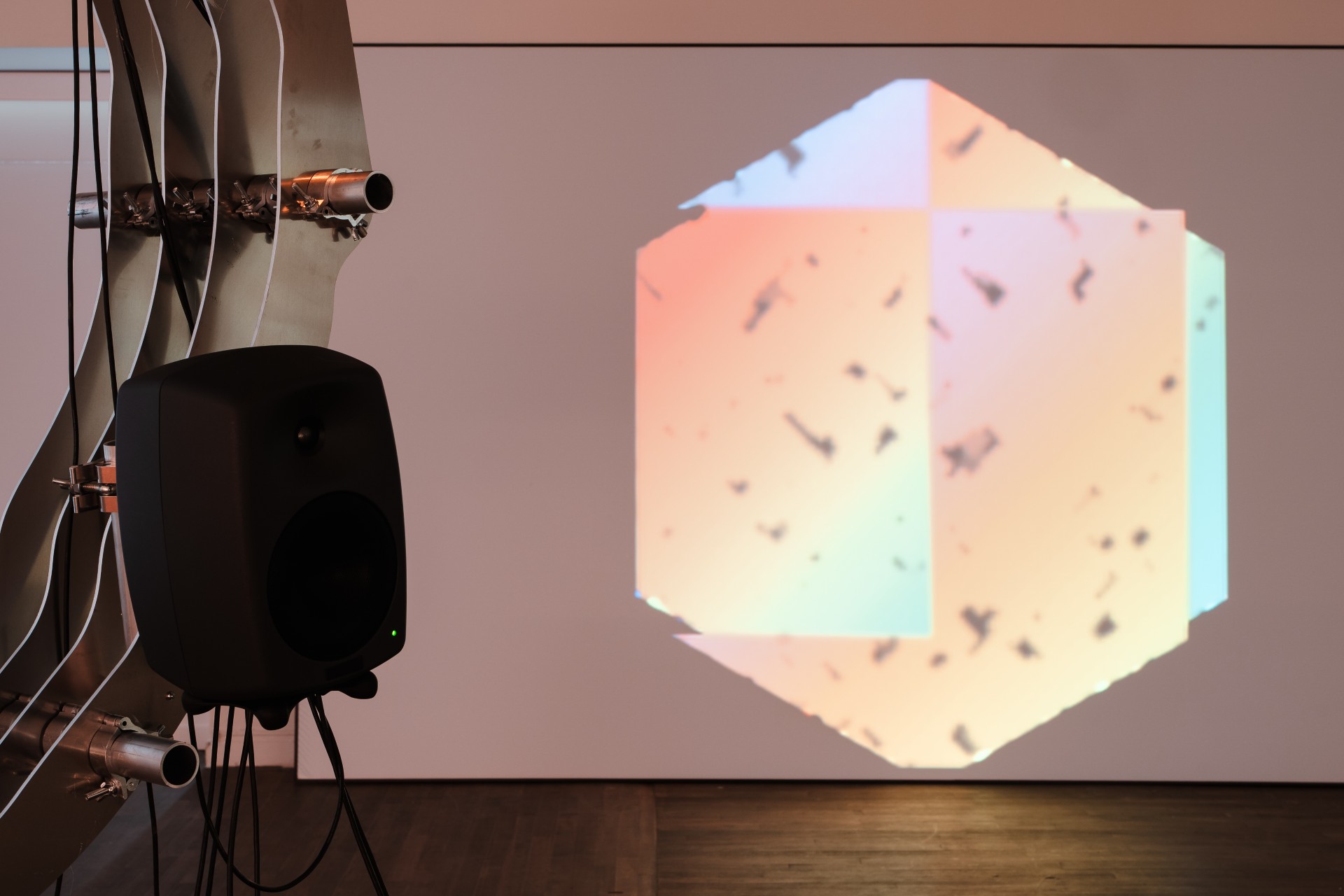
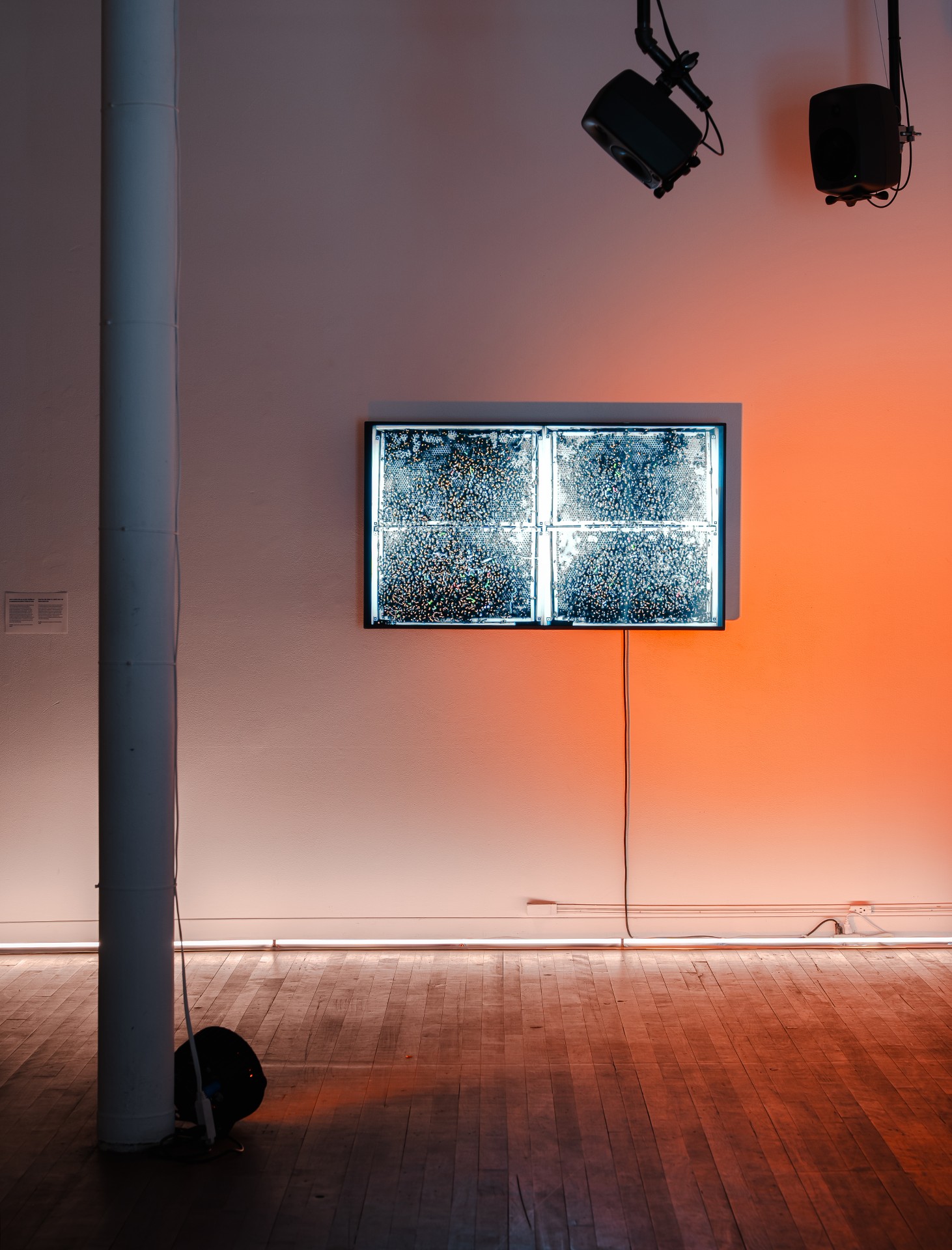
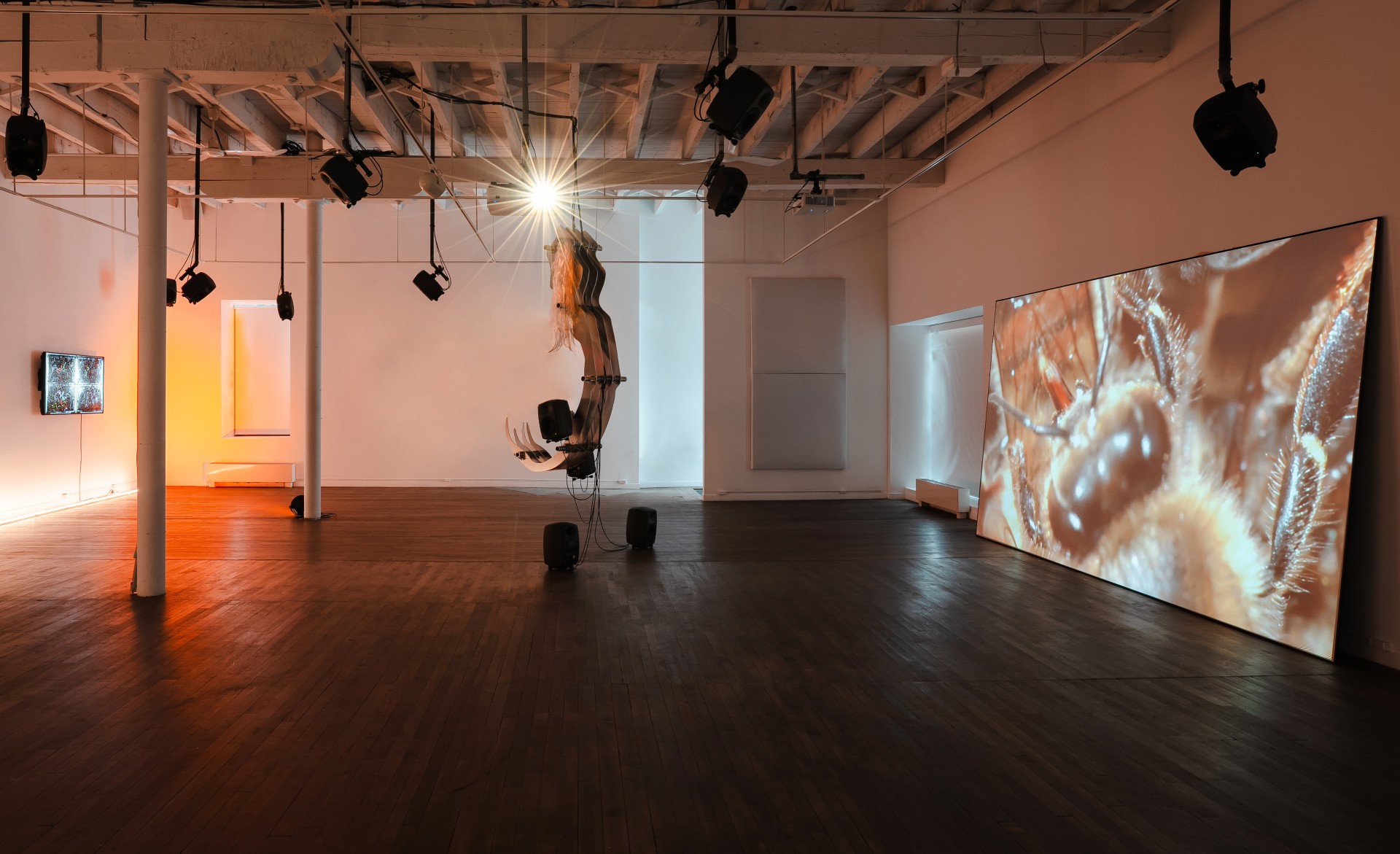
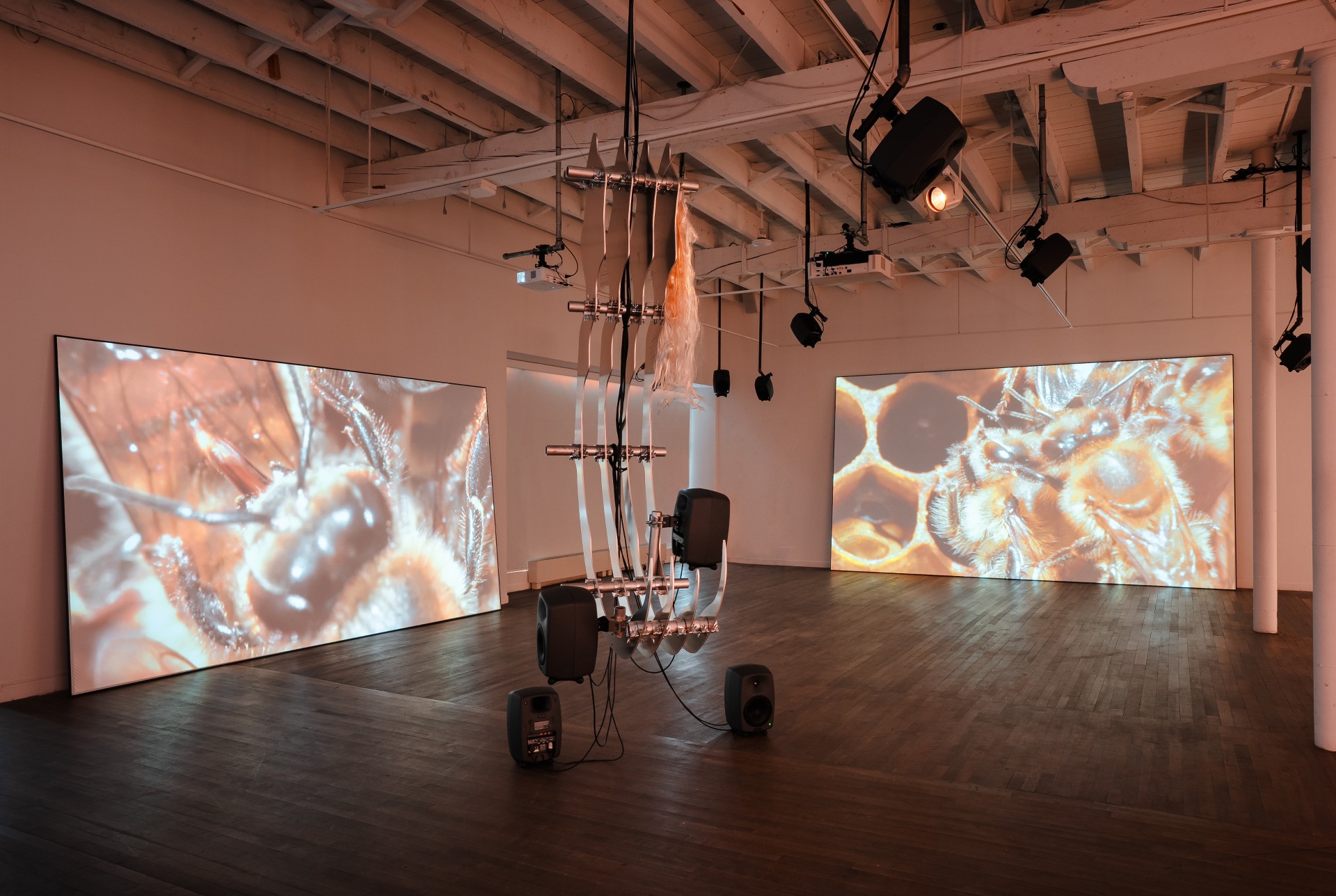
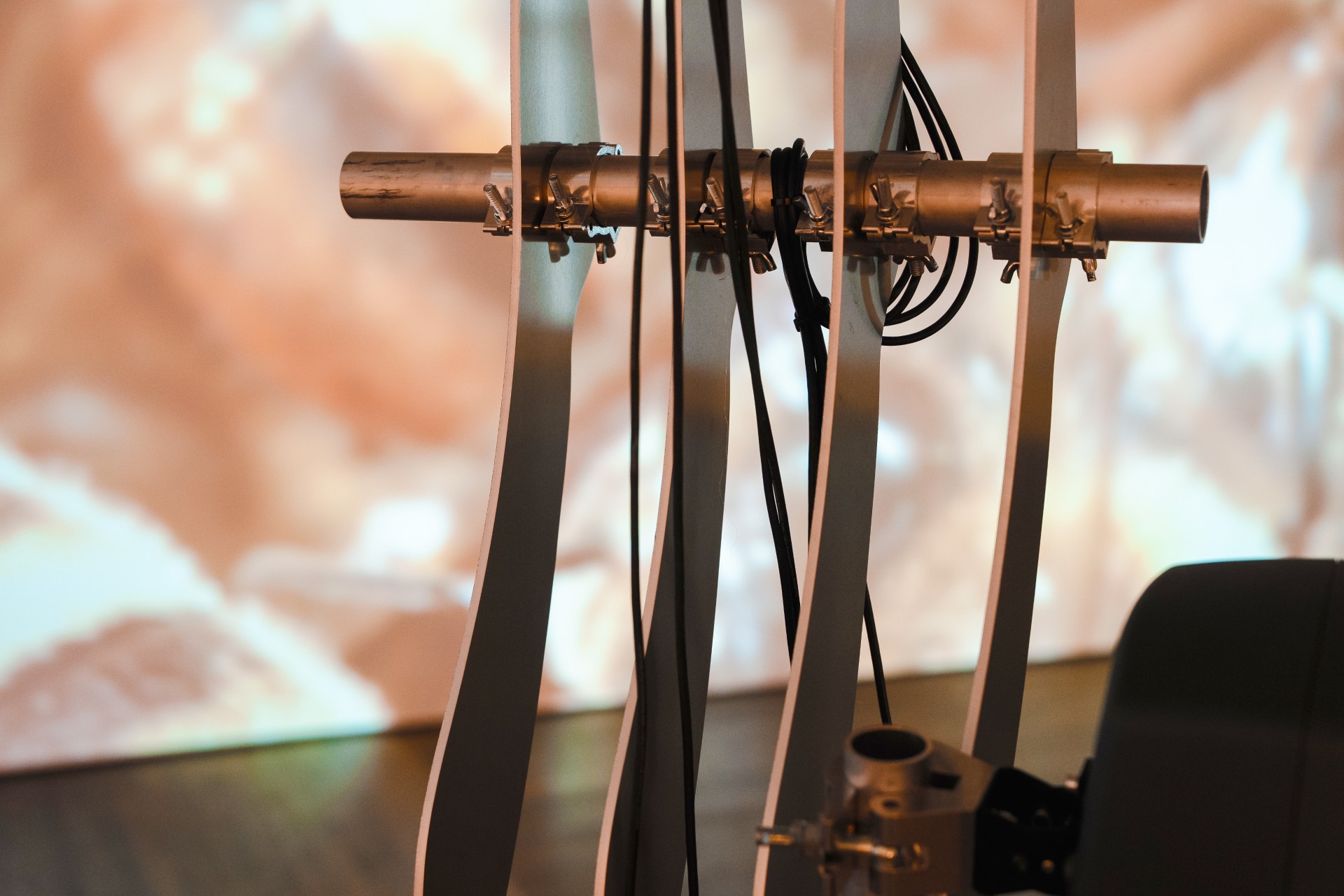
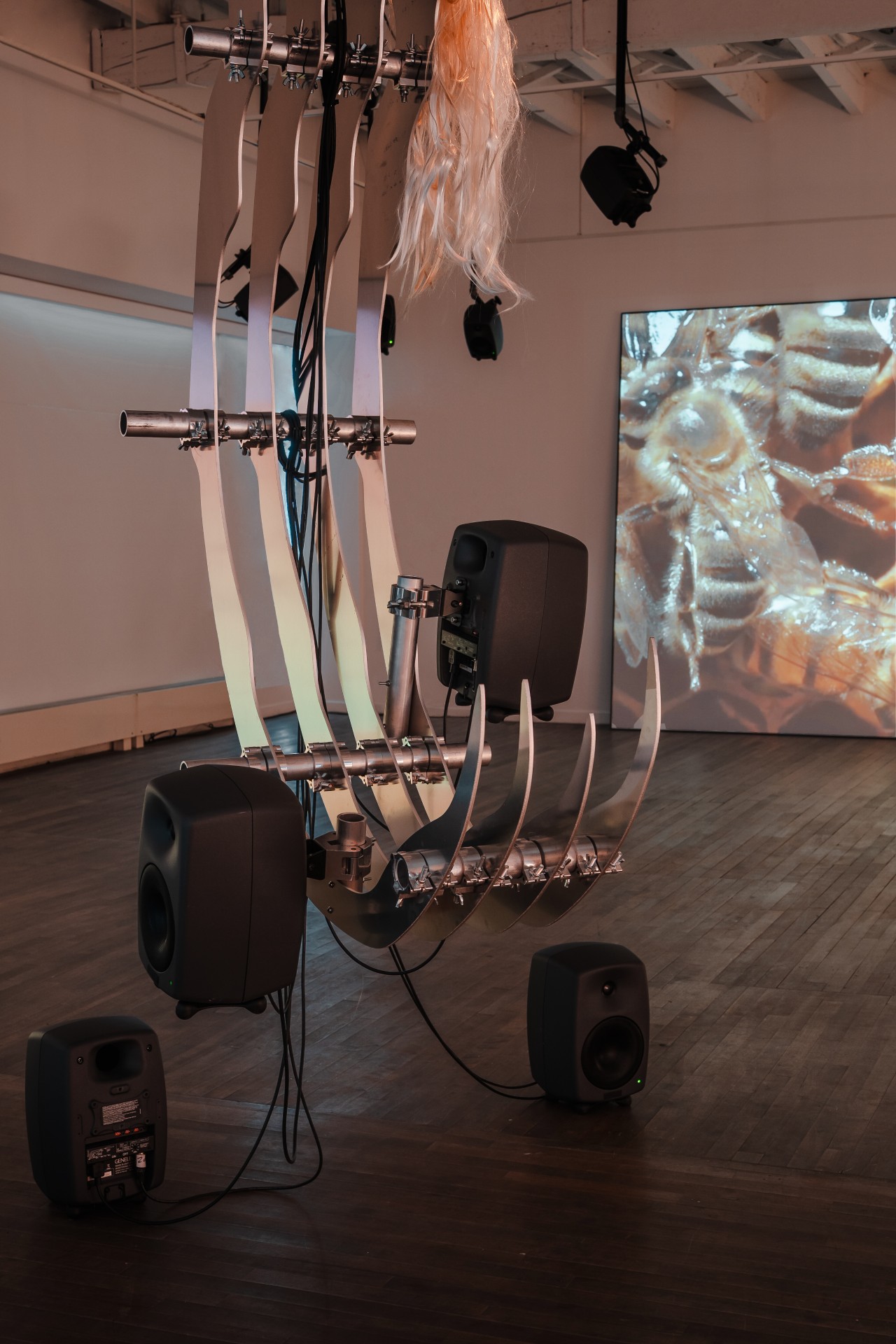
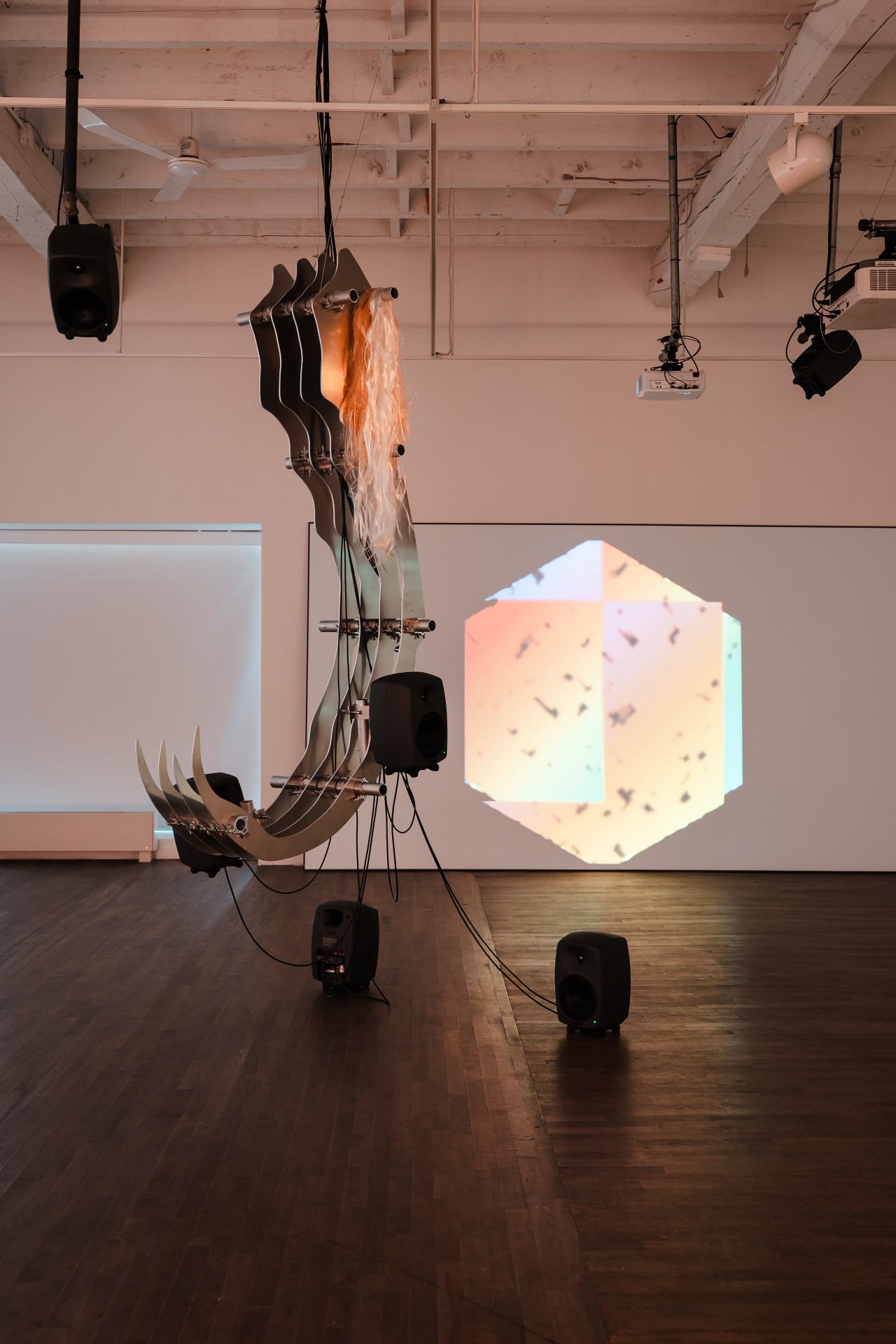
Amélie Laurence Fortin’s Apis Mellifera Concerto is a sound, sculptural, and video installation that delves into research on the behavioral intelligence of bees. Created following a residency at Sporobole as part of the Chantier IA (sound cohort) in 2025, the work aims to deepen reflection on questions related to the language of human life, non-human life, and artificial intelligence (AI).
Technological advances in recent decades have facilitated the adoption of non-interventionist scientific methodologies in research on living organisms; this field is now moving away from an anthropocentric worldview. In this sense, as large-scale data collection and analysis are now among the preferred approaches in research, the rapid development of AI technologies positions machine learning as an indispensable avenue in the behavioral study of living organisms. In computer science, scientists have replicated the neural networks of bees to design computational systems. In the field of AI, research draws inspiration from the bee’s energy efficiency to develop compact networks because, unlike LLMs (Large Language Models), bees demonstrate that a small neural network is sufficient to develop advanced cognitive abilities. Finally, the process of autonomous navigation mimics the visual orientation of insects to guide robots or vehicles through space without the need for complex mapping. From this perspective, bees act somewhat like a living mirror of our idealized automated computer systems.
In the 20th century, German professor Karl von Frisch discovered that bees communicate with one another—and with great precision—the locations of flower fields through dance (circular and wiggling). Through this discovery—which earned him a Nobel Prize in 1973—the researcher was able to demonstrate that bees possess a complex behavioral language based on trigonometry and that, as a result, humans are no longer the only ones capable of using tools for navigational communication and strategic information. Ethologist Martin Lindauer, a student of Von Frisch, subsequently developed a methodology for studying individual bees within a swarm, which allowed him to observe signs of democracy among bees. Research on the bees’ democratic system was further solidified by the work of Thomas D. Seeley of Cornell University in the United States. The biologist proved conclusively that bees, just like humans in groups, have developed a logical, consensus-based decision-making process.
After a discussion with Thomas D. Seeley, the artist obtained permission to base her work on Seeley’s research. Democracy, after all, is perhaps one of the most interesting topics of conversation to address in the commercial context of AI—a context that holds out the illusion that freedom is synonymous with the absence of tension. Yet democracy, like creativity, requires a significant amount of friction to stimulate reflection.
In collaboration with Renaud Gervais, a creative developer at Sporobole, Amélie Laurence Fortin created a generative, behavior-based sound instrument that replicates each stage of the democratic decision-making process among honeybees when they split the hive to search for a new one. This biomimetic instrument, capable of generating an orchestration of a living, moving ensemble, has benefited from recent advances in AI and agent-based software development to enable rapid and robust exploration of various media and modes of expression. The bees’ movements through the space between the hive and the research sites, as well as the dances they use to communicate their voting intentions, become here a veritable score of their democratic system. These various behavioral aspects coexist like layers of interconnected languages made visible through spatialized sound. This is why the proposed installation is ambisonic and invites the audience to move through the space to explore, in turn, the conceptual territory.
The installation also includes a video component featuring a colony of bees filmed in macro. The magnification created by the change in scale of the insects transforms this contemplative video piece into an ode to movement and to life in its organized chaos; it also reminds us that the individual is inseparable from the collective.
Credits:
Director of Photography: Emiko OkimeCello
Performance: Michał Bromboszcz
Programming and Technical Support: Renaud Gervais
Acknowledgments:
Nathalie Bachand, Vicky Chainey Gagnon, and the entire Sporobole team; Tim Landgraf, Freie Universität, Berlin; Joana Szymajda and Teatr Wielki w Łodzi – Opera Łódzka; Laura Elena Del Olmo Frese and the Museo Nacional de Antropología (Mexico); Maciek Berski, Caroline Landau, and Paweł Kamiński
Amélie Laurence Fortin (she/her) lives and works between Canada and Poland. Through her installations, sculptures, and sound works, she creates futuristic narratives in which objects bear witness to past or future actions. Her latest projects explore current technological upheavals through a radical, monumental, and performative formal approach in which opaque feminist fictional narratives and the ambiguity between technology and magic give rise to the emergence of chance. Her most recent exhibitions have been presented at several venues: Bliss Gallery (Poland), Festival Trans Amérique (Canada), Manif d’Art 12 Biennial (Canada), Centre Clark (Canada), Express Newark (U.S.), Rouyn-Noranda Performing Arts Biennial (Canada), Das Esszimmer – Raum Fü Kunst (Germany), OBORO (Canada), Tallinn Art Hall (Estonia), Fonderie Darling (Canada), BWA Wroclaw (Poland), Mois Multi Festival (Canada), Stroboskop Art Center (Poland), KIKK Festival (Belgium), Künstlerhaus Bethanien (Germany), Alfa Gallery (U.S.), as well as at various local and international art fairs. Fortin was selected for a one-year residency at Künstlerhaus Bethanien (2020). She has also held residencies at The Arctic Circle (2017), at Productions Recto-Verso as part of a Canadian-Belgian co-production with Werktank (2020–2022), at Radio28 CS (Mexico City), at Avatar as part of a long-term residency (2023–2025), and at Sporobole as part of the Chantier IA program. She was a finalist for the Videre Prize (2020) and is the recipient of the René-Richard, Louis Garneau, and ADFU Prize (2010). Her work has been featured in Szum Magazine, BLOK Magazine, BerlinArtLink, BE Magazine, EFSYN Magazine, Esse, and Espace, among others. Fortin earned a master’s degree in visual arts, focusing on the translation of extreme experiences into art installations (Université Laval, 2009–2011).