In the beginning, humans stood in awe of nature's overwhelming beauty and immense power. Each element of nature was seen as a being with its own will, and harmony among them brought tranquillity. Yet, when the balance was disrupted, the wind became a storm, and the sea turned into a tidal wave, swallowing the earth. Humans understood all these movements as the breath and gestures of Titans, giving names to these colossal forces themselves.
As time passed, life sciences discovered traces of this grand order and harmony within our own bodies. The largest protein, called ‘titin’, emerges almost like a forgotten piece of mythology. Titin connects muscles, stretches, and contracts, and it even repairs itself after damage. Just as nature does, our bodies constantly heal and maintain balance.
“Into the New World” explores the possibilities for healing and reconnection. Those who wandered through diasporic experiences find each other, drawing new relationships from their old wounds. This process mirrors how titin weaves torn muscles back together, with separated pieces remembering each other and forming a new flow. Five artists from Iran, Singapore, Finland, and Korea visualise the experience of 'otherness' in their own ways, seeking the possibilities of reconnections.
When these five artists' works come together in one space, their individual works open up possibilities for new dialogues within different contexts. Just as titin creates connections between muscle fibres, these works build a foundation for conversation through the exhibition space.
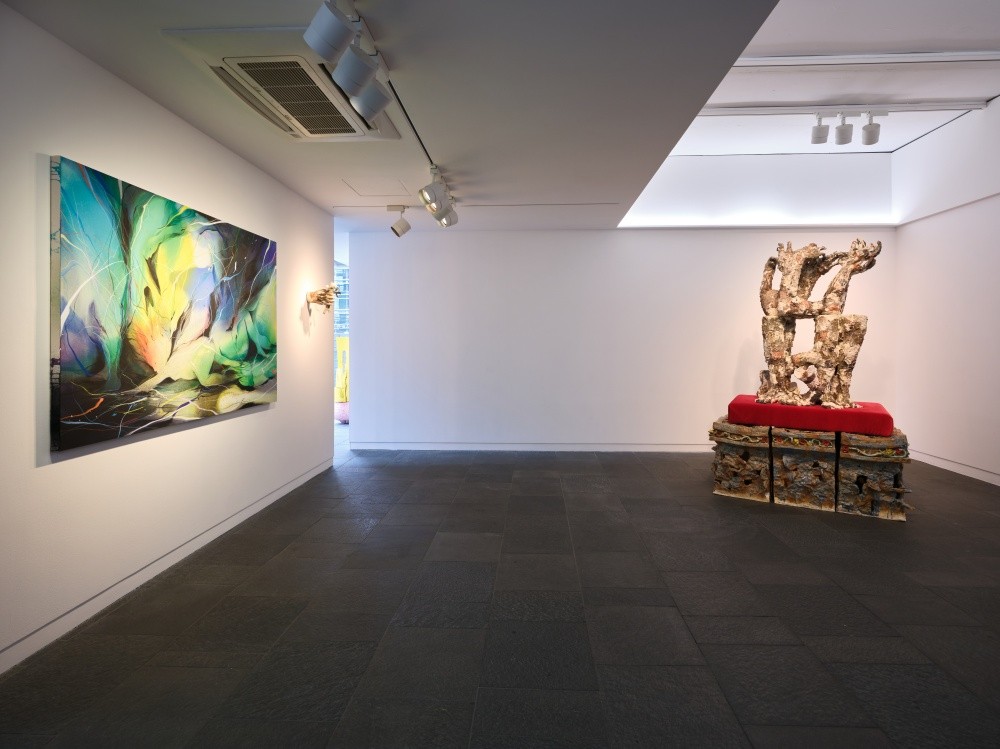
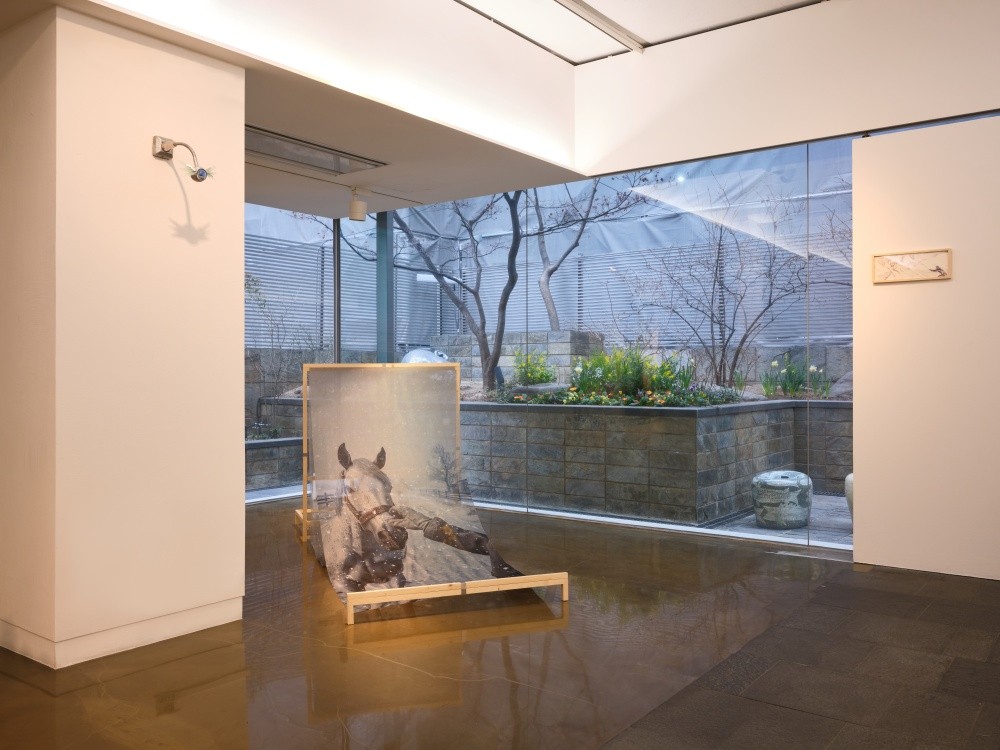
Sepideh Zamani’s and Park Juae’s paintings explore the theme of nature in distinctly different ways, each conveying a unique emotional depth. The image of a horse in a snowy landscape and the hand attempting to lead it may appear as a neutral scene at first sight, yet it could evoke varying emotions among the audience. This image captures a frozen moment that hints at what’s to come, allowing each viewer’s imagination to unfold a different story. The horse is not merely a part of nature but becomes a symbol of emotion and connection within human relationships. The way the image of the horse disperses or converges in a quiet setting invites reflection on how humans perceive and respond to nature.
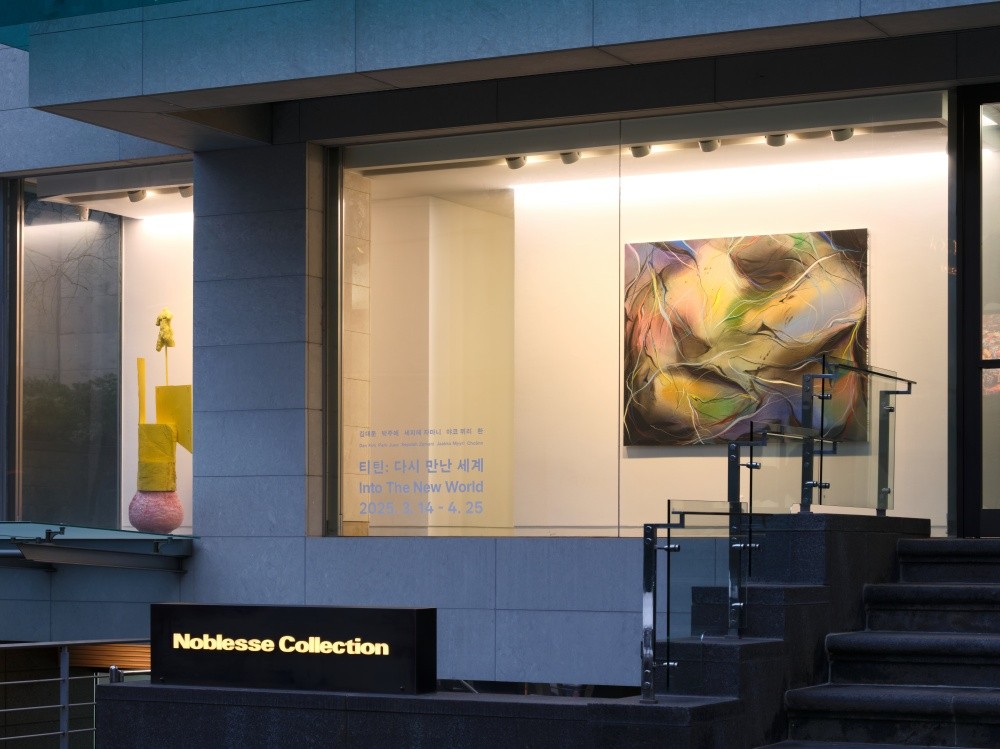
In Park Juae’s paintings, the female body is substituted with the landscapes of Jeju, blurring the boundaries between body and nature. Her work goes beyond simply depicting natural scenery, instead forming an organic relationship where the body and nature intertwine. The landscapes of Jeju are expressed as part of the human body and emotions, and through this process, the physical presence of the body resonates with nature, reconstructing their connection. Her work invites contemplation on how we perceive the boundary between the body and nature, presenting the female body as an intrinsic part of the natural world.
The two works create images that bind nature and human emotions into one, recognising nature as a living organism in their own distinct ways. In Zamani’s work, the emotional intersection between nature and humans is expressed through moments within landscapes, while in Park Juae’s paintings, the body and nature are intertwined in an inseparable relationship, attempting to interact with one another. These two works explore how nature and humans are organically connected, presenting a process where physical senses and ecological sensibility merge into a singular flow. Additionally, they remind us that our perspective of nature is not merely an observation of the external world but a process of creating new meanings through our bodily experiences and emotions.
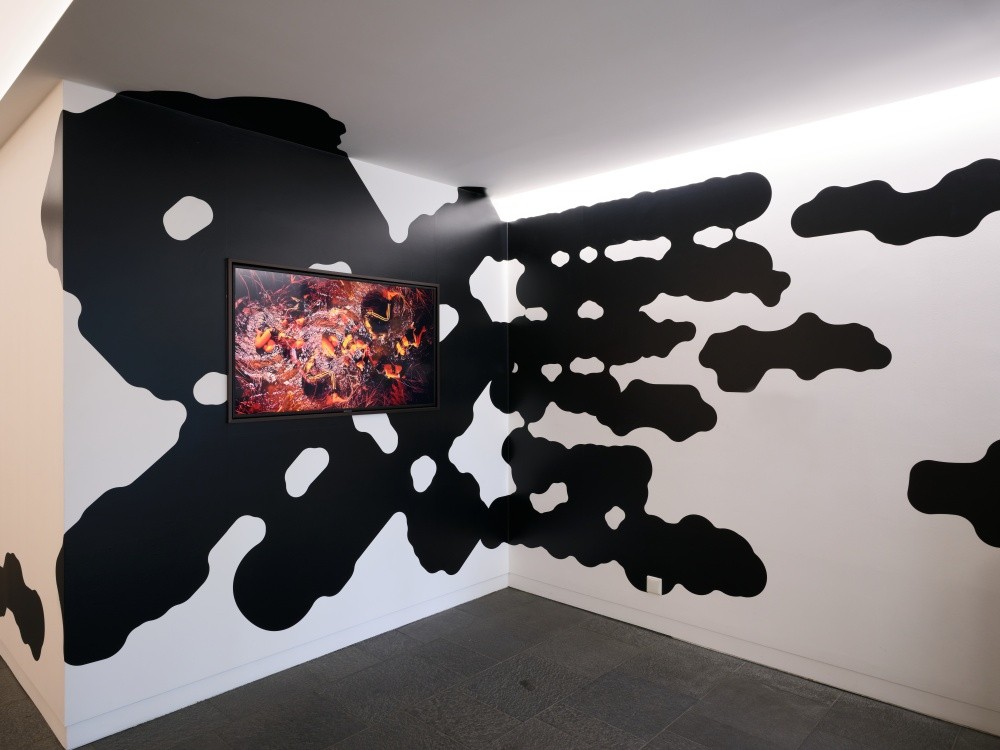
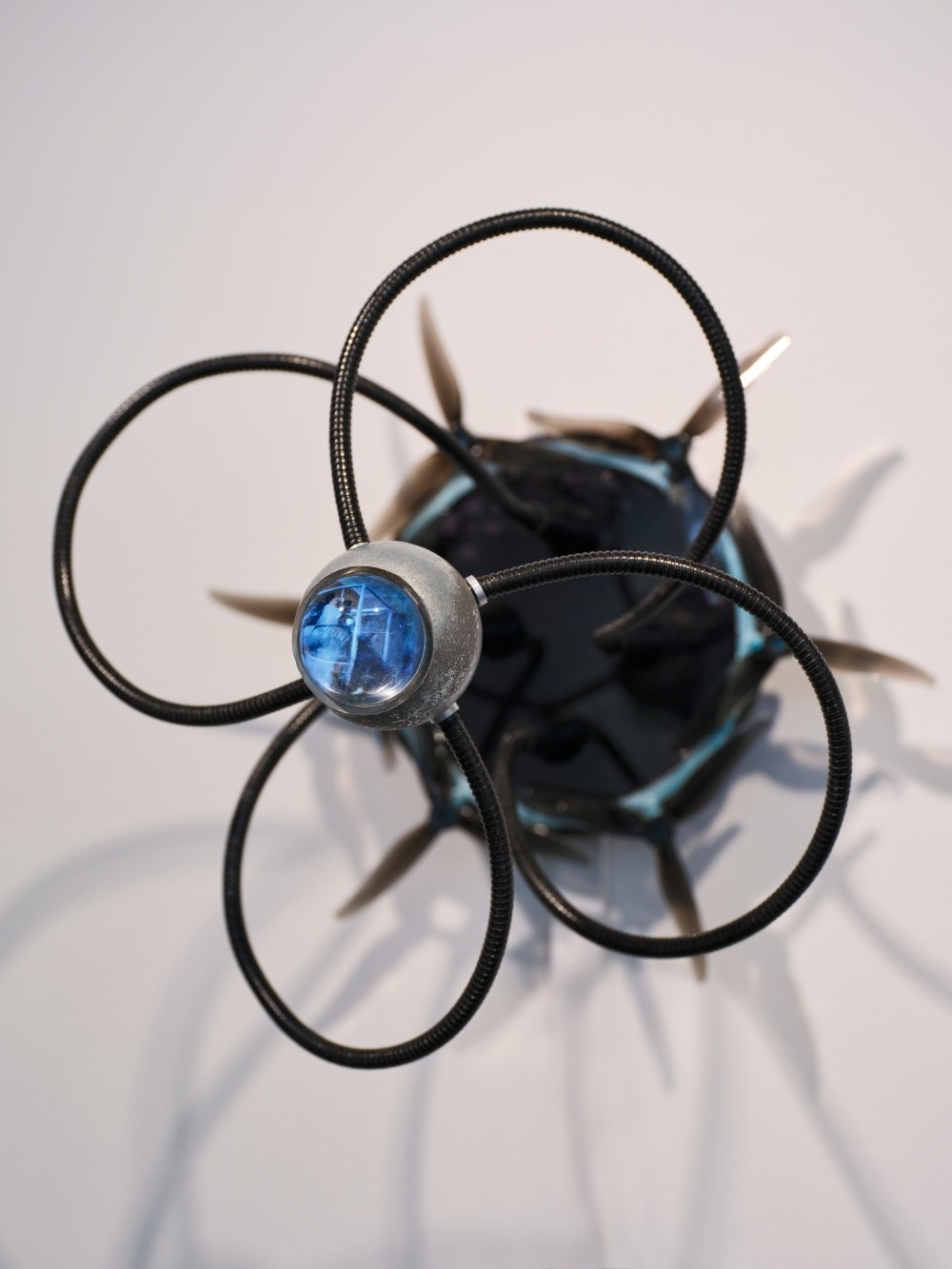
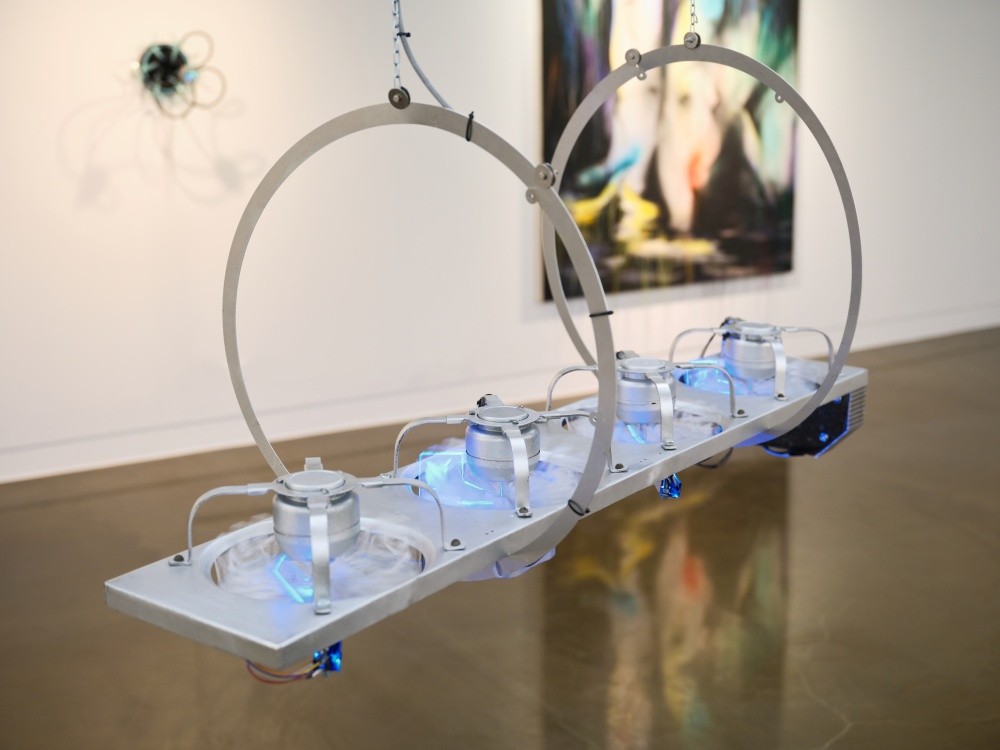
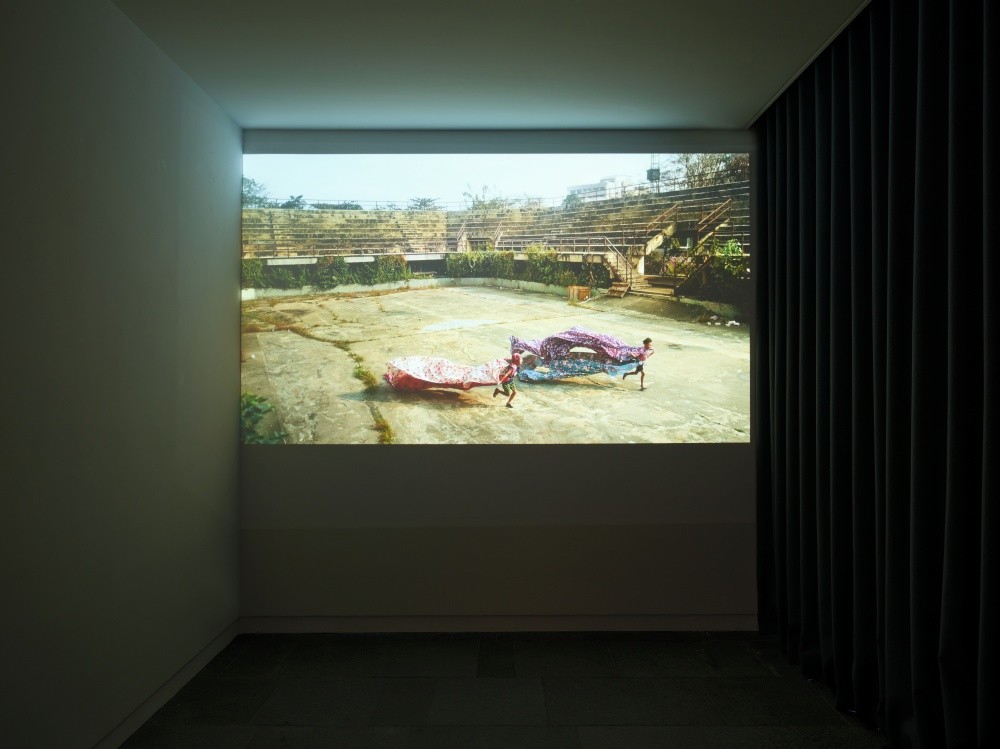
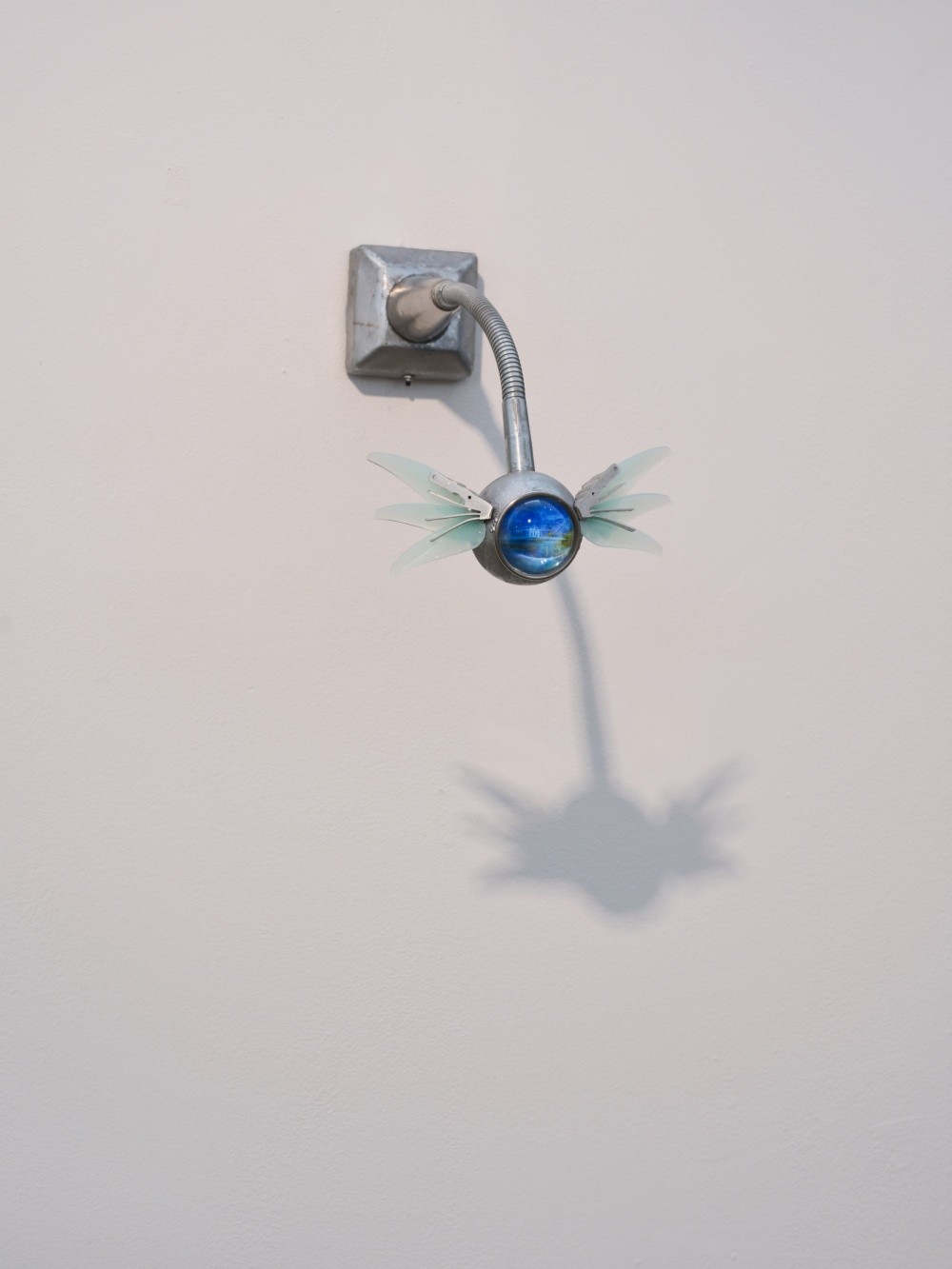
When Jaakko Myyri’s digital installation and Dan Kim’s sculptures are displayed together, an intriguing tension and balance emerge between digital and analogue, technology and the sense of touch. Myyri’s experiments with visual patterns generated through machine learning, proposing new possibilities beyond traditional artistic language. His digital work expands the visual expression of art using data and algorithms, exploring how technological elements can transform into sensory experiences.
In contrast, Dan Kim’s sculptures, including <너와나우리사이연결고리> (The Link Between You, Me, and Us) and his torso pieces, emphasise the process of making and breaking by hand, rooted in craftsmanship. He directly engages with and handles the characteristics of materials, revealing the destructive and atypical forms that arise during this process. His work stimulates human senses differently from the precision of digital technology, finding aesthetic meanings within imperfection, contrasting with technological exactness.
Both works attempt to redefine the relationship between technology and the body. While Myyri’s work seeks to expand sensory experiences through technology, Dan Kim emphasises the human touch within the relationship between the hand and material, presenting an alternative to technology. They propose different methods of combining ‘technology’ and ‘the body,’ exploring the blurred boundaries between technology and tradition, digital and analogue, in contemporary society. As a result, these works draw out sensory experiences in distinct ways, prompting viewers to reconsider the relationship between technology, tradition, and the human body.
Choānn’s <男人本色 Boys Will Be Boys> visually expresses the oppression and resistance of gender identity, inspired by the experiences of LGBTQ repression in Singapore. Park Juae’s paintings address the collective trauma of women related to the Jeju 4•3 Incident, unravelling wounds and memories visually. When these two works meet in the same space, experiences of oppression and resistance from different eras and regions intersect, creating a powerful emotional resonance. They explore how gender identity and women's experiences can engage in dialogue and intersect, connecting memories and histories formed in distinct contexts. This encounter amplifies the voices of oppressed individuals through the exhibition space, demonstrating how past pain can transform into possibilities of empathy and solidarity today.
When Zamani’s printed fabric images are placed alongside Myyri’s digital works, significant questions about materiality and immateriality are illuminated. Zamani's work emphasises physical presence through humble materiality, delivering a sensory experience through hand-crafted textures and forms. In contrast, Myyri’s work visualises immaterial data through digital imagery, exploring the immaterial dimension of the world we experience. The dialogue between these two works reminds us that the reality we perceive through our senses does not solely exist in material form, exploring how digital and physical worlds can collide and, at times, complement each other.
Dan Kim’s work focuses on the process of broken pieces coming back together, exploring the meaning of physical destruction and reconstruction. His work emphasises that connections can still form within 'imperfection,' suggesting the possibility of healing and recovering in art. When displayed with other artists’ works, his works convey the message that imperfection can actually create a deeper meaning and connection. This prompts reflection on the way we exist together, showing that beyond wounds and division, new solidarity and mutual understanding are possible.
The various forms of ‘otherness’ explored by each artist—diasporic experiences, oppression of identity, the boundary between human and machine, the intersection of regionality and femininity, and the rediscovery of marginalised materials—emerge from different contexts but ultimately converge on an important question: How can we acknowledge each other's differences while creating new forms of solidarity that transcend those differences? This exhibition is not merely a presentation of individual works but emphasises the process of generating new relationality and flows of perception between the works themselves.
By allowing diverse concepts such as digital and analogue, nature and the body, oppression and resistance, material and immaterial, and balance and imperfection to coexist, the exhibition encourages us to imagine completely new forms of solidarity and coexistence through experiences of otherness. ‘Titin: Into The New World’ itself reflects on the way of being within a community and the distribution of sensory experiences. Rather than striving for perfect harmony or balance, this exhibition presents new relationality formed by acknowledging individual imperfections and differences.
It showcases how different voices can maintain their uniqueness while contributing to a meaningful whole. Just as nature finds balance again after a storm, and as Titin connects muscle tissues and maintains elasticity, this exhibition seeks to bridge disconnected relationships in our society, exploring new possibilities for coexistence within them. The recognition that we are all ‘others’ somewhere, and the potential for new solidarity through this universal otherness—this is the future direction proposed by ‘Into The New World.’