"I owe an apology to all the vegetables and animals I’ve dragged into my complicated human problems"
Introduction
Czech artist Jakub Jansa in conversation with curator Barbara Lagié, on the occasion of Silence of the Mole, a project for the Czech and Slovak Pavilion at the 61st Venice Biennale.
Interview
Lagié BarbaracuratorAcross your films, installations and performances, narrative never appears as something purely linear. It seems to behave more like an environment: something one enters, moves through, partially understands, misreads, and returns to. How do you begin building such a narrative space — through a character, a situation, an image, a social tension, or the architecture of a world?
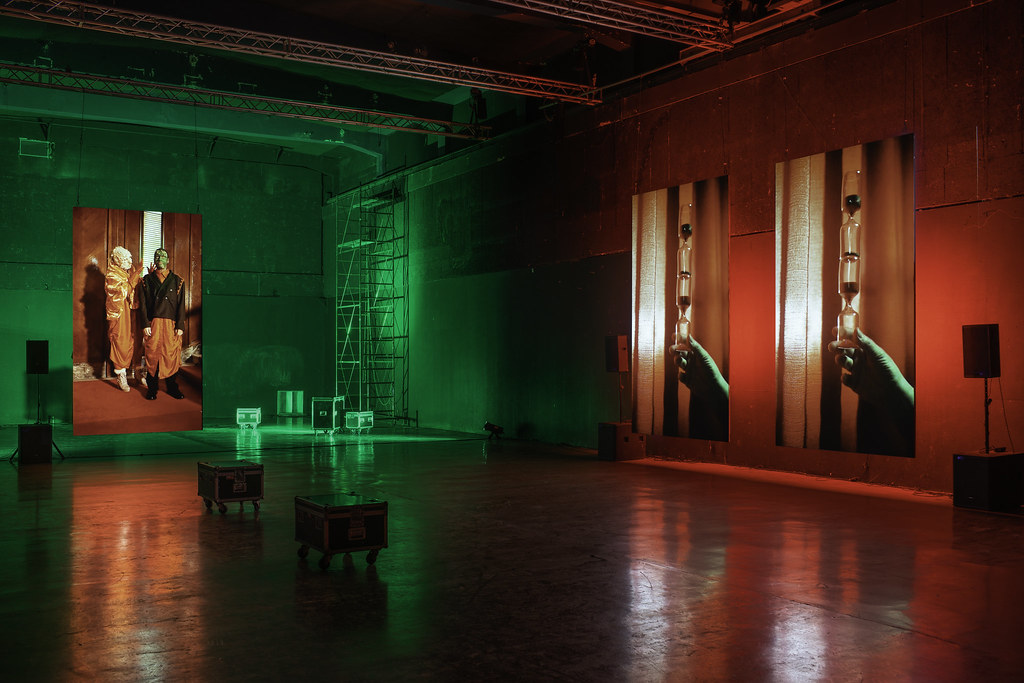
Jakub JansaartistUnlike cinema, where a film is presented in a theatre and offers a largely uniform experience to everyone in the audience, working with film, installation and performance in the gallery space makes it possible to create a different experience for each visitor. Not everyone sees or experiences the same thing. For me, this is one of the most exciting dramaturgical possibilities of the exhibition format, because it allows meaning to emerge through fragmented, individual encounters. For example, in my series Club of Opportunities, the philosopher and theorist Kamil Nábělek moves freely through the exhibition, telling random visitors key passages from the broader narrative of the series. Kamil wears no uniform, and his performance is not confined to any scheduled time.
He simply inhabits the gallery: some visitors encounter him, while others do not. This increases the level of engagement required to perceive the work, but it also introduces an element of mystery, ambiguity and suspense. Visitors begin to compare experiences, exchange stories, speculate and ask questions. Those who encountered Kamil can recount the experience to others, while those who missed him are left piecing together fragments of the narrative. In this way, the viewers themselves become storytellers and interpreters of the work. Something happens that we do not fully understand, and that uncertainty creates a desire to keep talking about it. The answer is never simply laid out in front of us.
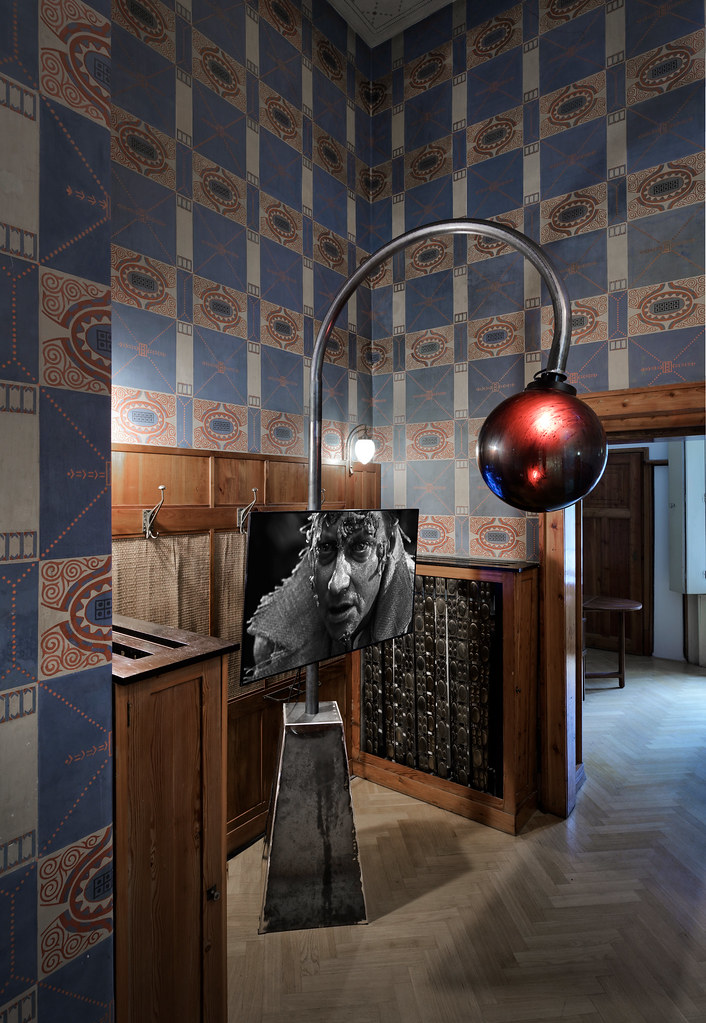
Jakub Jansa, Installation view, Pumpkinville, Laicher House, Kodl Contemporary, Prague
Lagié BarbaracuratorYour works often create worlds that feel strangely familiar, almost too close to the systems we already inhabit: clubs, ceremonies, hierarchies, rituals, self-improvement structures, cultural myths. What does it mean for you to “produce a world” today? Is it a way of inventing fiction, or rather a way of making visible the fictions that already organise social life?
Jakub JansaartistExactly. The work doesn’t offer an escape from the world, but a different way of perceiving the one we already inhabit. So, I simply don’t think I invent completely new worlds. I’m more interested in taking the systems we already live inside and shifting them just enough that they become visible. Many of the rituals, hierarchies and narratives that organise our everyday lives already function as a kind of fiction; we simply stop noticing them because they feel natural. Fiction gives me permission to make these structures tangible. It creates a slight distance from reality, and that distance allows us to recognise patterns that would otherwise remain invisible. I often think of my works as parallel versions of our own world rather than imaginary ones. They follow a familiar logic, but something is slightly off. That small displacement creates uncertainty and, hopefully, curiosity.For me, a world is not something I build in advance. It only comes into existence through the encounters between visitors, performers, objects, rumours, misunderstandings and memories. In that sense, the audience doesn’t just enter the world; they actively produce it.
Lagié BarbaracuratorMany of your characters—the Celerist, the Seer, Red Herring, and now Mr. M.—seem to emerge where personal desire, social pressure and collective imagination begin to overlap. How do you recognise that a figure is starting to take shape? Does it first appear as a body, an image, a social tension, or maybe a role waiting to be performed?
Jakub JansaartistI would say that each exhibition marks a new chapter in an ongoing story. With every exhibition, the narrative absorbs both the specific context of the exhibition and my own personal experiences, concerns or conflicts—what you describe as the overlap between personal desire and social pressure. This context gradually defines what I call an artistic problem: a particular constellation of questions, contradictions or constraints that I try to resolve through artistic means. Every project begins as a kind of puzzle or riddle. I rarely know the answer from the beginning; I am trying to understand how things work through the process of making the work.The characters emerge as part of that process. They are not conceived in advance as independent personalities; rather, they appear when I need a particular perspective to navigate the problem. In that sense, they function as extensions or alter egos of myself. They help me think through the artistic puzzle, allowing me to explore ideas and situations from a position that would not be accessible to me directly.
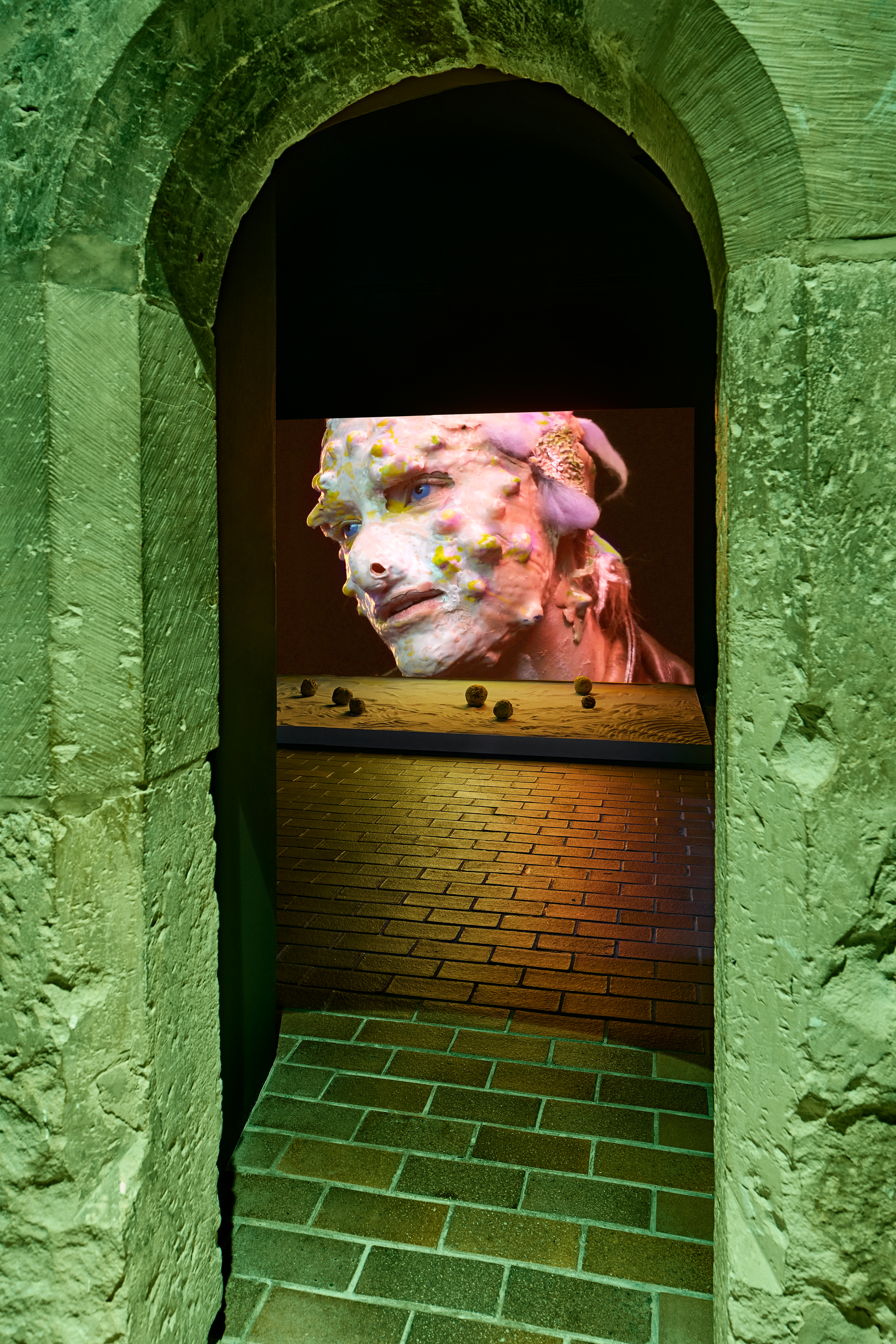
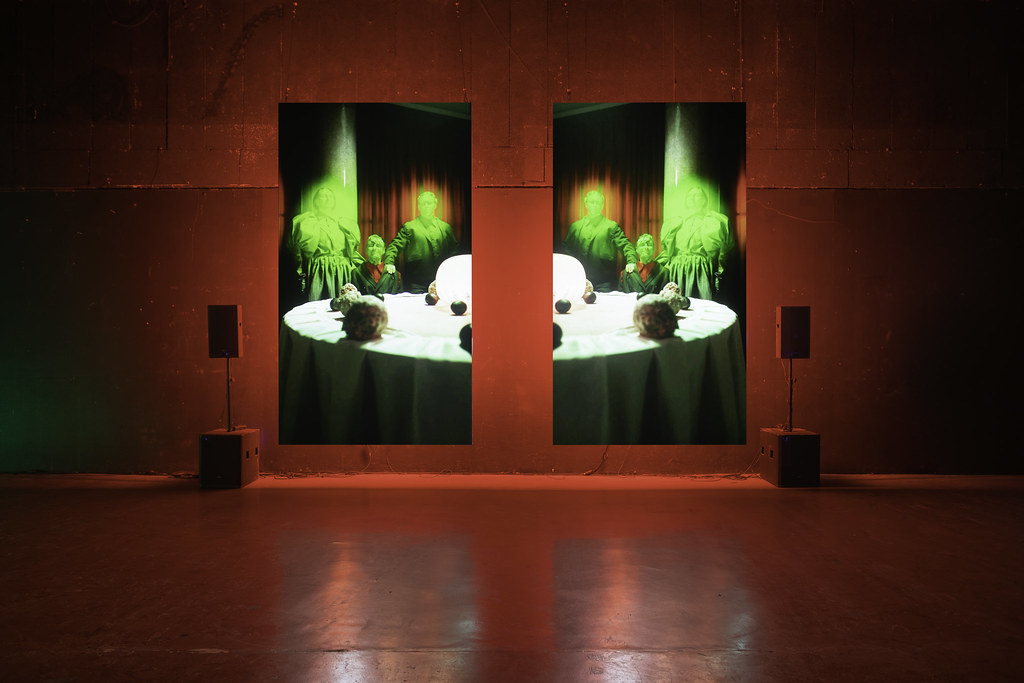
Jakub Jansa, Opening Ceremony (10mins, 4K), Garden of Problems, GHMP House at the Stone Bell. Photo: Jan Kolský.
Lagié BarbaracuratorHumour in your work often feels like an entry point rather than an endpoint. It draws us in, but what follows is rarely simple comfort: bodies, species, hierarchies and desires appear caught in larger political and ecological systems. How do you work with that shift between laughter, unease and recognition?
Jakub JansaartistHumour is definitely a tool that helps me gain critical distance from the problems I am working with. It allows me to approach difficult subjects without becoming overly didactic or moralising. But I don’t see humour as something inherently positive. It is a double-edged instrument: it can open up a conversation, make difficult issues more approachable and create space for reflection, but it can also normalise what it mocks or make us too comfortable with uncomfortable realities.At the beginning, my practice was shaped by found materials and readymades. For budget reasons, I worked mainly with upcycled materials from the Czech film industry, which has a long tradition in Prague. I wasn’t interested in using existing film sets as they were. Instead, I deconstructed them and reassembled the material into something new.
Jakub Jansa, Shame to Pride in End of the Black-and-White Era 1939–2021. Permanent Collection of the National Gallery Prague.
Lagié BarbaracuratorYour characters often emerge from what you call an artistic problem, but the problem rarely remains inside a character, or even inside a plot. In Club of Opportunities, the episodic form allows it to accumulate layers and expand into a whole environment. What happens when a problem outgrows the image and needs a system to hold it? How do you build that system?
Jakub JansaartistWorking with environments, or what we might call worldbuilding, can almost suggest a kind of playing God. But I’m less interested in divine control than in the act of play itself—an intuitive play with individual elements: objects, space and attention. At the beginning, my practice was shaped by found materials and readymades. For budget reasons, I worked mainly with upcycled materials from the Czech film industry, which has a long tradition in Prague. I wasn’t interested in using existing film sets as they were. Instead, I deconstructed them and reassembled the material into something new.
Jakub Jansa, Shame to Pride. Mocvara Gallery, Zagreb, installation view.
Lagié BarbaracuratorOnce this environment enters the exhibition space, it is no longer only a narrative to follow, but something the viewer moves through, spends time with, and encounters through objects. How do you think about the viewer’s position within it, and what do you choose to guide or leave open?
Jakub JansaartistMore generally, I’m interested in the relationships between things in space. Whenever I visit an exhibition, I feel like a detective, trying to uncover the connections between the objects that have been brought together. I like to imagine that someone might approach my exhibitions in the same way. I’ve never been particularly interested in creating a single masterpiece that demands all the attention. What matters to me is the relationship between individual works and elements, the way meaning emerges through their coexistence rather than from any one object alone.I’ve never been particularly interested in creating a single masterpiece that demands all the attention. What matters to me is the relationship between individual works and elements, the way meaning emerges through their coexistence rather than from any one object alone.
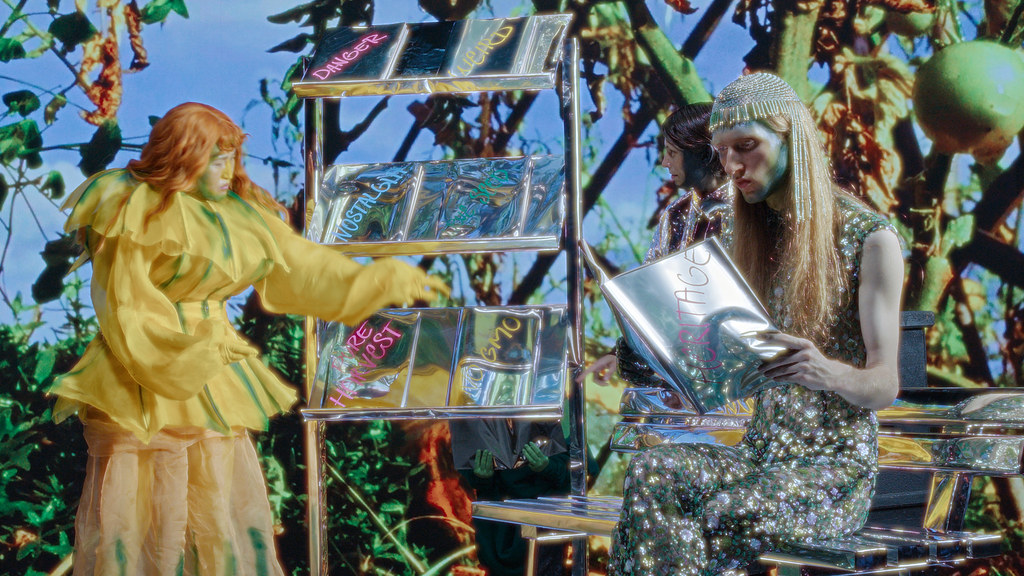
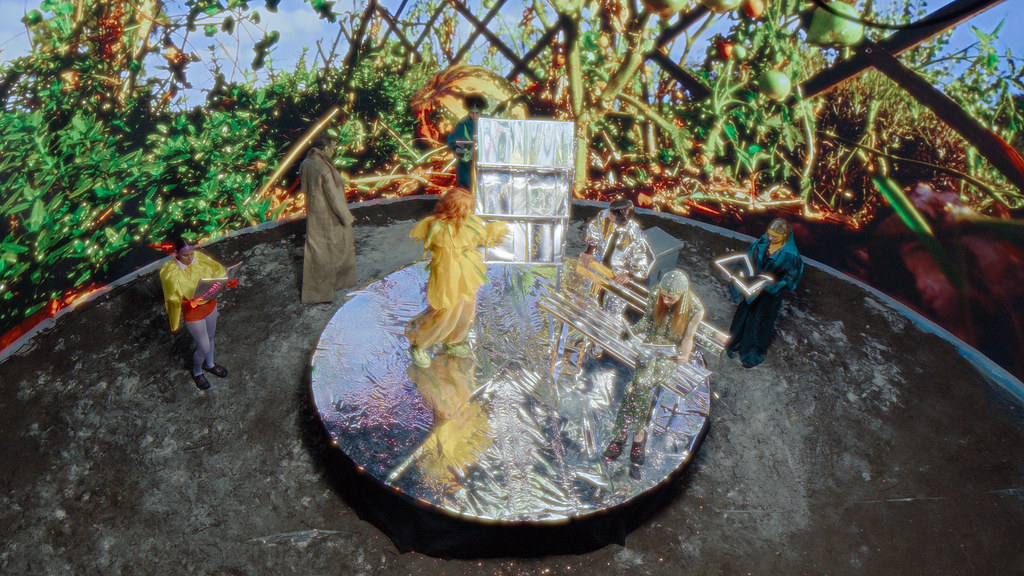
Jakub Jansa, Pumpkinville (14 mins, 4K), commissioned by Steirischer Herbst- Horror Patriae, Neue Galerie Graz, Austria, film still.Jakub Jansa, Pumpkinville (14 mins, 4K), commissioned by Steirischer Herbst- Horror Patriae, Neue Galerie Graz, Austria, film still.
Lagié BarbaracuratorIn your doctoral research, you ask how episodic narratives in exhibition spaces can move viewers away from passive watching towards a more active form of participation. In your own work, this does not seem to mean interactivity in a literal sense, but a more unstable form of attention. What kind of attention are you trying to produce?
Jakub JansaartistI wanted to create an environment where the story has neither a clear beginning nor an end, but instead where the viewer enters directly into an ongoing narrative. This means that not everyone will leave with the same experience, because the work invites each person to actively search for connections and construct their own meaning. For me, participation is not about literal interaction, but about encouraging a more attentive and engaged way of looking. The installation is built from many small narrative events and fragments that gradually reveal themselves. The installation, the sound and the narrator’s voice guide visitors through the space, and in some exhibitions they may also encounter a live storyteller, Kamil Nábělek, who becomes another layer of the narrative experience.
Lagié BarbaracuratorWith The Silence of the Mole, you are not starting from a neutral figure. The Mole already belongs to a shared memory — to childhood, tenderness, locality and collective projection. What happens when such a familiar cultural figure becomes a way of observing society?
Jakub JansaartistYes, it’s almost the opposite approach. Instead of creating a character and building its world, I started with a character that already exists in our collective memory. I really enjoyed working with that context because you can take something people think they know and gently push it in an unexpected direction. At the same time, you don’t have to introduce the character. The Mole is immediately recognisable, approachable and harmless. That familiarity allows the work to begin somewhere else, by questioning the context around him rather than the character himself.
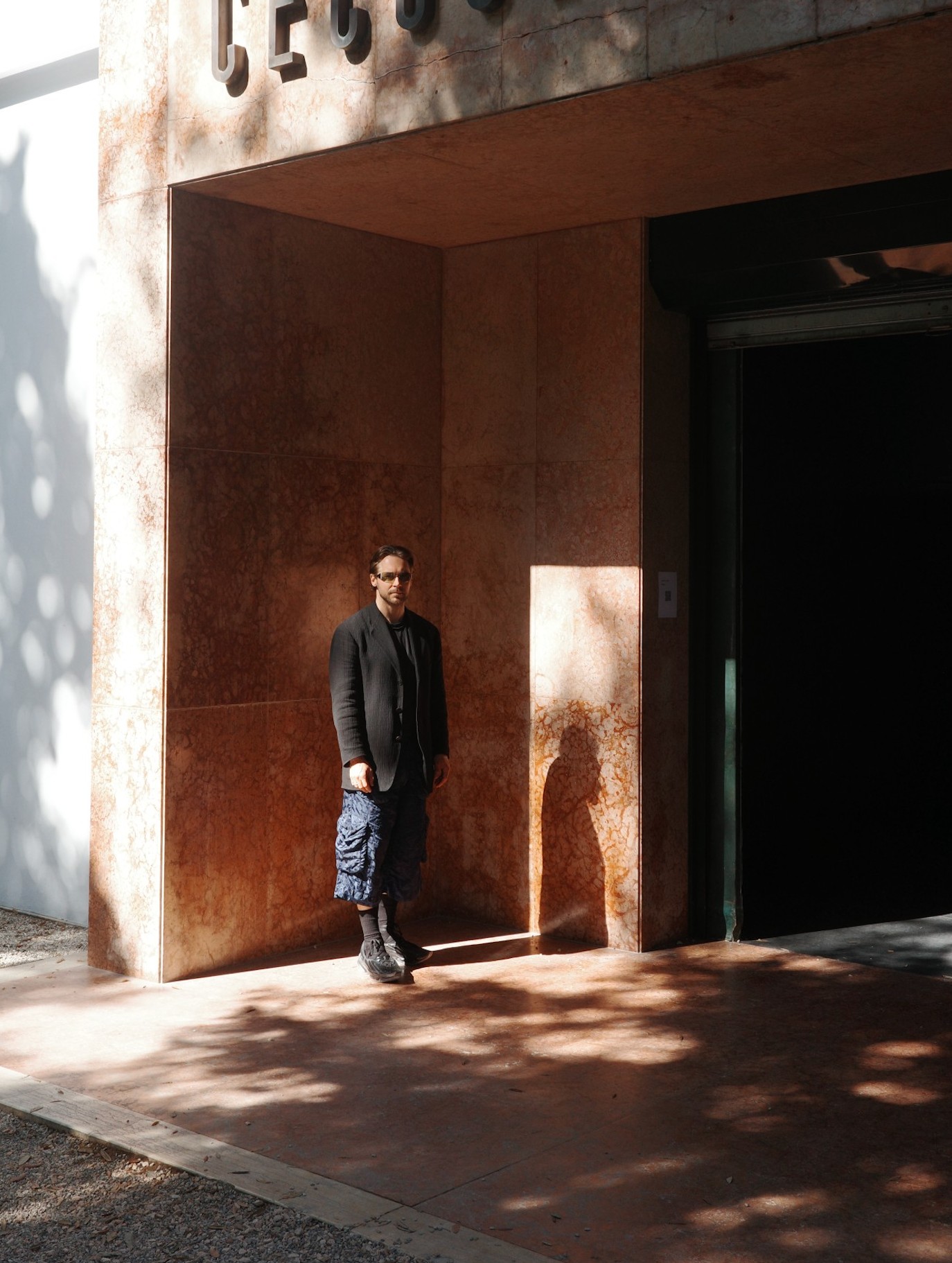
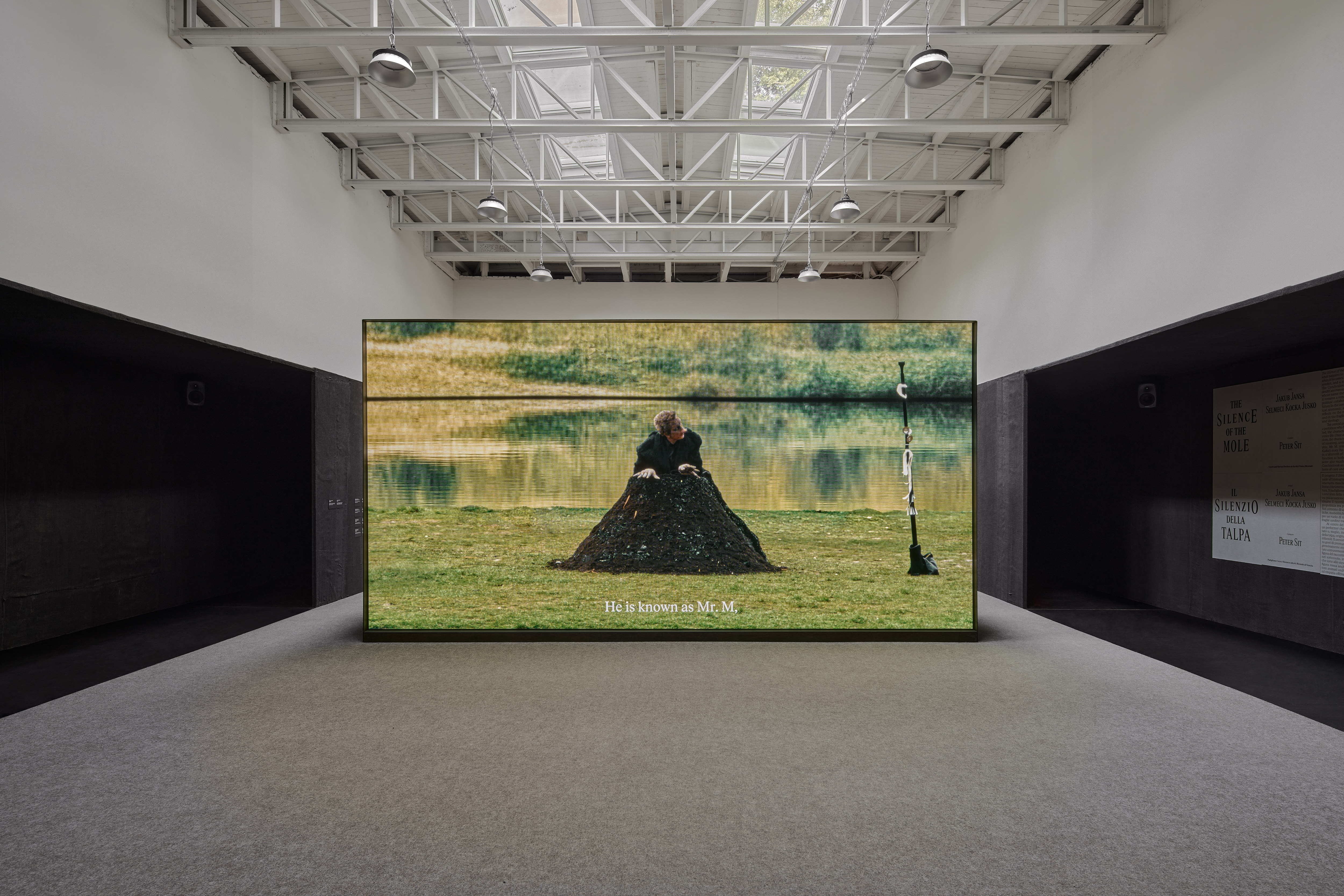
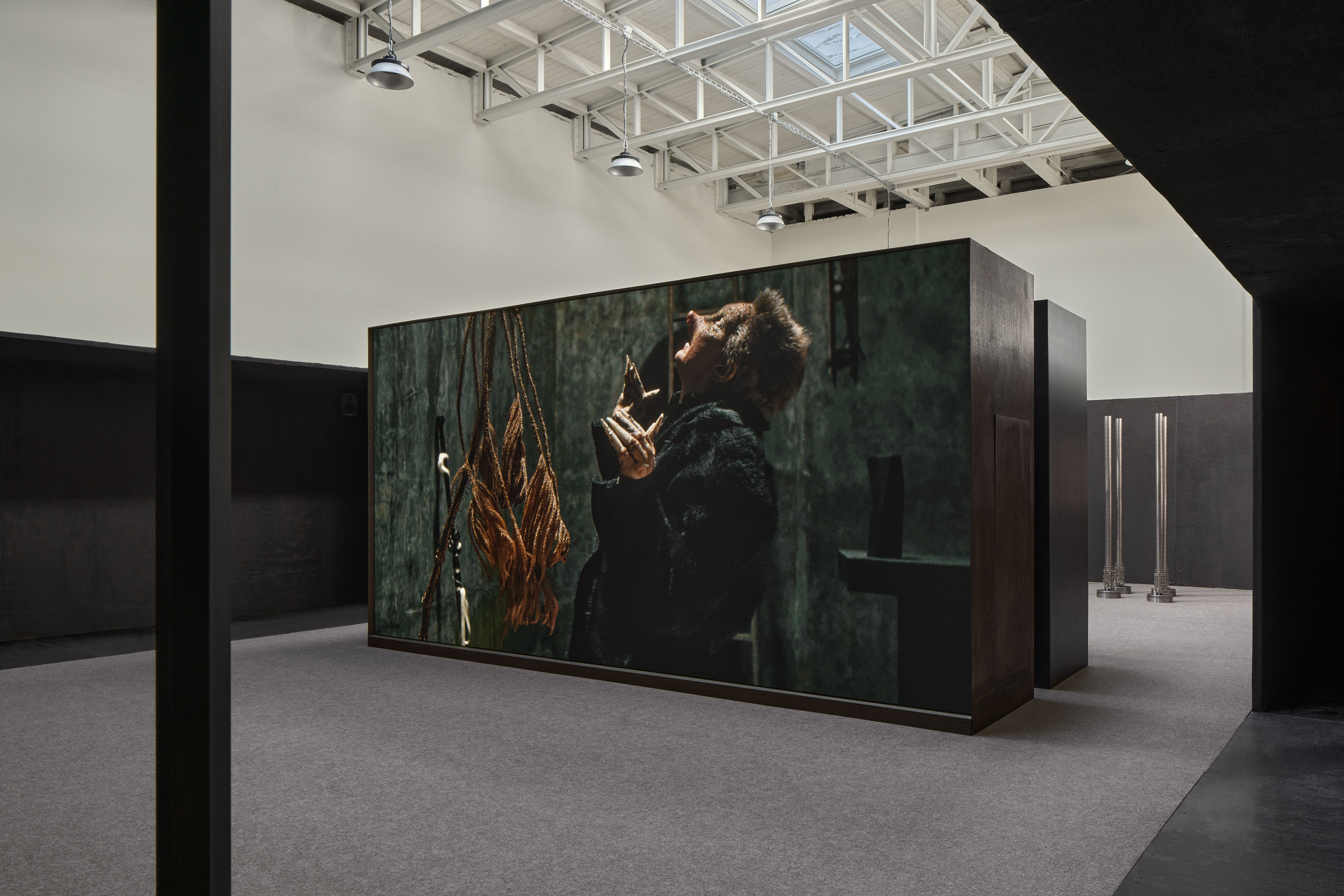
Silence of the Mole, Czech and Slovak Pavilion at 61st Venice Biennale. Photo: Jan Kolský.
Lagié BarbaracuratorMore broadly, your work often gives social mechanisms a non-human or organic body. The celeriac, the avocado, the pumpkin, plants or animals seem able to carry tensions that might become too direct if they remained human. What becomes possible through these displaced bodies?
Jakub JansaartistWhen you’re trying to talk about something you’re experiencing in real time, you naturally look for something that gives you at least a little distance from it. I owe an apology to all the vegetables and animals I’ve dragged into my complicated human problems. But without their help, I don’t think I would have been able to look at those situations with enough perspective.
Lagié BarbaracuratorRitual keeps returning in your work, through openings, initiations, confessions, clubs, collective gestures or self-improvement formats. What does ritual allow you to do that a conventional narrative structure would not?
Jakub JansaartistHa! That’s true. Rituals genuinely help me survive. Without them, I don’t think I would be able to get anything done.I’m not talking about elevated spiritual rituals, but very ordinary, repetitive actions. In a way, I would even say that a series of rituals is what I call discipline. I decided quite early in life that I didn’t want to be disciplined by other people or by systems (haha—this is a really ambitious statement :-)). I had to develop my own discipline instead. And that wouldn’t have been possible without rituals.They can be as simple as dancing alone in my studio every morning or small routines that help me prepare for focused mental work. I love rituals. And thanks for pointing out that they also appear in my work; I had almost forgotten that myself.
Lagié BarbaracuratorThe Silence of the Mole enters the Venice Biennale in the Czech and Slovak Pavilion, extending beyond the film into a broader exhibition environment. It is also the result of a close collaborative process. Could you say more about the people who shaped the project?
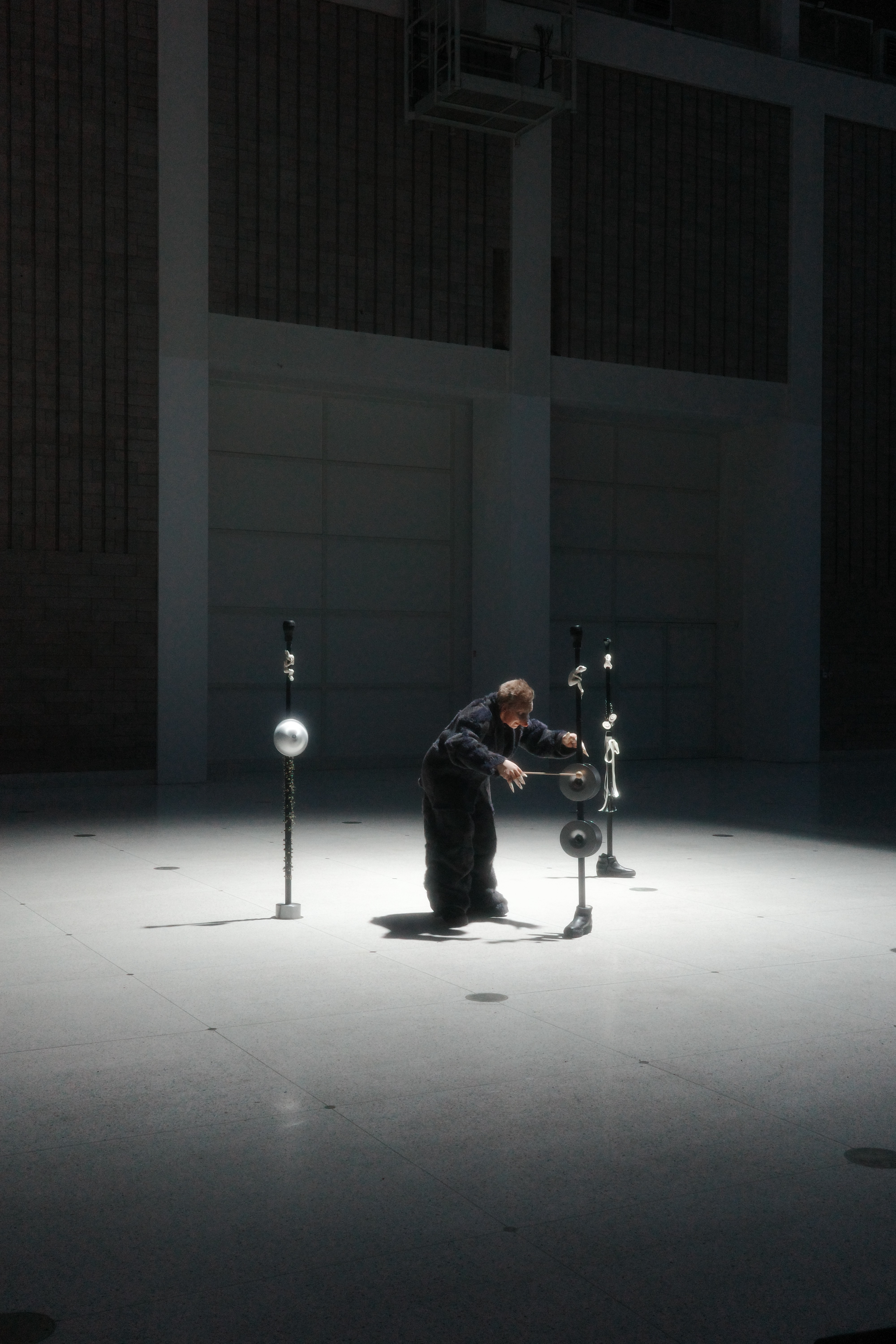
Silence of the Mole, Czech and Slovak Pavilion at 61st Venice Biennale. Photo: Jan Kolský.Jakub Jansa, Silence of the Mole, short film, 2026. Photo: Jakub Jansa.
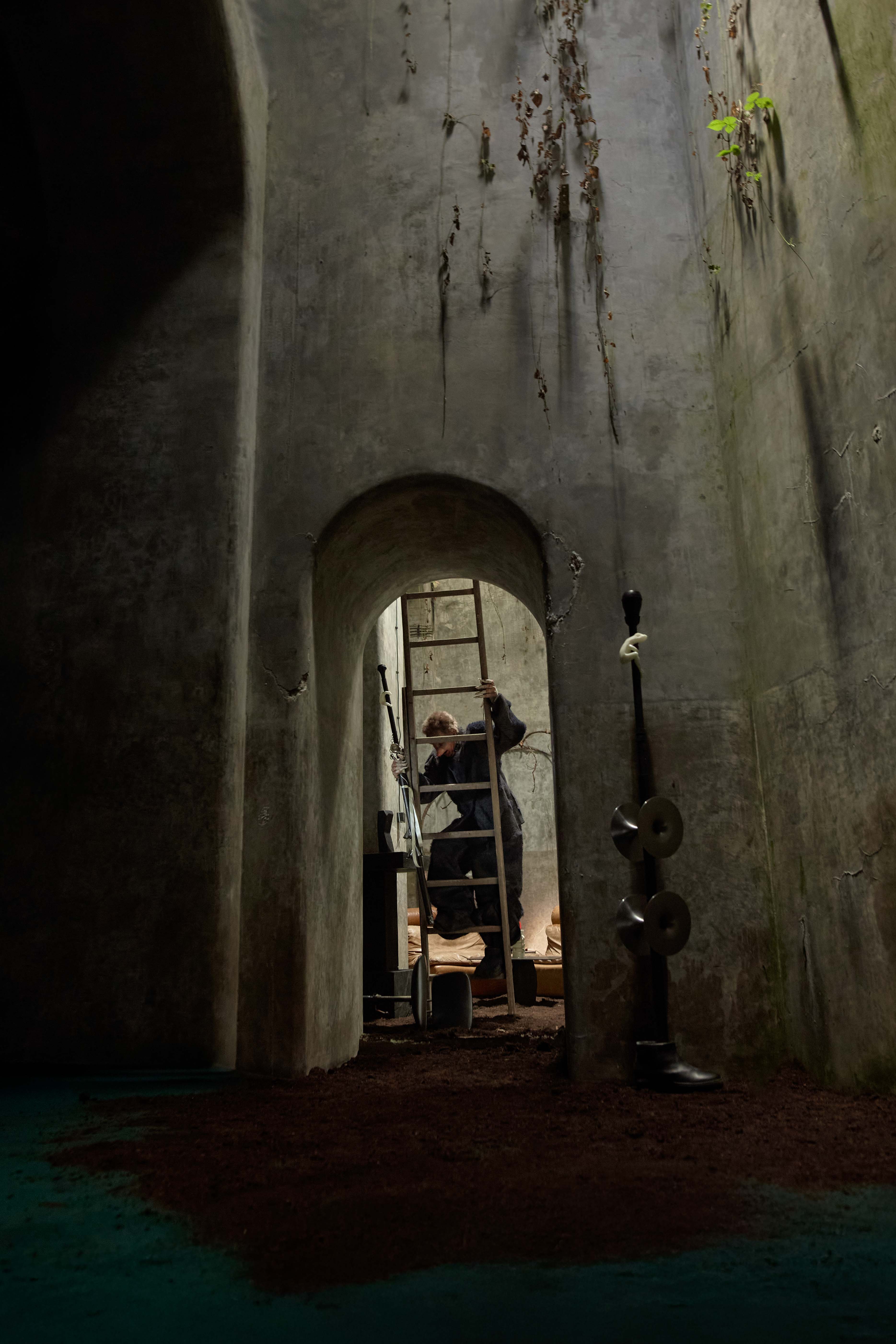
Jakub JansaartistThe whole exhibition is the result of a close collaboration between me, the artist duo Selmeci Kocka Jusko and the curator Peter Sit. While my film forms its narrative core, Selmeci Kocka Jusko developed a large-scale sculptural installation inspired by the Mole’s instruments and the work’s central motif of silence. The film also features costumes by Karolína Juříková of Overall Office, cinematography by Tomáš Kotas, an original score by composer Oliver Torr, and a performance by Daniela Voráčková in the role of the Mole. The film was produced by Closer Production and supported by Kodl Contemporary.
Jakub Jansa, Silence of the Mole, short film, 2026. Photo: Jakub Jansa, Shotbyus.
Lagié BarbaracuratorAt the Biennale, artworks, pavilions and national narratives are often consumed in rapid sequence, almost as a form of cultural binge-watching. What do you want the Mole to do within that rhythm? Can the pavilion become a space of interruption, or does it inevitably become another episode in the binge?
Jakub JansaartistAbsolutely. The Biennale is a kind of sadomasochistic binge-watching experience. Nobody can survive it completely. It’s brutal for both visitors and artists. I don’t think it’s possible to prepare a pavilion without being constantly aware that there are another hundred pavilions around you, each with its own carefully designed strategy for capturing attention. Our approach was almost the opposite. We wanted to slow people down and draw them into the story. Judging from the reactions we’ve received, I think that has worked. It’s a bit of a paradox because the sound in the pavilion is actually quite loud, but the overall experience doesn’t feel loud or demanding. Instead, it creates space to think, to stay for a while, and to absorb not only our work, but also everything that came before and everything that comes after it.
Participant bios
Jakub Jansa is a Czech artist working across film, installation, and performance. His distinctive practice combines fictional narratives, humour, and elements of the grotesque to examine social structures, power relations, class dynamics, and the ideologies that shape contemporary life. Through carefully constructed environments and cinematic storytelling, he creates intellectually rigorous yet accessible situations in which familiar systems and identities become unstable.
Jansa is representing the Czech Republic at the 61st Venice Biennale in the shared Czech and Slovak Pavilion, curated by Peter Sit. He was awarded the Jindřich Chalupecký Award in 2021, and his work forms part of the collection and permanent exhibition of the National Gallery Prague. In 2023, Prague City Gallery presented an extensive solo exhibition of his work at the Stone Bell House.
His work has been commissioned and exhibited by leading international institutions and major contemporary art platforms, including Neue Galerie Graz and steirischer herbst, Pioneer Works and Anthology Film Archives in New York, HEK Basel, the Ljubljana Biennale of Graphic Arts, and the Athens Biennale. Jansa’s growing international recognition has established him as one of the most distinctive voices of his generation in Czech contemporary art.